
Carolyn J. Dean
Aversion and Erasure
This book is about how the idea that the Holocaust of European Jews represents the most radical evil of our time shapes discussions of victims in general.
The book shows how the Holocaust transformed our whole way of thinking about war and heroism. War is no longer a proving ground for heroism in the same way it used to be. Instead, war now is something that we must avoid at all costs—because genocides often take place under the cover of war. We are no longer all potential soldiers (though we are that too), but we are all potential victims of the traumas war creates. This, at least, is one important development in the way Western populations envision war, even if it does not always predominate in the thinking of our political leaders.
During the 1970s and after, the Holocaust became a central reference point in the West for imagining inhumanity. This book seeks to understand how this development led us to imagine other kinds of brutality. For example, the Bosnian war was depicted as if it were “like” the Holocaust of European Jews.
I also try to understand how the attention given the Holocaust generated the idea that we live in a culture in which all minority groups want to be “victims” who have suffered their own Holocaust—as well as the use of the notion of “survivor” to describe victims, including those who have suffered domestic violence and those who have lived through the most extreme traumas of war and ethnic cleansing.
Most importantly, the book asks how we really see victims and how this discussion about the Holocaust and its impact shapes our decisions about who is really a victim and who is not.
Editor: Erind Pajo
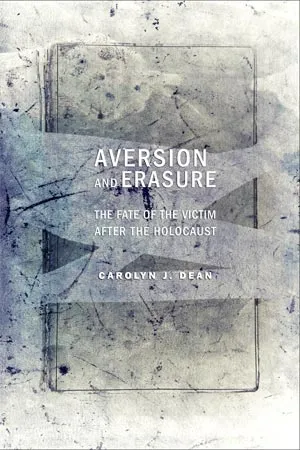
Aversion and Erasure
Carolyn J. Dean Aversion and Erasure: The Fate of the Victim after the Holocaust Cornell University Press 200 pages, 9 x 6 inches ISBN 978 0801449444
Available here →February 2, 2011
20110202-dean-carolyn-on-aversion-erasure-fate-victim-after-holocaust-1-1
In a nutshell
The rest of this thread
Brown University
Carolyn J. Dean
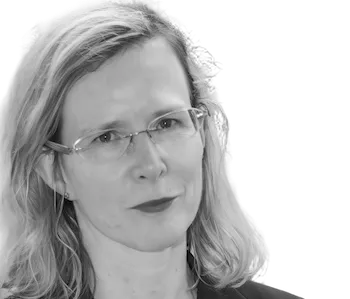
Carolyn J. Dean is John Hay Professor of International Studies and Interim Director of the Watson Institute for International Studies at Brown University. She is the author of several books, including The Fragility of Empathy after the Holocaust (Cornell, 2004), and Aversion and Erasure: The Fate of the Victim after the Holocaust (Cornell, 2010), featured in her Rorotoko interview.
Pull this thread
pulls againstpulls alongside
A victim is believed only insofar as he appears to have mastered his suffering.
Against FG · Amateur films and photographs Germans made during the war are evidence in their own right, and exceed their makers' intentions. On: Images of distant suffering do ethical work for those who see them
Against RA · The hunger strike was pioneered by force-fed suffragists, though the men who used it later are the ones lionized. On: Images of distant suffering do ethical work for those who see them
Alongside IG · US empire is waning, and the security state is the phase in which it turns to war to stay superpower. On: Images of distant suffering do ethical work for those who see them
Alongside WB · The distance Americans keep from deaths in Iraq is manufactured, and only putting the trigger in their hands breaks it. On: Images of distant suffering do ethical work for those who see them
Alongside MO · Terrorism is a contest over who gets to occupy the position of the victim. On: Images of distant suffering do ethical work for those who see them
Alongside CP · We owe wild animals in distress nothing, and special care to the animals we bred into dependence. On: Images of distant suffering do ethical work for those who see them
Nearby RW · Lee's raid on Washington to take or kill Lincoln was a genuine last gamble, and it nearly worked.
Know something the rest of us don't?
Most threads on Rorotoko begin with our invitation. Any thread can begin with a proposal: you write it with the same prompts every thread answers, and we review it.
Propose a thread →