
Stephen Schryer
Fantasies of the New Class
In the decades after World War II, the United States experienced an unprecedented boom in higher education. This boom altered the demographics of American society, creating a growing, educated middle class that was essential to the nation’s knowledge-based economy. In Fantasies of the New Class, I explore the impact of this demographic shift on postwar U.S. fiction and criticism.
Faced with an expanded audience who were, at least potentially, consumers of literary culture, writers envisaged themselves as educators with a special mission. They believed that they could fashion an aesthetically-attuned professional class who would transform American capitalism from within.
Reading Don DeLillo, Ralph Ellison, Mary McCarthy, Saul Bellow, Marge Piercy, Ursula K. LeGuin, Lionel Trilling, and John Crowe Ransom, among others, I argue that this exalted belief in literature’s influence was a constitutive illusion of postwar literary culture. This belief led writers to embrace a transformed conception of literary representation. They conceived of social reality as a tissue of ideas produced by competing knowledge elites, and they reshaped the American novel accordingly.
More broadly, American writers’ belief in the power of literary education resonated with models of intellectual agency shared by scholars from a variety of disciplines. Between the 1940s and 1970s, sociologists like Talcott Parsons, Gunnar Myrdal, C. Wright Mills, Daniel Bell, Alvin Gouldner, Irving Kristol, and others, believed that the professional or new class was in the process of displacing the capital-owning bourgeoisie. Shaped by the anti-materialistic culture of the university, the new class would usher in a more humane capitalism, a prospect that these writers viewed with either cautious optimism or chagrin.
My book highlights both the promise and flaws inherent in this exaggerated belief in the efficacy of new class cultural politics.
Editor: Erind Pajo
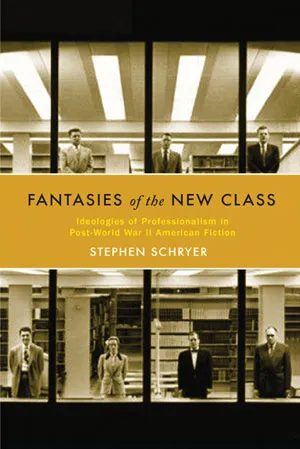
Fantasies of the New Class
Stephen Schryer Fantasies of the New Class: Ideologies of Professionalism in Post-World War II U.S. Fiction Columbia University Press 256 pages, 51/2 x 81/4 ISBN: 978 0231157568 ISBN: 978 0231157575
Available here →May 9, 2011
20110509-stephen-schryer-on-fantasies-new-class-ideologies-professionalism-1-1
In a nutshell
The rest of this thread

Stephen Schryer
Stephen Schryer is an assistant professor of English at the University of New Brunswick. He received his Ph.D. from the University of California, Irvine. In addition to Fantasies of the New Class, featured in his Rorotoko interview, Stephen Schryer has published in PMLA, Modern Fiction Studies, and Arizona Quarterly. He is working on a new book on post-World War II poverty discourse and American literature.
Pull this thread
Postwar writers who thought literary education could reform capitalism from within helped weaken the American welfare state.
Know something the rest of us don't?
Most threads on Rorotoko begin with our invitation. Any thread can begin with a proposal: you write it with the same prompts every thread answers, and we review it.
Propose a thread →