
Ivor Noël Hume
BELZONI
One might wonder why a twenty-first century reader should want to delve into a biography of someone so distant and so out of tune with the modern world.
At one level it provides escapism at its dramatic best, but at another it weaves a tale as complex as a novel by Henry James. In the end one realizes that the greed, jealousies, snobberies of academics, distrust of foreigners, and the desire to be accepted and honored are as alive today as they were in 1823 when Giovanni Belzoni died alone and forgotten in the Benin jungle of West Africa.
I am often asked what drew me to Belzoni.
Although I am no giant, we had something in common. I spent four years in the British theater before turning to archaeology, a profession for which I had no previous experience and so was vilified by academic critics. In essence, therefore, I was a short Belzoni.
In the course of what proved a long and successful career my archaeologist wife Audrey (not Sarah) and I traveled three times up and down the Nile. Each time we found the name Belzoni carved onto columns and into frescos. Simple curiosity made us want to know and understand a man who would do something so destructive.
It turned out that Belzoni was only adding to generations of scribes who felt impelled to put their stamp on the past. Beginning in the fourth century B.C. Greek mercenaries were followed by Romans, Coptic Christians, French and British soldiers, countless 19th century tourists and eventually a Soviet dam-building engineer. In short, Belzoni merely did what others had done before him.
Belzoni was not only a graffitist but also an artist of considerable talent who in the space of three years assembled a folio of drawings that rivaled those of Napoleon’s military artist Dominique Denon.
In 1820 Belzoni published his work to illustrate the book that was to be his enduring cenotaph. I was able to buy both and resolved, one day, to republish examples of his hand-colored lithographs. But as Belzoni himself knew, the illustrations meant little without his narrative—which therefore remains the cornerstone of this book.
Every story needs a villain and Belzoni had his in the person of French Consul Bernardino Drovetti who was treasure hunting for France while Salt was collecting for the British Museum. Caught in the middle, Belzoni narrowly escaped being murdered by Drovetti’s men amid the ruins of Karnak (Luxor).
When Belzoni sat down to draw the Karnak temple, he was awed by the scale of the ruins. Today, partially reconstructed, its great hypostyle hall is even more breathtaking. As I have told many a student, until you have stood amid the columns of Karnak you have no yardstick against which to judge the achievements of the human race. Without iron tools or computer-aided projections the Egyptians turned monumental ideas into glorious reality.
Editor: Erind Pajo

BELZONI
Ivor Noël Hume BELZONI: The Giant Archaeologists Love to Hate University of Virginia Press 320 pages, 7 1/4 x 9 3/4 inches ISBN 978 0813931401
Available here →December 26, 2011
20111226-hume-ivor-noel-on-belzoni-2
The wide angle
The rest of this thread
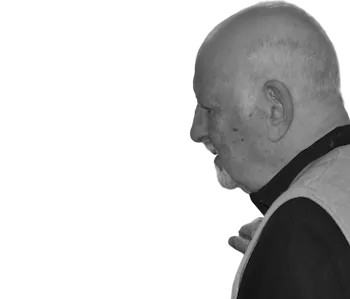
Ivor Noël Hume
Born in England in 1927 the author became an archaeologist charged with saving the buried relics of bombed London. Seven years later he accepted the post of archaeological director at Colonial Williamsburg and remained there until his retirement in 1987. His first books were published while he was still in London, and thirteen more have followed, interspersing historical fiction with Virginia history and archaeology. His play about Virginia colonist John Smith ran in Williamsburg throughout its 400th Anniversary and his television programs have won international awards. Throughout his career Hume has been a well-known lecturer at museums, in academic halls, and the theater of the National Geographic Society. He devoted one of his Washington lectures to the history of Egyptian graffiti.
Pull this thread
Belzoni's achievements in Egypt have been ignored because he was a foreign circus strongman rather than a scholar.
Know something the rest of us don't?
Most threads on Rorotoko begin with our invitation. Any thread can begin with a proposal: you write it with the same prompts every thread answers, and we review it.
Propose a thread →