
Nancy Leys Stepan
Eradication
I think I would like your “browsing reader” to first open the book at p. 12, and read through to p. 17—to get a quick introduction to Fred Lowe Soper, learn why he is so controversial within the history of public health, and why he is such a useful foil in discussing eradication.I started out with a rather negative impression of Soper. He was not a handsome man, by any means!But more seriously, he came burdened by a negative reputation because he was such a determined proponent of disease eradication.But as I read through the huge collection of documents Soper left to the National Library of Medicine, my impression of him altered.His career certainly contrasts with the career of many of today’s “experts” who rush off to spend five or six weeks in Nigeria, or Ethiopia, advising and consulting on foreign-funded health aid programs, and then rush back to the safety of their homes and careers in Europe or the United States.Soper spent over 20 years working in often tough conditions in the Americas for the Rockefeller Foundation.
In Brazil, in the 1930s, he eradicated a malaria mosquito, and almost managed to eradicate the urban yellow fever mosquito. After war service, he traveled tirelessly across the Americas as Director of the Pan American Health Organization (PAHO, the Americas office of WHO), as well as made many journeys to Asia and Europe, as he led the way in eradication efforts.Soper was brilliant in the field; one of his contemporaries described him as “one of the grand seigneurs in international public health.”Soper was a curious mix of the idealist and the pragmatist. He was an idealist in thinking that nearly all diseases could be eradicated.
He was a practical man of action and a magnificent director of large-scale health initiatives.If anything, Soper thought in most cases no new scientific research was needed to conquer diseases; what was needed was to apply what was already known, in a systematic way, to achieve the final zero. Soper rarely asked himself whether it was politically wise, and socially useful, to eradicate a disease; if the scientific and technical means were there (and he often, mistakenly, thought they were), then he believed we had a moral duty to eradicate.At times, Soper’s idealism got the better of him. His support for eradication became “eradicationism”—a faith, a utopian dream of a disease-free world.
But as someone has said, eradication is an absolute term that demands a degree of perfection. And the trouble with perfection is that it is hard to achieve—witness the difficulty of actually eradicating a disease.Nevertheless, though I have my reservations about eradication, I find it hard not to give more than just a grudging respect to Soper. And for the historian, his quirky personality, his talent for spotting talent, and his memorable sayings, were a gift! In so many ways Soper did indeed encompass all the positive and negative things about eradication.It would be nice if this book was useful to people involved in current efforts to solve the problems of diseases like malaria, or tuberculosis, in Africa and elsewhere.
Editor: Erind Pajo
Eradication
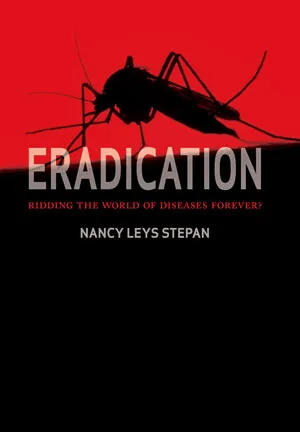
Nancy Leys Stepan Eradication: Ridding the World of Diseases Forever?Cornell University Press272 pages, 6 x 9 inches ISBN 978 0801450587
Available here →November 16, 2011
20120102-stepan-nancy-on-appeal-disease-eradication-3
A close-up
The rest of this thread
Alana Glubo
Nancy Leys Stepan
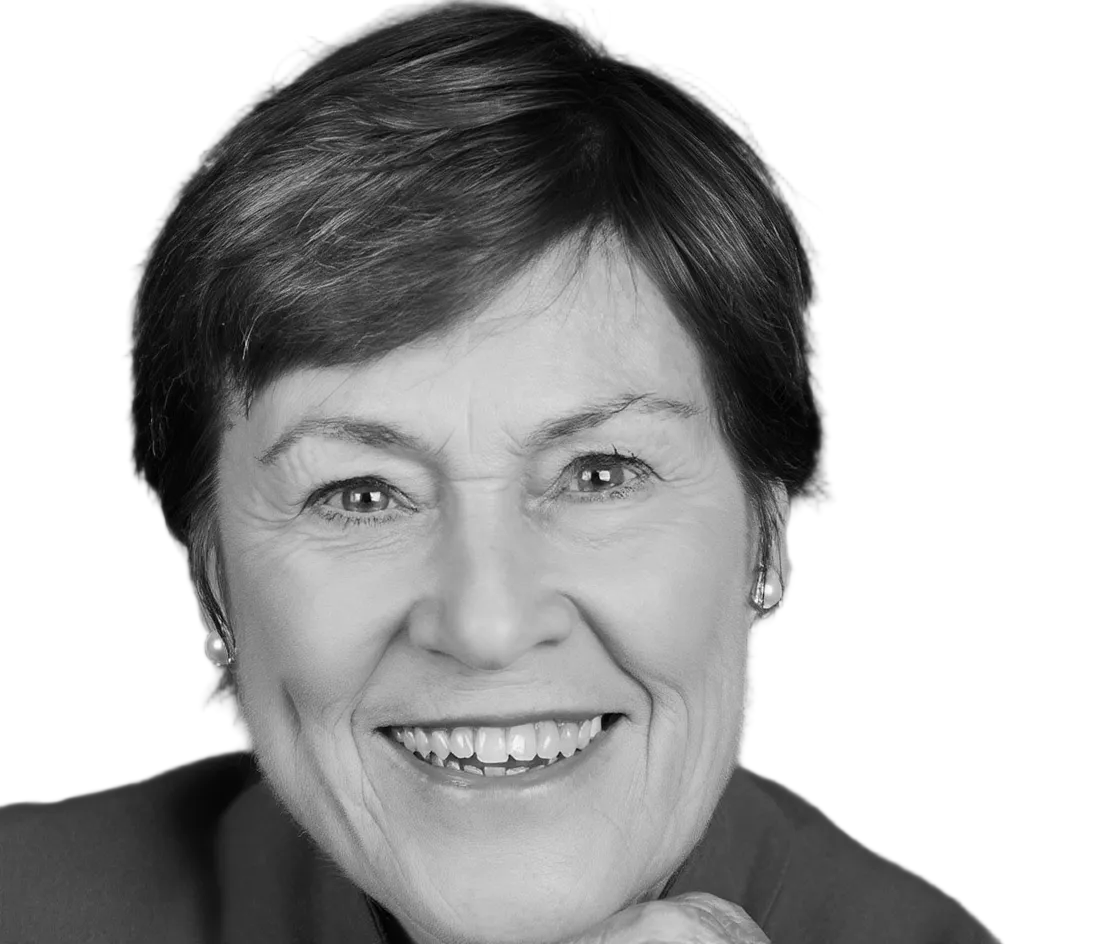
Nancy Leys Stepan started her working life as a science journalist, then qualified as a historian of science and medicine. She is Professor of History Emeritus at Columbia University, and has previously taught at Yale, Oxford, and the Central European University. Besides Eradication, featured on Rorotoko, her books include “The Hour of Eugenics” (co-winner of the Berkshire Prize), Picturing Tropical Nature, The Idea of Race in Science.
Pull this thread
pulls againstpulls alongside
Treating eradication as an ordinary public health goal is what defeats it.
Against SM · Florida's tomato fields went from the country's worst labor conditions to among its best without a single new law. On: A model or method validated in one setting transfers usefully to others
Against HL · Real health reform is a universal pool for hospitalization and chronic illness, with income-based subsidies for everything else. On: Targeted medical and technical intervention can substitute for addressing social conditions
Against EB · Mutual-aid structure makes radical religious groups lethal, so governments should compete with them in providing benign services. On: A model or method validated in one setting transfers usefully to others
Against BS · Drug approvals are falling because we are running out of proteins a small molecule can bind to. On: Targeted medical and technical intervention can substitute for addressing social conditions
Alongside GE · No single agricultural model can be optimal, because the physical constraints agriculture works within vary in time and place. On: A model or method validated in one setting transfers usefully to others
Alongside SA · American biological psychiatry descends by a traceable line from the eugenic tradition that produced the Nazi euthanasia programs. On: Targeted medical and technical intervention can substitute for addressing social conditions
Alongside JW · What worked for Taiwan, Korea and Singapore in electronics does not transfer to biotech, where governments bet blind. On: A model or method validated in one setting transfers usefully to others
Alongside DD · Schools do not create socioeconomic achievement gaps and modestly narrow them, so school reform is the wrong lever. On: Targeted medical and technical intervention can substitute for addressing social conditions
Know something the rest of us don't?
Most threads on Rorotoko begin with our invitation. Any thread can begin with a proposal: you write it with the same prompts every thread answers, and we review it.
Propose a thread →