
Geoffrey Heal
Endangered Economies
Environmental conservation is essential to a prosperous, healthy lifestyle. It is a necessity and not a luxury. We are part of the environment: we evolved with nature and depend on nature. Conserving the environment means conserving ourselves.
Yet our current economic model poses a threat; the threat is catastrophic environmental change within decades. This conflict between economy and environment is not inevitable, but arises from failures in our economic system. We can readily fix the most egregious flaws in the system to allow the economy and the environment to coexist and nurture one other.
External costs pose the biggest of these market failures that threaten the environment. They occur when a third party must pick up the tab for the negative consequences of a transaction. Let’s say, I buy gasoline and burn it in my car. Thereby, I harm people, who inhale the exhaust fumes, and people, whose climate is altered by the greenhouse gases that the car I drive generates. The people who are injured did not purchase and burn the gas – I did. Yet, I do not pay for the harm done to them, so there is little to make me aware of it, and I have no incentive to stop.
A second problem is that property rights are not always clearly defined, and here, too, the consequences are dire. Valuable capital is destroyed or harmed. No one owns the fish in the sea; they become property only in the marketplace. This leads to overexploitation because no one has an incentive to conserve resources that they don’t own. As a result, many fish stocks have plummeted by 90% in the last 50 years. It’s not just that the number of fish has fallen. Small fish tend to mature faster and have a better chance to breed before being caught; they also have a better chance of escaping capture. Thus, the process of natural selection has resulted in a diminished population of ever-smaller fish.
A third problem is that the natural world provides services that are essential to our prosperity, but that are not valued in our economic calculations. Natural assets provide a stream of services over time, just as physical or intellectual capital goods provide a flow of benefits, which makes the natural world a form of capital. Some of our most important and valuable assets are in fact natural capital, yet we generally don’t include them in our accounts or on our balance sheets. Our accounts don’t reflect their loss. Take the case of fish stocks: we are depleting this asset, yet we don’t mark this in any of our accounting at the national or personal levels.
The final economic flaw driving conflicts between the economy and the environment concerns how we evaluate our economic performance: we worship false gods. We use Gross Domestic Product (GDP) as the performance standard, but it’s wrong. GDP can go up when bad things happen, such as a hurricane or flood that necessitates rebuilding and generates income for contractors and their employees and suppliers. GDP can fall because of good outcomes, such as the introduction of long-lasting light bulbs. Fewer of these are sold, leading to a drop in the income of producers – but overall we are better off because we are using resources and energy more efficiently. We shouldn’t be rating ourselves by GDP growth, but by sustainable increases in human wellbeing.
Editor: Judi Pajo

Endangered Economies
Geoffrey Heal Endangered Economies: How the Neglect of Nature Threatens Our Prosperity Columbia University Press 288 pages, 6 x 9 inches ISBN 978 0231180849
Available here →May 3, 2017
20170503-heal-geoffrey-on-endangered-economies-neglect-nature-threatens-1-1-1
In a nutshell
The rest of this thread
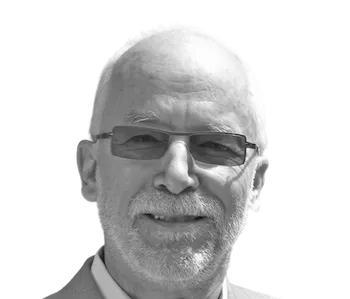
Geoffrey Heal
Geoffrey Heal is Donald C. Waite Professor of Social Enterprise at Columbia Business School. He is a Member of the National Academy of Sciences; Fellow of the Econometric Society; Past President of the Association of Environmental and Resource Economists, recipient of its prize for publications of enduring quality, and Life Fellow; Director of the Union of Concerned Scientists; founder, Director and Chairman of the Board of the Coalition for Rainforest Nations; member of the economic advisory board of the Environmental Defense Fund; and coordinating lead author of the Intergovernmental Panel on Climate Change’s fifth assessment report.
Pull this thread
There is no inherent conflict between the economy and the environment, only four correctable defects in economic institutions.
Know something the rest of us don't?
Most threads on Rorotoko begin with our invitation. Any thread can begin with a proposal: you write it with the same prompts every thread answers, and we review it.
Propose a thread →