
Geoffrey Heal
Endangered Economies
The natural world contributes in crucial ways to our physical wellbeing. There are also spiritual and esthetic dimensions to what it brings, and it is these that have traditionally motivated people to argue for conservation. Nature’s economic contributions are not taken into account. I look at how these can be measured and what the results are.
To give a sense of where this takes us, the world’s populations of pollinating insects represent an asset that is worth at least $14 trillion. Without them, up to a third of our food crops would be lost. And the world’s forests are worth well over $10 trillion just for their contribution to stabilizing the climate by photosynthesis, taking carbon dioxide out of the air and replacing it with oxygen. I calculate these values by estimating the value of the services the assets provide each year, and then capitalizing this over their lifetimes – the standard way of valuing any capital asset.
Biodiversity is another asset that is undoubtedly of great value, but we understand so little of why it matters to us that we can only value a few of the many aspects of its contributions to human societies. I identify several contributions. One is the development of medicines through bioprospecting. Another is the insurance role played by crop varieties that are not currently used commercially and can be used to replace current commercial varieties, if these fall to the assaults of pests. Yet another contribution is that biodiversity has allowed the development of all of our important foods crops and animals from their wild originals. And, of course, the popularity of nature programs shows that we have an intrinsic attraction and attachment to biodiversity.
Conserving the environment is crucial to our prosperity and the continued well-being of our children and grandchildren. There should be no conflict between the environment and the economy because the economy needs the natural world. But our institutions as currently configured give the appearance of conflict for the four reasons I summarized: external costs which do not figure in the calculations of firms and consumers, the abuse of important resources for lack of ownership, the great but unrecognized value of natural capital, and our obsession with the inadequate performance measure GDP.All of these problems can be fixed. It is easy to bring external costs home to those who generate them, to find ways of managing natural capital that is not owned by anyone, to account properly for the value of the natural world, and to find a better measure of economic performance than GDP. We know how to do all of these things, and most of them are already being done successfully in some societies. We just need to do all of them at scale.
The obstacles to conservation are not economic or technological – they are political. We are not doing what we need to accomplish because powerful vested interests, would be required to pay for their sins, starting with the fossil fuel industry.
The world faces serious environmental problems. Maps are already being redrawn to reflect loss of landmass to rising seas, and nations are beginning to fail because of water shortages. The natural world is critically threatened by mismanaged human activity, imperiling not only human populations but thousands of other species that call the forests and the oceans home. Now is the time to use the tools readily at hand to manage natural resources wisely. We need to use these tools broadly and boldly to rebuild a prosperous and sustainable world and end the threats to our prosperity engendered by our neglect of nature.
Editor: Judi Pajo

Endangered Economies
Geoffrey Heal Endangered Economies: How the Neglect of Nature Threatens Our Prosperity Columbia University Press 288 pages, 6 x 9 inches ISBN 978 0231180849
Available here →May 3, 2017
20170503-heal-geoffrey-on-endangered-economies-neglect-nature-threatens-3-1
A close-up
The rest of this thread
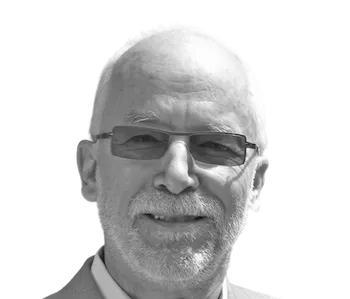
Geoffrey Heal
Geoffrey Heal is Donald C. Waite Professor of Social Enterprise at Columbia Business School. He is a Member of the National Academy of Sciences; Fellow of the Econometric Society; Past President of the Association of Environmental and Resource Economists, recipient of its prize for publications of enduring quality, and Life Fellow; Director of the Union of Concerned Scientists; founder, Director and Chairman of the Board of the Coalition for Rainforest Nations; member of the economic advisory board of the Environmental Defense Fund; and coordinating lead author of the Intergovernmental Panel on Climate Change’s fifth assessment report.
Pull this thread
There is no inherent conflict between the economy and the environment, only four correctable defects in economic institutions.
Know something the rest of us don't?
Most threads on Rorotoko begin with our invitation. Any thread can begin with a proposal: you write it with the same prompts every thread answers, and we review it.
Propose a thread →