
J.C. Sharman
The Despot's Guide to Wealth Management
Of the four host countries I studied—the US, Britain, Switzerland, and Australia—the last one seems like the odd one out. Aside from the fact that I am from there, Australia was important as the dog that didn’t bark, i.e. where the government wasn’t even trying to investigate whether there were foreign corruption proceeds in the country. The Australian government’s position was that there is simply nothing to investigate, because there is no foreign dirty money down under. (In contrast, though they are facing many obstacles, the governments of the other three countries are at least making genuine efforts to find and return foreign corruption proceeds.)
In order to sustain my hunch that the Australian government’s claim was wrong, I hired a private investigator experienced in financial crime to look for suspicious money, especially in the Australian real estate sector. Thanks to detailed property records that are searchable online, it was possible to match a list we compiled of senior foreign officials who were accused of serious corruption crimes in their home countries, with their real estate investments bought with tainted funds in Australia. These individuals’ social media profiles were often crucial in connecting the dots.
Thus, contrary to the complacent public position of the Australian government, we found that dozens of foreign officials accused of serious corruption crimes had recently bought property and invested suspicious funds in Australia. Rather than representing any inherent Antipodean virtue, or the absence of tainted funds from abroad, the lack of investigations is a cynical political judgement to let sleeping dogs lie.In addition to explaining where the new system of rules designed to combat foreign kleptocrats’ laundering came from, and the problems with the way it works, I make some suggestions as to how the system could work better. Some of these recommendations are directed to governments, but in general I argue that non-state actors can make the biggest improvements to effectiveness.
Recent progress in the fight against international tax evasion has important complementarities with the campaign against international corruption, but too often these efforts are isolated from each other. As noted, governments have largely delegated financial surveillance and due diligence to the private sector, especially banks, but then have generally failed to supervise and sanction these financial intermediaries, especially outside the United States.
Perhaps the most difficult aspect of countering corruption is that the only parties that know about the crime profit from it. Anti-corruption policies often boil down to efforts to counter-acting the profit motive, either by creating punitive disincentives (going to jail for taking a bribe), or through appeals to principle (serving the public good rather than selfish private interests). But I argue that we need to turn the profit motive from an enemy into an ally in the fight against corruption. How might this be done?Whistle-blowers are one of the main sources by which corruption scandals come to light.
These individuals often taken huge risks in telling what they know; they should be rewarded for doing so with a share of the penalties levied. One of the particularly disappointing aspects of the efforts to recover assets stolen by leaders overthrown in the Arab Spring was that governments from states like Egypt not only failed to get their money back, but they also racked up huge legal bills in doing so. Yet it should be possible to hire law firms to do the job on a contingency basis: if they recover stolen assets for the victim government the firm gets to keep a share, but if the effort fails, the law firm bears the entire cost.
Though it is natural to think that only law enforcement can undertake investigations, most of the advanced accounting and legal skills that are needed to follow the money trail are in the private sector. These highly-skilled individuals and the firms they work for are motivated by profit, so the question is how to align incentives so that these capabilities can be fully engaged in the hunt for stolen assets. Those squeamish about the idea of anti-corruption for profit should think harder about the costs of corruption, and our modest record of success so far in addressing this problem. In this struggle, we need all the help we can get.
Editor: Judi Pajo
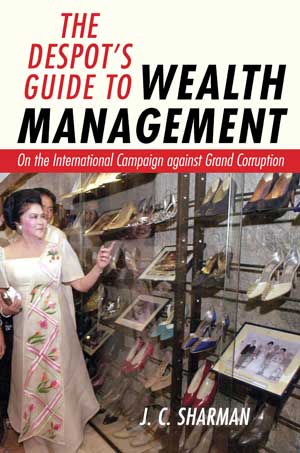
The Despot's Guide to Wealth Management
J. C. Sharman The Despot's Guide to Wealth Management: On the International Campaign against Grand Corruption Cornell University Press274 pages, 6 x 9 inches ISBN 978 1501705519
Available here →November 20, 2017
20171120-sharman-jc-on-book-despots-guide-wealth-management-international-3-1
A close-up
The rest of this thread
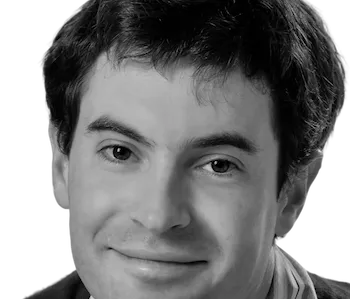
J.C. Sharman
J.C. Sharman is the Sir Patrick Sheehy Professor of International Relations at the University of Cambridge and a fellow of King’s College. Earlier, he worked at Griffith University, the University of Sydney, and American University in Bulgaria. Sharman’s research is focused on the regulation of global finance, especially in relation to money laundering, tax, corruption and offshore financial centres, and the international relations of the early modern world. His latest books are The Despot’s Guide to Wealth Management (Cornell University Press, 2017), which is featured in his Rorotoko interview, and International Order in Diversity: War, Trade and Rule in the Indian Ocean (Cambridge University Press, 2015).
Pull this thread
The way to stop kleptocrats' money is to recruit the profit motive, not fight it.
Know something the rest of us don't?
Most threads on Rorotoko begin with our invitation. Any thread can begin with a proposal: you write it with the same prompts every thread answers, and we review it.
Propose a thread →