The late Supreme Court Justice Antonin Scalia once dismissed the teachings of Confucius as “the mystical aphorisms of the fortune cookie.” In doing so, he was expressing the perspective of a long line of conservative thinkers who think that “so-called philosophy” outside the West is nothing but shallow platitudes. For example, in his bestselling The Closing of the American Mind, Allan Bloom claimed that contemporary colleges and universities were corrupting the morals of their students by undermining their faith in the classic texts of Western civilization.
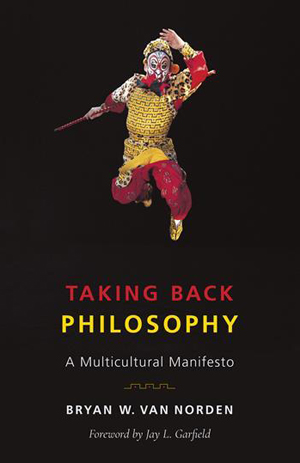
In contrast, Taking Back Philosophy: A Multicultural Manifesto argues that education must become multicultural in order to maintain its contemporary relevance. China is an increasingly important geopolitical power, and President Xi Jinping routinely praises Confucian philosophers. In India, the dominant political party espouses a version of Hindu nationalism, grounded in classical Vedanta philosophy.
The US population is increasingly ethnically diverse, and within a few decades whites of European descent will be a minority. Can we afford not to learn about philosophy outside the European tradition?I got a PhD in Chinese philosophy from Stanford University in 1991. Since then, I have been fighting to convince my colleagues to teach Chinese and other non-European philosophies. I have given carefully argued examples of the sophistication of Chinese philosophy.
I have provided model course guides and reading lists. I have run informational sessions at conferences. A handful of institutions, like Vassar College, where I have taught for 20 years, and Yale-NUS College in Singapore, where I am currently teaching, have been open to multicultural philosophy. However, most have not. The vast majority of philosophers have simply ignored the irrefutable evidence for the existence and high quality of Chinese, Indian, African, and Indigenous American philosophy. I hope that my fellow philosophers will read my book and finally be convinced. But if they are not, I think it is time for students and the general public to demand a multicultural approach to philosophy.