
Inderpal Grewal
Saving the Security State
Empires wax and wane, and what we are seeing today is the slow and gradual waning of U.S. empire in the new century. I call this phase of U.S. empire the “security state,” a phase in which the U.S. turns to war as the only means of maintaining its status as the superpower. This book examines, through research in American popular culture, media and law, how Americans, based on race and gender, are dealing with this change as they try to both protest and shore up the power of their country.
The American empire is waning because it refuses to support those in need, citizens and non-citizens. The government is challenged by those who see that it will not come to their aid in times of danger. In particular, this failure is most striking when it comes to citizens of color, and it was clearly visible, for example, in New Orleans in the aftermath of Hurricane Katrina when the Bush Administration failed to help its citizens. It was not just people in the U.S., but many around the world who saw that failure, adding to the global change in attitudes towards the United States.
I argue that this waning of empire is a consequence of decades of neoliberal policies enacted by U.S. administrations since that of Ronald Reagan. Many scholars have found that neoliberal policies have led to reduction in social safety nets, increases in military and the use of military methods to repress insurgencies and protests internationally and domestically. In addition, privatization of public goods and reduction of taxes have increased inequalities. I argue that this neoliberalism is now at a different stage: governments are now repressing restive and protesting groups by means of authoritarian policies. This moment, which I call “advanced neoliberalism,” is then about both protest and repression, as inequality leads to uprisings among people.
At the same time, individuals in the U.S. believe that as individual Americans they can uphold and maintain U.S. power and their global stature. They do this in several ways that I describe in the chapters of the book.
First, they become humanitarians, voluntourists, and missionaries, hoping to show that Americans are still “good” and want to help others even as the U.S. is waging destructive and dubious wars around the world. The U.S. government supports some of these projects and uses humanitarianism to further its military goals.
Second, individual Americans take on the task of surveillance of their fellow citizens in order to maintain state security. Technology plays a role here. Digital media technologies enable us to surveil our friends, family and neighbors, and even parenting is now more focused on surveillance. Women find empowerment through participation in surveillance and participate in government anti-terrorism projects to protect the security state. Women in the CIA, FBI and police are now staples of television and cinema as empowered agents of the government.
Third, white men are given a special sort of power, that is, the sovereign power to kill that is normally one that only the state can exercise in liberal countries. By virtue of gender and race, white, mainly Christian males are able to possess and use guns in ways that others cannot while Muslims and men of color are targeted by police if they possess guns. White males are protected by police, politicians, laws and can use guns to kill strangers, intimate partners and even themselves.
Despite all these efforts to protect the U.S. and its power, I argue that citizens often end up becoming more insecure, and that U.S. power continues to decline. War seems to be ongoing, gun violence is pervasive, and women and people of color are often rendered more vulnerable by their participation in the security projects of the state. Security is an ongoing and endless project with no end in sight yet it remains powerful because it is an engine of capitalism and state power.
Editor: Judi Pajo

Saving the Security State
Inderpal Grewal Saving the Security State: Exceptional Citizens in Twenty-First-Century America Duke University Press 336 pages, 6 x 9.2 inches ISBN 978 0822368984
Available here →February 19, 2018
20180219-grewal-inderpal-on-book-saving-security-state-exceptional-citizens-1-1-1
In a nutshell
The rest of this thread
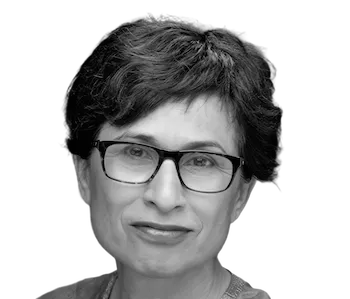
Inderpal Grewal
Inderpal Grewal is Chair and Professor in Women’s, Gender and Sexuality Studies Program, Faculty in the South Asia Council, Ethnicity, Race and Migration Studies Program, and Affiliate Faculty in American Studies and Anthropology at Yale University. She is author of Home and Harem: Nation, Gender, Empire and Cultures of Travel (Duke, 1996), Transnational America: Feminisms, Diasporas, Neoliberalisms (Duke, 2005), and Saving the Security State: Exceptional Citizens in Twenty-first century America (Duke, 2017). She is co-editor (with Caren Kaplan) of Scattered Hegemonies: Postmodernity and Transnational Feminist Practices (University of Minnesota Press, 1995), Introduction to Women’s Studies: Gender in a Transnational World (Mc-Graw Hill, 2001, 2005) and (with Victoria Bernal) of Theorizing NGO’s: Feminism, Neoliberalism and the State (Duke, 2014). Her areas of research include feminist theory, cultural studies of South Asia and its diasporas, British and U.S. imperialism, and global feminist movements.
Pull this thread
US empire is waning, and the security state is the phase in which it turns to war to stay superpower.
Know something the rest of us don't?
Most threads on Rorotoko begin with our invitation. Any thread can begin with a proposal: you write it with the same prompts every thread answers, and we review it.
Propose a thread →