
Katherine Verdery
My Life as a Spy
This book is about how surveillance functioned in communist Romania from 1973 to 1988, the period during which I was one of its subjects. The text contains many verbatim quotations from documents in my secret police file, enabling the reader to encounter the world view of those officers. These form one of the three voices the book employs, the other two being my own research notes and correspondence from that period, and my authorial commentary in the present. In this sense, it is a polyphonic work.
“
There’s nothing like reading your secret police file to make you wonder who you really are.” This first line of the Preface sets one agenda of the book: to describe the effects that reading your own surveillance file has on your identity, and along the way, to indicate how we can make use of such a file to understand something about the secret police who wrote it. They were, after all, masters of deception and approached any new “target” with the assumption that she was too. Moreover, their optic was shaped by assumptions and values that differed markedly from those of an American scholar like me, coming to do research for a dissertation in Eastern Europe during the Cold War.
Convinced I was a spy, they give us a rather unexpected idea of what spying looked like from their viewpoint.
It is also a kind of primer on what it’s like to do research in a place and time defined by the “Cold War.” It describes my growing awareness of the surveillance around me, as well as presenting my interviews with friends who informed on me to the police.
In this light, the best way to read the book is to treat it as a kind of adventure story, which tells how I rode my motorbike into a military base and what repercussions that had, how I struggled to become more tolerant of people who informed on me, how I managed to track down three secret police officers to interview, and finally, how I came to understand my place in the world of these officers.
Editor: Judi Pajo

My Life as a Spy
Katherine Verdery My Life as a Spy: Investigations in a Secret Police File Duke University Press 344 pages, 6 x 9 inches ISBN 978 0822370666
Available here →January 23, 2019
20190123-verdery-katherine-on-book-my-life-as-spy-investigations-secret-1-1
In a nutshell
The rest of this thread
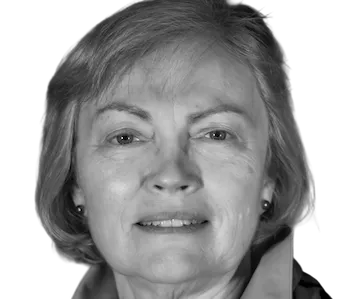
Katherine Verdery
Katherine Verdery is the Julien J. Studley Distinguished Professor of Anthropology at the Graduate Center, City University of New York; previously, she taught at Johns Hopkins University (1977-1997) and the University of Michigan (1998-2005). Since 1973 she has conducted anthropological research in Romania on ethnic and national identity, cultural politics, the socialist system, postsocialist transition, the state, property transformation, and the secret police. Her books include: Transylvanian Villagers: Three Centuries of Political, Economic, and Ethnic Change (1983), National Ideology Under Socialism: Identity and Cultural Politics in Ceaușescu’s Romania (1991), What Was Socialism, and What Comes Next? (1996), The Political Lives of Dead Bodies (1999), The Vanishing Hectare: Property and Value in Postsocialist Transylvania (2003), Peasants under Siege: The Collectivization of Romanian Agriculture, 1949-1962 (2011, with Gail Kligman), Secrets and Truths: Ethnography in the Archives of Romania’s Secret Police (2014), and most recently, My Life as a Spy: Investigations in a Secret Police File (2018). Among her professional activities, she has served as Director of the Center for Russian and East European Studies (University of Michigan) and member of the Boards of Directors of the American Anthropological Association, American Ethnological Society, and American Association for the Advancement of Slavic Studies (AAASS, now Association for Slavic, East European, and Eurasian Studies). She was the first anthropologist to serve as president of the AAASS, in 2004-06.
Pull this thread
A secret police file says more about the officers who wrote it than about its target.
Know something the rest of us don't?
Most threads on Rorotoko begin with our invitation. Any thread can begin with a proposal: you write it with the same prompts every thread answers, and we review it.
Propose a thread →