
Katherine Verdery
My Life as a Spy
I tried to finesse this question by putting the most important things at the beginning: a surveillance photo of myself in my underwear, a preface beginning with the sentence I quoted in question 1, and a brief account of how I came to resemble a spy early in my work because I rode my motorbike into a military base.
Other than these, among my favorite passages is the section in which I describe what life was like during my research trip in the austerity-driven years 1984-85 (pp. 139-50), including some jokes people were telling at the time and some splendid stories about how people struggled to make ends meet. I like this passage because it shows Romanians’ marvelous capacity to face adversity with humor, a trait that caused me to return over and over to that wonderful country despite its ugly government under Nicolae Ceausescu.
Another favorite is the passage that includes my conversations with a friend I call Mariana (pp. 233-244), which I think shows the complexity of a person’s becoming an informer for the secret police and some of the psychological complexities of their doing so.My hopes for the book are of three different types. First, I hope it will bring into readers’ consciousness the topic of surveillance as something that can happen every day, with unexpected effects. Surveillance—of any kind—involves complex social relationships and special techniques. I believe any citizen should become aware of them, in hopes of curbing threats to liberty—of both political and commercial kinds.
If the book contributes to developing literacy about a disturbing aspect of the world around us, that will be a very valuable outcome.
Second, for my readers in Romania—especially of younger generations—I hope it will contribute to an understanding of the country’s life under socialism, an understanding very different from that purveyed by older generations. The decades of communist rule in Romania left devastation in their wake, on many fronts. My way of trying to comprehend that system by means of its secret police offers an alternative to officially purveyed histories of communism, a vision that young people might find salutary.
Third, for the narrower readership in my discipline of anthropology, I hope students will read it as a guide concerning that very difficult form of research, fieldwork: learning about others through participating with and observing them. It is not an easy method; the book illustrates some of the reasons why. I hope those who train to practice this method will find the book’s arguments and examples useful in their work. For in the end, I remain a child of the Enlightenment, believing that through these means we can best learn about other people’s ways of being—an admirable goal for all of us.
Editor: Judi Pajo

My Life as a Spy
Katherine Verdery My Life as a Spy: Investigations in a Secret Police File Duke University Press344 pages, 6 x 9 inches ISBN 978 0822370666
Available here →January 23, 2019
20190123-verdery-katherine-on-book-my-life-as-spy-investigations-secret-3-1
A close-up
The rest of this thread
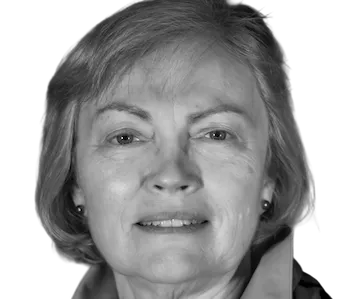
Katherine Verdery
Katherine Verdery is the Julien J. Studley Distinguished Professor of Anthropology at the Graduate Center, City University of New York; previously, she taught at Johns Hopkins University (1977-1997) and the University of Michigan (1998-2005). Since 1973 she has conducted anthropological research in Romania on ethnic and national identity, cultural politics, the socialist system, postsocialist transition, the state, property transformation, and the secret police. Her books include: Transylvanian Villagers: Three Centuries of Political, Economic, and Ethnic Change (1983), National Ideology Under Socialism: Identity and Cultural Politics in Ceaușescu’s Romania (1991), What Was Socialism, and What Comes Next? (1996), The Political Lives of Dead Bodies (1999), The Vanishing Hectare: Property and Value in Postsocialist Transylvania (2003), Peasants under Siege: The Collectivization of Romanian Agriculture, 1949-1962 (2011, with Gail Kligman), Secrets and Truths: Ethnography in the Archives of Romania’s Secret Police (2014), and most recently, My Life as a Spy: Investigations in a Secret Police File (2018). Among her professional activities, she has served as Director of the Center for Russian and East European Studies (University of Michigan) and member of the Boards of Directors of the American Anthropological Association, American Ethnological Society, and American Association for the Advancement of Slavic Studies (AAASS, now Association for Slavic, East European, and Eurasian Studies). She was the first anthropologist to serve as president of the AAASS, in 2004-06.
Pull this thread
A secret police file is better evidence about the officers who wrote it than about the person it tracks.
Know something the rest of us don't?
Most threads on Rorotoko begin with our invitation. Any thread can begin with a proposal: you write it with the same prompts every thread answers, and we review it.
Propose a thread →