
Katherine Verdery
My Life as a Spy
The book is highly relevant to contemporary life, in which forms of surveillance have become ubiquitous, although they differ from the ones I describe. It encourages readers to ask how these various forms differ—such as, does postmodern surveillance create identity “doubles” (doppelgangers), as communist surveillance did? What forms of knowledge do the two types rely on, and what are the implications for our social relations with others? Those interested in Foucauldian ideas about surveillance will find here some thought-provoking comparisons.
Anthropologists rarely find themselves with sources of this kind. How did I come to acquire mine? Following the overthrow of communist governments in Eastern Europe in 1989, a number of the successor governments instituted a process generally known as “lustration” (purification), to prevent people who had profited from the communist regime from also doing so in the new system.
Lustration involved opening the archives of the secret police, both making them visible to the public and enabling people who had been under surveillance to track their own relationship to the apparatus of repression. This process began in Romania in 1999.
Having completed a book for which I had used the secret police archives, I let an archivist persuade me to apply for my own file, though I had no clear idea of how I would use it. Once I received it (all 2,781 pages) I thought I might write a memoir of my field experience. The memoir morphed into something more complex—part memoir, part social science exploration of surveillance itself.
Editor: Judi Pajo

My Life as a Spy
Katherine Verdery My Life as a Spy: Investigations in a Secret Police File Duke University Press 344 pages, 6 x 9 inches ISBN 978 0822370666
Available here →January 23, 2019
20190123-verdery-katherine-on-book-my-life-as-spy-investigations-secret-2-1
The wide angle
The rest of this thread
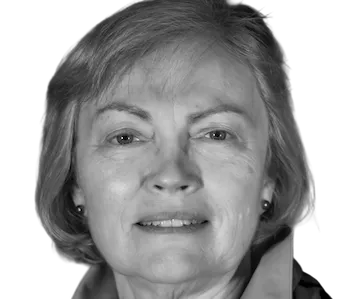
Katherine Verdery
Katherine Verdery is the Julien J. Studley Distinguished Professor of Anthropology at the Graduate Center, City University of New York; previously, she taught at Johns Hopkins University (1977-1997) and the University of Michigan (1998-2005). Since 1973 she has conducted anthropological research in Romania on ethnic and national identity, cultural politics, the socialist system, postsocialist transition, the state, property transformation, and the secret police. Her books include: Transylvanian Villagers: Three Centuries of Political, Economic, and Ethnic Change (1983), National Ideology Under Socialism: Identity and Cultural Politics in Ceaușescu’s Romania (1991), What Was Socialism, and What Comes Next? (1996), The Political Lives of Dead Bodies (1999), The Vanishing Hectare: Property and Value in Postsocialist Transylvania (2003), Peasants under Siege: The Collectivization of Romanian Agriculture, 1949-1962 (2011, with Gail Kligman), Secrets and Truths: Ethnography in the Archives of Romania’s Secret Police (2014), and most recently, My Life as a Spy: Investigations in a Secret Police File (2018). Among her professional activities, she has served as Director of the Center for Russian and East European Studies (University of Michigan) and member of the Boards of Directors of the American Anthropological Association, American Ethnological Society, and American Association for the Advancement of Slavic Studies (AAASS, now Association for Slavic, East European, and Eurasian Studies). She was the first anthropologist to serve as president of the AAASS, in 2004-06.
Pull this thread
A secret police file is better evidence about the officers who wrote it than about the person it tracks.
Know something the rest of us don't?
Most threads on Rorotoko begin with our invitation. Any thread can begin with a proposal: you write it with the same prompts every thread answers, and we review it.
Propose a thread →