
Noah Feldman
The Arab Winter
Today many people think that, in retrospect, the Arab spring was doomed to fail. Arab popular self-government was a “mirage,” a “false dawn.” There was no truly transformative political self-determination in those countries where people took to the streets and expressed their will to change.
The purpose of this book is to save the Arab spring from that verdict of implicit nonexistence. I propose an alternative account that highlights the exercise of collective, free political action—with all the dangers of error and disaster that come with it.
There is no question that, apart from removing a handful of dictators, the Arab spring did not achieve most of its grander aspirations.
Nevertheless, there was an Arab spring that led to today’s Arab winter. People whose political lives had been determined and shaped from the outside tried politics for themselves, and for a time succeeded. That this did not lead to constitutional democracy or even to a more decent life for most of those affected is not a reason to believe that the effort was meaningless. Failure is always one possible outcome of attempting self-determination.
Regardless, the effort mattered for the course of history. And it matters for the future. The central political meaning of the Arab spring and its aftermath is that it featured Arabic-speaking people acting essentially on their own.
The Arab spring marked a crucial, historical break from a long era in which empires—Ottoman, European, and American—definitively shaped the course of Arab politics. The participants in the events of the Arab spring and its aftermath took charge of their politics through action. In doing so, they remade and transformed the two big forces that have dominated political ideas in the Arabic-speaking world for the past century, namely Arab nationalism and political Islam.
This book is not an attempt to explain precisely why the Arab spring took place when it did or why the outcomes differed from place to place. It’s not a work of history or of structural political science.
My constant question is, rather, what does it mean that these things happened?
This is the sort of question that Hannah Arendt so influentially asked about the American and French revolutions, and indeed about political action itself. The exploration I undertake is indebted not only to Arendt’s question but also to her distinctive view that people who engage in genuine collective political action are exercising freedom in the truest sense.
Editor: Judi Pajo

The Arab Winter
Noah Feldman The Arab Winter: A Tragedy Princeton University Press 216 pages, 5 1/2 x 8 1/2 inches ISBN 978 0691194929
Available here →May 27, 2020
20200527-feldman-noah-on-book-arab-winter-tragedy-1-1-1
In a nutshell
The rest of this thread
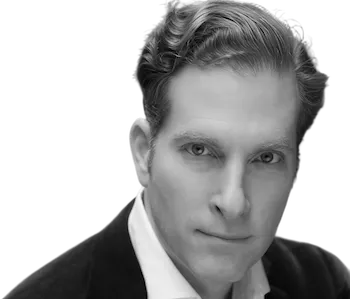
Deborah Feingold
Noah Feldman
Noah Feldman is the Felix Frankfurter Professor of Law at Harvard Law School. He is a Senior Fellow of the Society of Fellows, a member of the Academy of Arts and Sciences, and a contributor to Bloomberg Opinion. Feldman served as a law clerk to Justice David H. Souter of the U.S. Supreme Court (1998-1999), and as a senior constitutional advisor to the Coalition Provisional Authority in Iraq, advising members of the Iraqi Governing Council. He is the author of eight books, including Arab Winter (2020) featured here.
Pull this thread
If the Egyptian people removed Mubarak, they also removed Morsi, so Egypt's dictatorship is now the product of popular will.
Know something the rest of us don't?
Most threads on Rorotoko begin with our invitation. Any thread can begin with a proposal: you write it with the same prompts every thread answers, and we review it.
Propose a thread →