
Noah Feldman
The Arab Winter
The book grew from almost two decades of trying to interpret the trajectory of political developments in the Islamic and Arabic-speaking worlds—and from my efforts as an engaged outsider seeking to enable liberal, Islamic-democratic constitutionalism in the Middle East and North Africa.
Writing in 2003, before the U.S. invasion of Iraq, I predicted in After Jihad that free elections in Arabic-speaking countries would lead to experiments in Islamic democracy, and I encouraged the United States to let those experiments run their course in the name of democratic self-determination.
In 2004, after a truncated stint as constitutional advisor to the Coalition Provisional Authority in Iraq, I explored in What We Owe Iraq the ethical consequences of the Iraq invasion and what already appeared as the contradictions and dire failures of the occupation that followed.
In 2008, in The Fall and Rise of the Islamic State, I tried to deepen the continuing debate over Islamic democracy by offering some hypotheses about how classical Islamic constitutional design had worked, how it had failed, and what challenges it would have to overcome in order to solve contemporary governance challenges.
Since 2011, I have watched Islamic democracy rise and fall with stunning speed in Egypt and observed the antidemocratic ideology of the Islamic State drive its own horrific cycle of death and destruction. Islamic democracy was tried, briefly, in Egypt—and it failed, for complex reasons not necessarily inherent to the undertaking.
In contrast, in Tunisia, where I was a constitutional advisor and an observer, I saw firsthand the alternative of gradual, compromise-driven constitutional politics, complete with the liberalization of the leading Islamist party there. Islam and democracy have cohered there. Yet what emerged is not Islamic democracy.
In the depth of the failure of Islamic democracy and the Arab winter, I feel no longer young and idealistic but chastened and middle-aged. Nevertheless, midlife demands meaning-making as much as or more than does youth. This book is an attempt at that.
Editor: Judi Pajo

The Arab Winter
Noah Feldman The Arab Winter: A Tragedy Princeton University Press 216 pages, 5 1/2 x 8 1/2 inches ISBN 978 0691194929
Available here →May 27, 2020
20200527-feldman-noah-on-book-arab-winter-tragedy-2-1
The wide angle
The rest of this thread
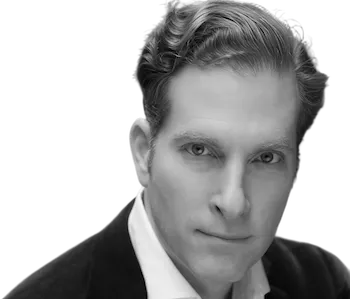
Deborah Feingold
Noah Feldman
Noah Feldman is the Felix Frankfurter Professor of Law at Harvard Law School. He is a Senior Fellow of the Society of Fellows, a member of the Academy of Arts and Sciences, and a contributor to Bloomberg Opinion. Feldman served as a law clerk to Justice David H. Souter of the U.S. Supreme Court (1998-1999), and as a senior constitutional advisor to the Coalition Provisional Authority in Iraq, advising members of the Iraqi Governing Council. He is the author of eight books, including Arab Winter (2020) featured here.
Pull this thread
pulls againstpulls alongside
If the Egyptian people removed Mubarak, they also removed Morsi, so Egypt's dictatorship is now the product of popular will.
Against RP · Failure is not secretly good for us, and creative lives are made by continuation, not by talent destined to win. On: Failure, waiting and non-productive time are generative rather than simply wasted
Against MB · Modern advertising differs in kind from everything before it, and for the first time it meets no legal resistance. On: Ordinary people support harmful regimes and systems from genuine conviction rather than from manipulation
Against BB · Five of the six main causes of start-up failure are avoidable, so the ninety-percent failure rate is not inevitable. On: Failure, waiting and non-productive time are generative rather than simply wasted
Against FM · Most of the world now lives in one built form designed by hedge funds and algorithms that nobody will claim. On: Ordinary people support harmful regimes and systems from genuine conviction rather than from manipulation
Alongside JN · Bee signals evolved among spies and competitors, so a colony's stop signal matters as much as its waggle dance. On: Failure, waiting and non-productive time are generative rather than simply wasted
Alongside BM · The marriage of evangelical religion to free-market economics is a product of the service economy. On: Ordinary people support harmful regimes and systems from genuine conviction rather than from manipulation
Alongside KG · The mirror test never formed an intellectual tradition, and following the apparatus yields a different history of the mind sciences. On: Failure, waiting and non-productive time are generative rather than simply wasted
Alongside FD · Poor Americans' patriotism is a reasoned sense of ownership, not stupidity or false consciousness. On: Ordinary people support harmful regimes and systems from genuine conviction rather than from manipulation
Know something the rest of us don't?
Most threads on Rorotoko begin with our invitation. Any thread can begin with a proposal: you write it with the same prompts every thread answers, and we read it.
Propose a thread →