
Arnold Weinstein
The Lives of Literature
Today, our students and their professors very often read literature through a political lens: what does this book tell us about the ideological arrangements in play in either the author’s life or the period when it was written? This makes sense. Our important books do shine a light on such matters. And our best students are nothing if not critical: they want to illuminate the sins of the past and of the present, in order to move forward. They are often in a hurry.
This was no less true in 1968 when I began my career at Brown University. It was the time of the Vietnam War; soon after came the scandal of the bombing in Cambodia. Students were in uproar. At Brown, they went on strike and shut down classes. And when they did come into your classroom, they put hard questions to you: how does this novel or poem (that you are assigning) contribute to improving the world? In short, there has never been a time when literature and the arts did not have to prove their “relevance.”
But the upshot of this imperative is that we’ve lost sight of what literature actually is, and why we need to read it. To read a poem exclusively for its political pay-off is a reductive exercise. Further, it willy-nilly positions literature as a thin alternative to social science. Yes, we are interested in the operation of power, but what we miss seeing is the actual power of literature itself. Important works of art do tell us about the work of ideology, but they also tell us about the work (and play) of the mind and heart.
And, offensive as it may sound today, life itself is more than ideology. Eating, drinking, talking, laughing, loving, hating, seeing, doing, thinking, imagining, remembering, dreaming: these fundamental activities of life occupy us 24/7, both awake and asleep. Our best books enrich us on all these fronts, for they display—writ large, as it were—the antics and energies that fuel us from birth to death.
Finally, the power of literature is inseparable from the power of words. Words—written and spoken—are the very medium of books and of teaching. And of human relationships. Words can be outright combustible; they are, in some real sense, “the arms we bear,” a form of munitions that requires no Second Amendment protection.
Emily Dickinson memorably said, “If I read a book, and it makes my whole body so cold no fire can ever warm me, I know that is poetry. If I feel physically as if the top of my head were taken off, I know that is poetry. These are the only ways I know it. Is there any other way?” Please note: Dickinson is telling us about what constitutes both poetry and knowing. And she’s right. The best reading and teaching experiences have an element of fission.
Editor: Judi Pajo
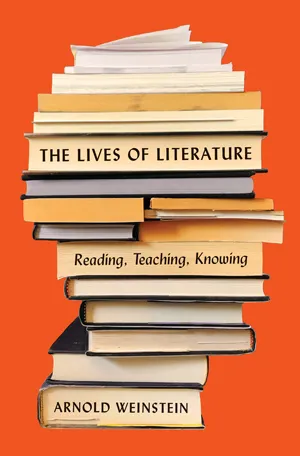
The Lives of Literature
Arnold Weinstein The Lives of Literature: Reading, Teaching, Knowing Princeton University Press 352 pages, 6 1/8 x 9 1/4 inches ISBN 9780691177304
Available here →March 8, 2023
20230308-weinstein-arnold-on-book-lives-literature-reading-teaching-knowing-2-1
The wide angle
The rest of this thread
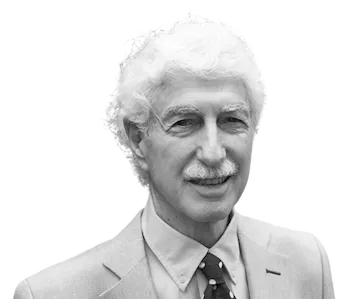
Gustav Reed
Arnold Weinstein
Arnold Weinstein is the Edna and Richard Salomon Distinguished Professor emeritus at Brown University. His earlier books include The Fiction of Relationship; Nobody’s Home [American Fiction from Hawthorne to DeLillo]; A Scream Goes Through the House [Literature and Medicine]; Recovering Your Story: Proust, Joyce, Woolf, Faulkner, Morrison; Northern Arts [Scandinavian literature and art]; Morning, Noon and Night [nominee for Pulitzer Prize]. His audio-video lectures on world literature are produced by the Teaching Company, and his online course version of The Fiction of Relationship was produced by Coursera. He has been Professeur Invité at the Ecole Normale Supérieure in Paris and Fulbright Professor of American Literature at Stockholm University. He has received National Endowment for the Humanities and Brown University Awards for scholarship, teaching, and teaching innovation.
Pull this thread
We read literature for existential and experiential knowledge, not for any political payoff.
Know something the rest of us don't?
Most threads on Rorotoko begin with our invitation. Any thread can begin with a proposal: you write it with the same prompts every thread answers, and we review it.
Propose a thread →