
Mark Paterson
How We Became Sensorimotor
The book is a social history of the science of the body’s inner senses. We think we know about the five senses that Aristotle had identified and placed into a hierarchy in De Anima (On the soul) and De Sensu et Sensibilibus (On sense and sensibility), with vision as the most important and smell and touch the least, the latter shared with base animals. But what about sensations which seem interior to the body yet which are fundamental to our sense of our own embodiment? What about balance, pain, fatigue, the so-called ‘muscle sense,’ the sense of our bodily position in space (proprioception), and the sense of movement (kinesthesia)? The book examines what we know about these inner senses, including the body’s sense of movement, and the instruments and technologies designed by scientists to observe, trace, and represent those sensations and movements.
The historical focus is the years between 1833 and 1945. This was an immensely transformative period, historically and politically, but also scientifically, the understanding of the body’s inner senses was fundamentally transformed. Scientific discoveries about the body and the measurement of previously unexamined sensations had wide-ranging effects in a surprising number of areas, including immediate practical applications in industry, sport, and military training. Later it would have substantial implications for explorations into phenomenology, embodied consciousness, the extended mind, and theories of the so-called ‘sensorimotor’ body, which I will get into later.
With this in mind, I delved into the historical literature and conducted original archival research at the Montreal Neurological Institute (MNI) on the neurosurgeon Wilder Penfield and his collaboration with the medical illustrator Hortense Cantlie; at the Wellcome Trust in London to consult letters and correspondence of physiologist and neuroscience pioneer Charles Sherrington; and at the Institute of Neurology in Bloomsbury, London. Their historic discoveries are detailed in the book.
The significance becomes clear through the questions I ask in the book: What is the story of each inner sense, how did it become distinct and measurable, and how is it regarded in the scientific literature to this day? Each chapter takes a particular sense and historicizes its formation by means of recent scientific studies, case studies, or coverage in the media. This array of inner sensations, including balance, fatigue, pain, the “muscle sense,” and the essence of physiological movement which Étienne-Jules Marey tried to make visible, and which Maurice Merleau-Ponty termed “motricité,” become distinct chapters. In several chapters I move outward from the familiar confines of the laboratory to industrial settings and even to wild animals and their habitats. The book includes important or now-forgotten stories, such as how pain measurement schemes transformed criminology, or how Wilder Penfield’s outmoded concepts of the sensory and motor homunculi of the brain still mar psychology textbooks.

Illustration of the osseous labyrinth of the inner ear, printed originally in the 1916 edition of Henry Gray’s Gray’s Anatomy: Descriptive and Applied (Philadelphia: Lea & Febiger, 1913), 1136.

Spinning chair devised by Ernst Mach to investigate the experience of motion. From Ernst Mach ([1875] 2001, 24). Illustration public domain, courtesy of Springer Nature.
Editor: Judi Pajo

How We Became Sensorimotor
Mark Paterson How We Became Sensorimotor: Movement, Measurement, Sensation University of Minnesota Press 320 pages, 5 1/2 x 8 1/2 inches ISBN 9781517909994
Available here →April 12, 2023
20230412-paterson-mark-on-book-how-we-became-sensorimotor-movement-1-1-1
In a nutshell
The rest of this thread
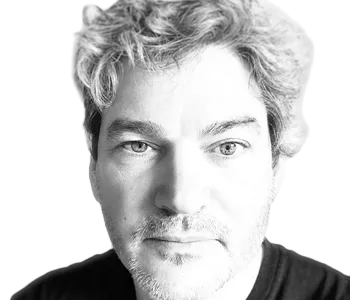
Mark Paterson
Mark Paterson is Associate Professor of Sociology at the University of Pittsburgh. He has an interest in the history and science of bodily sensation, blindness, and technologies of the senses. Along with articles published in humanities and social science journals, he is author of The Senses of Touch: Haptics, Affects and Technologies (2007) and Seeing with the Hands: Blindness, Vision and Touch After Descartes (2016), and co-editor of Touching Space, Placing Touch (2013) and a special issue of ACM Transactions in Human-Robot Interaction (in press) on affect and embodiment. His current research is concerned with the role of embodiment in the histories of human-robot interactions. His research website is sensory-motor.com
Pull this thread
The inner senses were not discovered but made measurable by instruments.
Know something the rest of us don't?
Most threads on Rorotoko begin with our invitation. Any thread can begin with a proposal: you write it with the same prompts every thread answers, and we review it.
Propose a thread →