
Nicole Howard
Loath to Print
At its heart this book is about scientific discovery and the risks inherent in sharing new ideas. It focuses on the scientific revolution in Europe during the 16th and 17th centuries. This was a period when astronomy, medicine, and natural philosophy were undergoing massive shifts. What people knew and how they came to know it—their theories and epistemologies—were changing quickly. This story is also situated in the early years of the printing press, a technology that radically transformed how ideas were communicated. Exponentially more copies of a work could be efficiently produced by the press, and readers had greater access to printed works than ever before. Much has been written about the sciences in this period, the technology of the press, and the relationship between the two.
My book takes a slightly different tack. I examine the various attitudes among scientists toward print technology, and I challenge the idea that printing was universally welcomed. While the importance of the press to the advancement of science cannot be denied, the scientists positing new ideas expressed serious concerns about putting their work into print. The title of the book, Loath to Print, echoes the attitude of many scientists of the time. Astronomers, physicians, philosophers, and others were happy to share their ideas within a narrowly defined community of scholars, individuals who shared common values and approaches to knowledge production. They were less keen, however, to see those ideas broadcast to a wider public that they believed lacked the necessary skills to evaluate their claims properly.
In the book, I unpack why scholars were reluctant to put their work into print. Their reasons were varied, and it is interesting to see the array of the concerns or frustrations authors had with the process of printing and publishing. I also examine the ways they dealt with this reluctance. Some shunned print entirely; others attempted to control the printing process in different ways. I am hoping to provide a glimpse of the attitudes held by a community of scholars toward a broader public that would, invariably, be readers and judges of their work. I also want to shine a light on some of the very creative methods they employed to see that their ideas landed in the “right hands”—the readers they believed were best suited to assess their work.
Editor: Judi Pajo

Loath to Print
Nicole Howard Loath to Print: The Reluctant Scientific Author, 1500–1750 Johns Hopkins University Press 232 pages, 6 x 9 inches ISBN 9781421443683
Available here →July 19, 2023
20230719-howard-nicole-on-book-loath-to-print-reluctant-scientific-author-1500-1750-1-1-1
In a nutshell
The rest of this thread
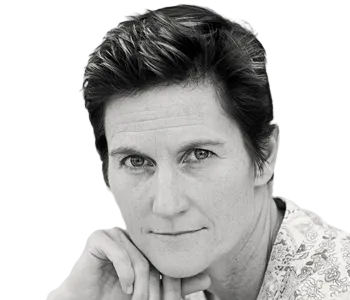
Nicole Howard
Nicole Howard, a professor of history at Eastern Oregon University, received her Ph.D. in the History and Philosophy of Science from Indiana University. Her work examines the relationship between print culture and Renaissance science. Dr. Howard’s first book was The Book: The Life Story of a Technology, a brief history of books in western culture. A sabbatical five years ago gave her time to develop her ideas around scientific communication in the 16th and 17th centuries, and that research gave rise to her most recent book, Loath to Print.
Pull this thread
The astronomers, physicians and natural philosophers producing new science were reluctant to broadcast it in print.
Know something the rest of us don't?
Most threads on Rorotoko begin with our invitation. Any thread can begin with a proposal: you write it with the same prompts every thread answers, and we review it.
Propose a thread →