
Nicole Howard
Loath to Print
Loath to Print considers a brief moment in the much longer history of knowledge production and dissemination; specifically, the book addresses ideas of scientific elitism. With the advent of print, the public gained access to ideas and theories that, traditionally, would only have been accessible to a select few scholars. Now ideas like Isaac Newton’s theory of universal gravitation, or William Gilbert’s work on the magnet, or Christiaan Huygens’ treatise positing life on other planets were no longer circulated among a select few, but became available to the public from book sellers. Certainly, the Church had a long history of attempting to limit the circulation of particular kinds of knowledge. Now the worry among many scientists was that uneducated readers would misunderstand a work, or misapprehend a theory, and then trumpet their counterarguments with no regard for their accuracy. Such a response could—and often did—make life difficult for the author. Instead of engaging in meaningful debate with a peer who viewed the physics differently, or who arrived at a different medical conclusion, they would be bogged down in defending themselves against specious and uninformed arguments. The debate, then, was not just on the merits of a scientific idea, but on the efficacy of publishing at all.
My own scholarly work effectively laid the breadcrumbs for this project, though I did not set out with this argument in mind. Originally, I was interested in the ways that scientists tried to control the audience for their work. Sometimes they requested that a limited number of copies of a work be printed. This allowed them to share copies with specific readers whom they felt made up the ideal audience. In other research I looked at scientists who were involved in developing their own small-batch printing techniques, and I wondered why they were going to all the trouble. Finally, I examined the work of editors in this period of science. These were individuals who took on the responsibility of seeing another person’s work into print, often agreeing to manage the entire printing and publishing process themselves. I was curious why and how the role of the editor – not the copyeditor but more of a midwife to publication – emerged in this period.
Ultimately, I came to see that all of these efforts—private circulation, in-house printing, etc.—pointed to a deep and abiding resistance of scholars to seeing their works into print. They really disliked doing it! And they especially disliked the fallout from publishing, given that their time could be completely taken up trying to respond to dozens of accusations and claims by readers who simply did not get the science. That realization led me to look more closely at communication among scientists, to better understand how they felt about print. It did not take long to see some consensus: printing was an arduous task, often best avoided.
Editor: Judi Pajo

Loath to Print
Nicole Howard Loath to Print: The Reluctant Scientific Author, 1500–1750 Johns Hopkins University Press 232 pages, 6 x 9 inches ISBN 9781421443683
Available here →July 19, 2023
20230719-howard-nicole-on-book-loath-to-print-reluctant-scientific-author-1500-1750-2-1
The wide angle
The rest of this thread
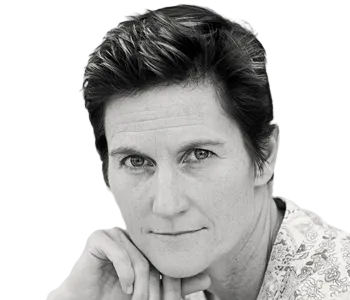
Nicole Howard
Nicole Howard, a professor of history at Eastern Oregon University, received her Ph.D. in the History and Philosophy of Science from Indiana University. Her work examines the relationship between print culture and Renaissance science. Dr. Howard’s first book was The Book: The Life Story of a Technology, a brief history of books in western culture. A sabbatical five years ago gave her time to develop her ideas around scientific communication in the 16th and 17th centuries, and that research gave rise to her most recent book, Loath to Print.
Pull this thread
Early scientists were often reluctant to put their new work into print.
Know something the rest of us don't?
Most threads on Rorotoko begin with our invitation. Any thread can begin with a proposal: you write it with the same prompts every thread answers, and we review it.
Propose a thread →