
Kyle Parry
A Theory of Assembly
How have new technologies transformed the way we communicate? It’s a question we have to ask in the age of smartphones and the internet and as ever more disruptive expressive tools enter our lives.
One ready-at-hand answer is a play on the old NASA mantra: digital and social media have made cultural exchange faster and cheaper. These new technologies might have even helped make communication better in some respects—more inclusive, enjoyable, effective—although it’s also become clear, between deep fakes, trolling, rampant data collection, e-waste dumps, and all manner of other contemporary horrors, that there’s at least as much bad out there as good.
Another answer to the how-has-it-all-changed question is more involved.
Yes, the era of posts and likes and comments is an era of glut and speed, but it’s also—speaking from a US perspective—an era of remarkable, and remarkably fraught, cultural invention. Our feeds and “For You” pages are stages for ideas and interactions we’d never quite imagined; they also hook us into ever more elaborate forms of extraction. Impassioned innovation with these new tools has made possible movements like Black Lives Matter.
Radical uses of new media have also coincided with intensification in opposite directions: memes, hashtags, and other novel media forms amplifying causes of hate and regression.
A Theory of Assembly takes this second way of looking at the changes over the last several decades of (mostly US) digital art and culture and turns it up to eleven. Let’s not just focus on so-called “high” or “low” culture; let’s think across all registers. Let’s not just look at one or two but as many mediums and genres as we can. Let’s not just stick with the concepts we’ve inherited; let’s be willing to invent new ones.
Let’s not only focus on what seems positive and progressive; let’s consider the whole big mess of possibilities.
The argument that comes out of this research is surprising. We know that a huge amount of digital culture involves that quintessentially human desire to share a story: to trace characters through events. But there’s an extraordinary amount that doesn’t. This book is obsessed with giving these non-narrative versions of electronic expression their due, and it zeroes in on one astonishingly variable example: assembly.
Assembly is active in all kinds of places, from satirical lists to social movement hashtags to the entire history of internet memes.
The thing that unites these heterogeneous and not always positive instances of assembly is an emphasis on expressive relationships. When you assemble, you put different media elements together—words, data, sounds, images, objects, even humans and nonhumans—and you do so in a way that registers as meaningful: a disturbing comparison, a provocative combination, a humorous collection, an overwhelming accumulation. Somehow, it’s the arrangement itself that does the talking.
With chapters on art, memes, disaster, and slow and structural violence, the book argues that some of the most pressing questions of our “moment,” including the best and worst of how social media have transformed politics, can’t be properly answered without addressing the workings and implications of this fundamentally relational cultural form.
Editor: Judi Pajo

A Theory of Assembly
Kyle Parry A Theory of Assembly: From Museums to Memes University of Minnesota Press 344 pages, 5 1/2 x 8 1/2 inches ISBN 9781517913168
Available here →August 31, 2023
20230830-parry-kyle-on-book-theory-assembly-from-museums-to-memes-1-1-1
In a nutshell
The rest of this thread
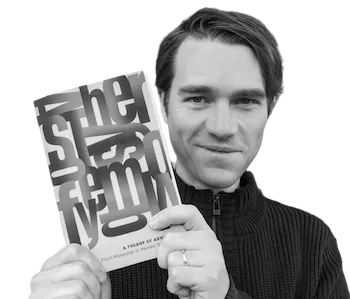
Kyle Parry
Kyle Parry is Associate Professor of History of Art and Visual Culture at the University of California, Santa Cruz. He is coeditor of Ubiquity: Photography’s Multitudes (Leuven, 2021) and author of A Theory of Assembly: From Museums to Memes (Minnesota, 2023), which is featured in his Rorotoko interview. He recently published an article for Decolonizing Data (Routledge, 2023) called “Metadata Is Not Data About Data” and is now developing a new project on generativity.
Pull this thread
What social media did to politics cannot be understood without assembly, the form where arrangement itself is the utterance.
Know something the rest of us don't?
Most threads on Rorotoko begin with our invitation. Any thread can begin with a proposal: you write it with the same prompts every thread answers, and we review it.
Propose a thread →