
Kyle Parry
A Theory of Assembly
There are a bunch of really good books that take up the “What’s changed?” question at a big scale. When I first started working on this project, I didn’t think that was what I was doing. I thought I was exploring how digital archives can help us respond to disasters in novel and helpful ways.
The turning point came in 2019. I was teaching an introductory course on digital visual culture that I thought of as a Trojan Horse: get students in the door with the promise of memes and leave them with a whole new armature for critical and humanistic thinking. This time I taught the course, however, something new was in the air.
When I would put memes and other digital ephemera on the big screen, the auditorium would fill with absurdly loud laughter. Students’ attempts to explain their attachments to this stuff defied their vocabulary and my own, even the vocabulary in the insightful texts we read. Meanwhile, the world of rapid and often perilous digital expression continued to grow and change outside the classroom walls.
This experience with this great group of students gave me the courage to adopt a much wider optic. I had published an article on the ways artists and citizens alike responded to Hurricane Katrina with highly creative uses of compilation and configuration. I had considered everything from a viral juxtaposition to a Kara Walker installation to a participatory online memory bank, and I had drawn some initial connections with that long-established form of assembly, popular gathering. I went into that summer asking myself what it might mean to apply my most adventurous ideas about cultural forms to any digital context whatsoever, even to art and culture before the digital.
A Theory of Assembly is the fruit of these explorations. The book starts by laying out what I mean by assembly: it’s both a type of thing and something people do, often individually but also often in very distributed fashion, as with the recent (watch as I age this interview!) Barbenheimer meme. The book then examines the powers and perils of assembly across various aesthetic, activist, everyday, and journalistic spheres.
Rather than work through case studies, as is (understandably) common in the humanities, I trace patterns of form and effect across a purposely large and even unwieldy mix of examples. I also rely on an eclectic mix of lenses and subfields, from intersectionality and assemblage theory to performativity and science studies. (I see this as part of an internet-specific interpretive practice I dub “plural reading.”)
My questions are both critical and analytical. How can artists and museums best seize on the aesthetic potential in analogy and arrangement? How is assembly different from well-known combinatorial forms like montage and collage? What can “assembly-infused” maps and practices of “memetic drip” contribute to the expressive demands of climate justice? How do certain pernicious uses of digital assembly, especially those that target social justice movements, manage to succeed, and what can be done in turn?
Editor: Judi Pajo

A Theory of Assembly
Kyle Parry A Theory of Assembly: From Museums to Memes University of Minnesota Press 344 pages, 5 1/2 x 8 1/2 inches ISBN 9781517913168
Available here →August 31, 2023
20230830-parry-kyle-on-book-theory-assembly-from-museums-to-memes-2-1
The wide angle
The rest of this thread
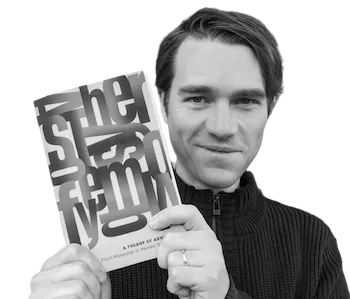
Kyle Parry
Kyle Parry is Associate Professor of History of Art and Visual Culture at the University of California, Santa Cruz. He is coeditor of Ubiquity: Photography’s Multitudes (Leuven, 2021) and author of A Theory of Assembly: From Museums to Memes (Minnesota, 2023), which is featured in his Rorotoko interview. He recently published an article for Decolonizing Data (Routledge, 2023) called “Metadata Is Not Data About Data” and is now developing a new project on generativity.
Pull this thread
In much of digital culture, the arrangement of elements is itself the message.
Know something the rest of us don't?
Most threads on Rorotoko begin with our invitation. Any thread can begin with a proposal: you write it with the same prompts every thread answers, and we review it.
Propose a thread →