
Kyle Parry
A Theory of Assembly
I love the question about what I’d want a “just-browsing” reader to encounter first, because it’s imagining a reader who hasn’t yet gotten into the book’s “story.” They’re just trying to get a feel for what this author has taken the time to gather: the images and ideas, perspectives and preoccupations poured into the book.I’d pick an assembly: four images that appear together in the color plates (plates 6–9). The one at the top left is a dam spewing white water.
The dam is labeled “I am not racist” and the gushing water is labeled “But.” This is a classic instance of an “image meme” that presents a satirical commentary through a simple act of visual-verbal arrangement. It’s also a prime example of an increasingly intuitive genre of internet culture I hazard calling “expressive folksonomy”: a kind of creative annotation of the world by way of cleverly assembled fragments, labels, gestures, and (quite often) visual metaphors.In the other corners of the two-page spread, you see projects that couldn’t be more different: Hieronymus Bosch’s hallucinatory 15th century work The Garden of Earthly Delights; the border-crossing balloons of Postcommodity’s Repellent Fence; and the irreverent GIFs that make up the pandemic-era project Well Now WTF?
If someone were to land on these pages, they would find themselves in the middle of the book’s driving questions. What happens when we put seemingly impossibly different communicative elements into spatial proximity? What hidden affinities exist across digital and non-digital uses of expressive gathering? For whom can the arts of assembly matter most? In this case, the choices of what to include—the particular “constituents” of this assembly—are not so obvious.
Why should an enigmatic triptych share the stage with a pixilated meme? Why should an author be allowed to compare a GIF-laden website with a wind-blown installation? I can imagine some readers feeling skeptical, which is entirely understandable. I can also imagine others doing what assemblies often ask us to do, which is to generate unexpected associations: the imperiled gathering in the Bosch triptych with the denial of gathering in Well Now WTF?; the variations on tension and division across all four images; and plenty of other connections and contrasts I haven’t anticipated.
With over 80 images, the book is filled with these kinds of provocative and, I hope, “generative” assemblies. In browsing the other chapters, you’d find yourself encountering some key facets of what I’m trying to show and do. For instance, you’d encounter the considerable ambivalence of assembly, as when I juxtapose an account that regularly and “memetically” mocks progressive climate policies with the meme-savvy TikTok account of content creators who favor intersectional environmentalism.
You’d also see my insistence on thinking across scales and methods, as when a freeze frame of a trans athlete’s Instagram profile gives way to a flow chart from a Facebook patent for a way of assessing and selecting content based on users’ perceived personality characteristics. In the world of this book, its assemblies all the way down.I often read conclusions to books that explain how something disturbingly relevant happened in the lead-up to publication.
This was true in my case.A few weeks before I received feedback from peer reviewers, January 6th happened. One of the reviewers recommended I make it the focal point of the closing chapter. I was initially hesitant, because it felt too close, and because I didn’t feel like I could muster the nuance such an event requires. But I soon realized just how many of the book’s threads came together that day. I won’t try to summarize my analysis here, but I think we can learn a lot about that event and the dynamics that surround January 6th by using the lens of digital assembly.
We can, for instance, see its mixture of physical and expressive gathering, we can confront the way its organizers relied on forms of “memetic” assembly small and large, and we can ask what larger, longer-existing, pernicious assemblies (and, of course, narratives) its participants mobilized and expanded.Rather than end on that note, though, A Theory of Assembly closes by invoking the words of people who call for what I think of as reparative assembly: ways of gathering and rearranging the world through whatever expressive methods might help support the promise of mutual and equitable thriving. I’m especially fond of Toni Morrison’s call to creatively endure as we strive after radical and restorative change.
“We speak, we write, we do language,” Morrison writes. “That is how civilizations heal. I know the world is bruised and bleeding, and though it is important not to ignore its pain, it is also critical to refuse to succumb to its malevolence. Like failure, chaos contains information that can lead to knowledge—even wisdom. Like art.”
Editor: Judi Pajo

A Theory of Assembly
Kyle Parry A Theory of Assembly: From Museums to Memes University of Minnesota Press344 pages, 5 1/2 x 8 1/2 inches ISBN 9781517913168
Available here →August 31, 2023
20230830-parry-kyle-on-book-theory-assembly-from-museums-to-memes-3-1
A close-up
The rest of this thread
Kyle Parry
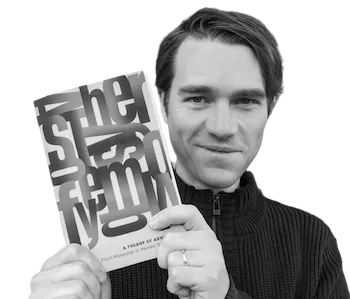
Kyle Parry is Associate Professor of History of Art and Visual Culture at the University of California, Santa Cruz. He is coeditor of Ubiquity: Photography’s Multitudes (Leuven, 2021) and author of A Theory of Assembly: From Museums to Memes (Minnesota, 2023), which is featured in his Rorotoko interview. He recently published an article for Decolonizing Data (Routledge, 2023) called “Metadata Is Not Data About Data” and is now developing a new project on generativity.
Pull this thread
What social media did to politics cannot be understood without assembly, the form where arrangement itself is the utterance.
Know something the rest of us don't?
Most threads on Rorotoko begin with our invitation. Any thread can begin with a proposal: you write it with the same prompts every thread answers, and we review it.
Propose a thread →