
Antone Martinho-Truswell
The Parrot in the Mirror
My book is called The Parrot in the Mirror: How Evolving to Be Like Birds Makes Us Human. This book initially grew out of a single conversation as I was sitting around the cafe of the Zoology faculty at Oxford, chatting with my post-doctoral supervisor, Alex Kacelnik. He worked with birds, and I worked with birds, and everyone around us worked with birds.
We were the Zoology department, and there are other people working with other animals in the Zoology department, but there are a whole lot of people who are doing research with birds, and I said, isn’t it funny, we are one of the best Zoology departments in the world, this should tell us the way the winds of the field are blowing, everyone’s working with birds, we’re mammals. Why? And Alex, who always has the answer, said to me, well, they are diurnal, they’re awake when we’re awake. Most mammals, almost all mammals, except for the megafauna that are difficult to work with anyway, are nocturnal, and that means either working in the dark or working at night.
So, if you’ve got a question that you could test in any model organism, and you have the choice, of course you would prefer to work with a species of bird, because it’s just much more civilized for a human work schedule. And that made a lot of sense. And I tucked that away, and thought, well, isn’t that a nice, sort of Kiplingesque just-so story.
Then, years later, I was thinking about writing a different book (one I still have not written), and I suddenly had the idea, actually, there’s quite a lot that we share with birds. And over time and over further research of my own, I had come to be aware of many more and deeper connections that we have in terms of behavior and life history with birds and with crown group birds, corvids and parrots, more specifically. There are a couple of really human traits, things that we think of as particularly defining of what we are that we don’t share with any mammals, and we do share with birds. And as I was thinking about these with my evolutionary biologist’s hat on, I thought, well, actually, these things are interlocking.
The reason that we have a number of these different traits is that they interplay with each other and reinforce each other. It’s not surprising, then, that when you start to find one or two of these traits in another group of animals, you would find all of them because they interlock and reinforce each other.
And so, first of all, this is an object lesson in convergent evolution. For a general reader who hasn’t confronted that idea before, this is the idea that there are certain constraints, challenges, environments that species face that cause them to evolve to do very similar things.
A classic example is that birds and bats both fly. Their common ancestor did not fly, but they both have good reason to fly and have evolved flying separately. They’re exploiting an ecological niche that other animals weren’t exploiting and doing very well as a result of it. So convergent evolution is the idea that totally unrelated species can end up looking quite similar, not because they are closely related, but because they have shared challenges that they both faced in their separate evolutionary histories, and evolved similar solutions.
This is a very complicated version of convergence that shows how two very distant groups, mammals and birds, diverged 300 million years ago, how we have ended up with humans as a group of mammals doing a lot of behaviors that look more like bird. The book is then also a deep investigation of this cluster of unusual, highly complex behaviors that we think of as particularly human, and why they come together as a package, whether it be in humans or birds.
Editor: Judi Pajo

The Parrot in the Mirror
Antone Martinho-Truswell The Parrot in the Mirror: How Evolving to be Like Birds Makes Us Human Oxford University Press 224 pages, 8 1/5 x 5 3/8 inches ISBN 9780198846109
Available here →September 7, 2023
20230907-martinho-antone-on-book-parrot-mirror-how-evolving-to-be-like-birds-makes-us-human-1-1-1
In a nutshell
The rest of this thread
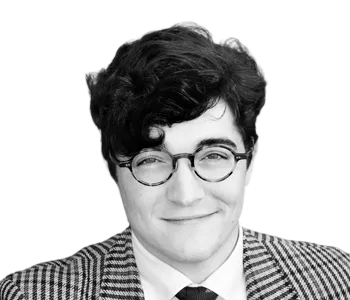
Antone Martinho-Truswell
Antone Martinho-Truswell is a behavioral ecologist whose work focuses on animal minds and learning, especially in birds and cephalopods, intelligent species whose evolutionary history differs dramatically from that of mammals. He has been published in Science, Proceedings of the Royal Society B, Current Biology, and elsewhere, and his work has been covered in The New York Times, The Atlantic, The Times, and The New Scientist, as well as on ABC and BBC Radio. He has also written on longstanding questions in biology, animal behavior, and human society for Aeon and the BBC. Martinho-Truswell is currently Dean of Graduate House at St Paul’s College, Sydney, and was previously Fellow in Biology at Magdalen College, Oxford.
Pull this thread
The traits we treat as uniquely human are shared not with other mammals but with birds.
Know something the rest of us don't?
Most threads on Rorotoko begin with our invitation. Any thread can begin with a proposal: you write it with the same prompts every thread answers, and we review it.
Propose a thread →