
Antone Martinho-Truswell
The Parrot in the Mirror
If you think about some of the things that really define what it is to be human, the first one you’re going to go to is our intelligence. We have very high levels of cognition, we are capable of very complex, innovative behavior. Lots of animals are capable of complex behavior, but being able to invent new behaviors within your lifetime, not relying on what we might call instinct, or genetic programming to solve your problems, being able to invent something new is a huge advantage. It means that you can change behavior mid-lifetime rather than waiting for a genetic mutation to allow you to change, and that is obviously the most defining feature of human behavior. That’s why we live in buildings and no other animals do.
But then there are a few other behaviors that really are defining of humanity. Language is very defining of humanity, and our language is very different from other mammals. That’s probably the one that’s most controversial when you start to talk about birds.
Things like bird song are used as models for language. But there’s a lot of debate over whether we can call them a sort of analog for language.
But then there are others that are even more similar. Humans tend to form long-term monogamous pairings, and have both parents involved in rearing children. That’s extremely uncommon amongst mammals. The whole benefit of pregnancy is that you don’t have to do that.
A mother can look after an unborn baby for a number of months, feed it through the placenta, and it’s much easier than looking after a nest full of eggs, it’s much more contained, it’s much more protected. She doesn’t need help. So monogamy and biparental care is uncommon among mammals. But it’s something that humans do, and it’s something that birds do. Most birds form monogamous pairings. To the extent that there are birds that do polygamy or polygyny or polyandry, or free-for-all-mating which exists in birds like wild turkeys; they are exceptions, they are examples that we point out as birds behaving a little bit differently.
But nearly all parrots are monogamous, most crows, most other corvids are monogamous, quite a lot of song birds are, or they are at least monogamous from season to season.
And then, one of the big benefits of laying eggs is that both parents can pretty much contribute equally to sitting on eggs or provisioning offspring; if one parent is sitting on the eggs, the other one can bring food and participate in that way.
Some species like pigeons swap off so they’ll do mom on the eggs in the morning, dad on the eggs in the afternoon, or vice versa. This is a very common behavior in birds, forming these long-term pairs, either of lifelong monogamy like in swans, or serial monogamy like in a number of songbirds, and definitely that two-parent care of children, which is almost essential if you have a completely helpless baby like a newly-hatched bird. But for something like a giraffe where it’s born and sort of wobbles to its legs and starts nursing and eating its own supplemental food, you really don’t need two parents to look after a baby giraffe, so you don’t.
Evolution has pushed the males to seek as many mating opportunities as possible and take advantage of their own lack of necessity in rearing children. Another thing that we have in common is how long we live. This is one of the slightly more complicated ideas in the book, the difference between K-selection and r-selection. Very broadly, r-selection is live-fast, die-young; you have as many offspring as you can, you don’t particularly look after them very well, you don’t live very long, so you invest as much as possible into big broods early on.
Something like salmon are a very good example of that, where they breed once, they have thousands of eggs, and then the parents actually die, and don’t get to reproduce again. And we see that in a lot of small mammals. If you’re a mouse, your chances of living into next year are pretty bad, regardless of how old you are because of predation and the dangers of being a small mammal, so mice tend to invest in large litters, they look after them briefly, and then they are on their own.
That’s not the case with birds. Birds can fly. So unlike, say, a mouse, a bird of an equivalent size is not at risk of being predated very easily in any given year. A sparrow, for example, if it’s in good health, can pretty well rely on having another chance to mate next year and the following year, and the year after that. So evolutionarily, there’s pretty strong selection against aging and against degenerative disease, because you have a good chance at more offspring next year.
In a mouse, there’s not very strong selection against things like aging and degenerative disease, because your chances of making it to the next year are pretty bad to begin with. So over time we see that birds, because they have the absolute silver bullet that is flight, not only do they live longer because predators can’t catch them, but then that drives being able to live longer, because each year is worth more to them. You end up with very, very long lifespans in birds of a similar size to mammals with very short lifespans. Something like a house sparrow that’s about the same size or even a little lighter than a common mouse, can live five to ten times as long as a mouse. It’s particularly pronounced at the small end, but we also see it at the big end.
The longest living bird for which we have two verified documents attesting age is a Major Mitchell’s cockatoo named Cookie, who lived at the Chicago Zoo, who lived to be 83. By the time you get to mammals that have ever lived to be 83, you are down to humans and a short list of absolutely gargantuan mammals, huge things like whales and elephants. Mammals do not live anywhere near as long as birds of the same size, and often it’s a factor of two or three. And the exception is humans. When you look at the five longest-lived mammals, it’s four whales and us.
Now, we can’t fly, or at least we couldn’t fly when we first emerged in the Rift Valley. We can fly now thanks to our big brains and the technology they’ve created. But our big brains are the silver bullet that we had to make us very strongly K-selected, that is, selected for a long life, slow reproduction, looking after your offspring, taking your time, and where each year has a high reproductive value for you. That one, I think, is really the tail that wags the dog on a lot of the similarities. Once you are living a very long time, then, it is very important to have the ability to innovate behavior, because you’re going to face a lot of changing circumstances over the course of a long life.
So, birds start with flight, they end up living a long time for that reason, and then they end up smart. For their size birds have very dense brains. They do have small heads – they need to have small heads so that they can fly, but in some cases their neurons are less than a third of the size of equivalent mammal neurons, packed much more densely in the brain, and with fewer glial and other support cells. Their computation power in that small area is very, very high. That is in response to how long they live and the challenges that they have to face, challenges like forming strong pair bonds that last a long time, and having this sort of complicated social life where you form strong pair bonds, you have multiple children, you have communication with other members of your species.
All of that relies to some degree on having the brain power to do it. So, you start to see how these different behaviors pull each other in.
Most important to our fundamental similarity is that once you are that intelligent, you need to have a really long developmental time in order to build that brain. That is why we see that in the most intelligent birds, like parrots, like songbirds, like other neoaves, the group of basically all birds except for fowl and ratites. In the neoaves, we tend to see birds as being altricial. They hatch out pink and naked and blind in the nest, and need to be fed and looked after for months on end. And that’s partly because the egg does not have enough nutrients for that bird to develop all the way to the point that it can look after itself like a baby chicken where it hatches out, fluffs its feathers, and then can follow mum.
This very long development time then drives more necessity of having two parents to look after it, drives more necessity of forming those monogamous pairs, so that you have a partner to help you look after the offspring. This is sounding a lot like human child rearing, as you can imagine. We’re in a very similar position. We don’t have the constraint of the egg. We have the constraint of the hips. Other mammals can grow their baby as big as they need to for it to be able to look after itself, like an elephant, because they have big, wide, square hips, because they live on all fours.
We stand bolt upright with a narrow set of hips, which means we have to birth our baby long before it is really able to do anything by itself. We produce the most underdeveloped baby of any placental mammal and that has driven why we need to form strong, monogamous pair bonding, and biparental care of children. Even our closest relatives, like chimpanzees, have a relatively easy birthing process, and are pretty much looked after by the mother.
The males are not really participating in child rearing. So, you have this constellation of behaviors, all of them very unusual for mammals, forming a kind of evolutionary gravity well where each one draws in the others. And birds have fallen into the same gravity well, for different reasons. But once you’ve fallen into one, the others become necessities to support that adaptation.
This is why it’s a good example of convergent evolution.
It’s a meta challenge. In order to support some of these unusual and pretty complicated behaviors – whether that’s high intelligence, whether that’s flight, whether that’s language, and strong interspecific communication – all of these are sufficiently complicated that you need other adaptations to do them. You pull in the others in order to do it, and you end up with two groups totally unrelated, that start to look pretty similar in their underlying behavior.
Editor: Judi Pajo

The Parrot in the Mirror
Antone Martinho-Truswell The Parrot in the Mirror: How Evolving to be Like Birds Makes Us Human Oxford University Press 224 pages, 8 1/5 x 5 3/8 inches ISBN 9780198846109
Available here →September 7, 2023
20230907-martinho-antone-on-book-parrot-mirror-how-evolving-to-be-like-birds-makes-us-human-2-1
The wide angle
The rest of this thread
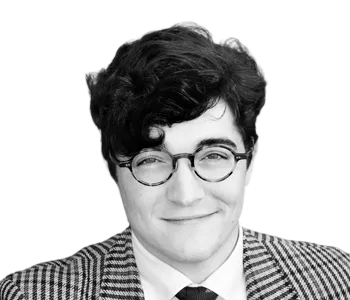
Antone Martinho-Truswell
Antone Martinho-Truswell is a behavioral ecologist whose work focuses on animal minds and learning, especially in birds and cephalopods, intelligent species whose evolutionary history differs dramatically from that of mammals. He has been published in Science, Proceedings of the Royal Society B, Current Biology, and elsewhere, and his work has been covered in The New York Times, The Atlantic, The Times, and The New Scientist, as well as on ABC and BBC Radio. He has also written on longstanding questions in biology, animal behavior, and human society for Aeon and the BBC. Martinho-Truswell is currently Dean of Graduate House at St Paul’s College, Sydney, and was previously Fellow in Biology at Magdalen College, Oxford.
Pull this thread
The traits we treat as definingly human are shared with birds, especially parrots and corvids.
Know something the rest of us don't?
Most threads on Rorotoko begin with our invitation. Any thread can begin with a proposal: you write it with the same prompts every thread answers, and we review it.
Propose a thread →