
Antone Martinho-Truswell
The Parrot in the Mirror
Do you touch on the nature-nurture debate in your book?
In this book, I’m mainly talking about nature, particularly when I’m getting into topics such as monogamous pairings, and biparental care of children, and that kind of thing.
I’m talking about what might be thought of as a biological default. Obviously, not all humans conform to that default. Thanks to what we might call nurture, that is, the circumstances that you find yourself in, things like the modern welfare state and subsidized childcare, we now have an environment, nurture, that allows humans to behave in ways that are different from our biological default, the evolutionary apparatus that we have in order to deal with living in a tribe in the Rift Valley as hunters and gatherers. But that’s the genetic equipment that we still come with as standard and it’s in response to the way that we reproduce and how intelligent we are.
There’s an interesting case about cheating of all kinds, both cheating in the relationship sense, and cheating in the sense of cheating at a game, taking unfair advantage. I talk a little bit about that in the chapter on family life in the book. We do see occasions of cheating in both birds and in humans. And I talk about two different versions of it, but both of them are a tweak on that biological default.
There is the human example of being unfaithful in a relationship. There are some interesting evolutionary theories on why that happens.
For example, if you imagine yourself as a completely, ruthless evolutionary maximizer – and we don’t do that in our conscious brain but evolution will exploit little tendencies in that way – if you want to have the maximum number of eventual descendants, not just your children, but total descendants in the future, you want your sons to be real philanderers because you want them to have lots and lots of mating opportunities so that your genes get spread as far and wide as possible.
But you want those children looked after by attendant fathers because they end up doing better; they’re more likely to survive when there is more food around because of an additional caring parent. So, you have this sort of war between the sexes from an evolutionary perspective in that a female would want to reproduce with a male that has genes for philandering, so that her sons can go off and be effective philanderers and produce lots and lots of offspring. But she wants those children fathered by a good and faithful attendant father who will look after them and provide for them.
So you have a very obvious case of why cheating might happen there, of why the female might cheat with a philandering male but form a long-term pair with a faithful male so that she gets good, attentive fathering from the long-term partner and efficient gene spreading from the extraneous partner. And then on the male side, you have the same thing. To the extent that you can produce offspring that you don’t have to look after, that’s evolutionarily advantageous to your genes.
So if you can leave children in other people’s metaphorical nests, that are then raised by other attendant fathers, and you don’t have to deal with them, you have better reproductive fitness. So both sexes end up with this impetus. But that only works if there is an ecosystem of faithful pairings to support it. If everybody starts cheating, the system breaks down, you get no benefit from leaving a potential son in somebody else’s family, because it won’t be particularly well-looked after and might not survive. And you lose the benefit of cheating.
So cheating only prospers when it’s rare. You have a very analogous situation happening with brood parasites in birds. You couldn’t design a better analogy than we have in birds like the cuckoo, which has given its name to the cuckhold. The cuckoo lays its eggs in a different species’ nest, and it relies on the same effect as a cheating human male. The cuckoo is trying to take advantage of a good and attentive pair of parents so that it can have good, well-taken care of offspring, and it doesn’t have to take care of any of those offspring. The birds that are being cuckolded, that are having a foreign egg laid in their nest, look after it, look after that baby, and then it goes on to do the same thing again.
However, if you have too many cuckoos in an area to the point that any given species is having most of their eggs turning out to be cuckoo eggs, then they might over time have an evolutionary pressure to stop looking after those eggs. It’s not their genetics anyway, so whether they look after the eggs or not doesn’t really benefit their offspring and their number of offspring. And so over evolutionary time you end up with them becoming less and less attentive parents, and the cuckoos get less and less benefit from their brood parasitism. So again, being a cuckoo relies on the rarity of being a bad parent in the birds that you’re taking advantage of. It’s a very analogous situation. And both of them are an example of how you take advantage of the behavior that already exists as the default.
Do birds develop culture?
One example would be birdsong. In some songbird species, it is the case that the birds learn their song from their parents, usually a male from his father. And what that means is that you do have regional variation, because just as genes evolve and diverge from each other over time, so do memes – and this is the original use of “meme” which is an information unit of reproduction rather than a genetic unit of reproduction – if two brother birds start with the exact same song and then move to opposite sides of a mountain and have descendants, those songs will diverge simply because they don’t check against each other every so often, and we do see that the same species will have slightly different songs in different regions. And that is something we can measure.
We also see culture, for example, with tool use, because we can compare the physical tools.
In New Caledonia, the New Caledonian crows are well-known for using different varieties of tools to aid them in hunting for grubs. On different regions of the island we see some use sticks, some use pandanus leaves, some that cut the pandanus leaves in a certain way, and we start to get the sense of variances of behavior in different sub-populations, which seem to be learned behavior rather than genetically determined.
We see that in mammals as well. I think the example that I gave in the book is that there is a behavior of using two stones to crack open nuts in chimpanzees that seems to be moving through populations as we speak. It was first noticed in one group, and then it has spread to nearby groups, but it’s not all chimpanzees yet. We definitely see animal culture, particularly in intelligent species that can learn from one another.
And again, we would expect to. If a species can learn from other members of the species, we don’t expect new knowledge to be everywhere all at once. We expect it to originate somewhere, and if it’s useful, pass from one to another. And we see that in captive groups as well. Often some of the most frustrating things that animals will do in captivity, like learning to break out, or learning to predict their human caretakers’ behaviors in unhelpful ways, starts with one and then grows to the population.
People who are not ready to accept that we evolved from apes and that we’re related to chimpanzees, be it for religious or other reasons, do you think that your argument that we’re evolving like birds have evolved, and that we’re related to parrots, could have them reconsider evolution?
Well, I should say, we’re not particularly related to parrots. We are fairly certain that we are distantly related to all life on Earth, but parrots are not especially close – further certainly than all mammals. We are convergently evolving to share a lot of behaviors with them. But the underlying point is actually that they are quite distantly related to us. We are most and always related to chimpanzees and other apes.
My hope would be that if someone like that reads this book, they will see an elegance and neatness to how it all fits together.
It’s nice to have answers that make sense, at a level that one can understand, and that answer deep questions to things that look a bit weird. Look at human lifespans, which even before modern medicine, were unduly long for our size. Look at our dogs, that’s probably the one that comes home to roost for most people. A human can probably look after about six or seven generations of dogs in one human life. We are not that much bigger than them, we are not that different from them in terms of bodies; a lot is fairly similar. So that is odd that we live so long. It’s odd that we stand upright and that we don’t have big teeth, and it’s sort of odd that we talk rather than communicate with physical gestures that chimpanzees use. We look very different and yet our body plan is very obviously mammal – we have hair, we are warm-blooded. If you cut open a human and a pig, there are a lot of interchangeable parts as medicine understands all too well.
What I’m hoping is that the explanation of why we’ve ended up this way against all expectation of our biological background is somewhat convincing that the forces of selection do seem to work. They are explanatory in a useful way. And I think the most convincing thing in any argument is if you show that it works at explaining the world, then hopefully that will convince people.
I’ve never found the religious problem with evolutionary biology. I’m a practicing Catholic myself. If it helps anybody get over the line on understanding that this doesn’t have to be a conflict, I’ve got my AMDG on the dedication page. I’ve never seen that conflict because a world that operates according to logical principles seems pretty divine to me.
The universe isn’t chaos, but has rules and laws that dictate how it works, including the logical law that is selection. Selection is simply the fact that if you take away what’s not working, and let what is working, continue and reproduce, that will define the next generation, that’s a very neat logical fact. It’s not even a biological fact. And by showing how often it worked, and how they interlock, and how complexity does arise from that very simple process, which I hope I’m explaining somewhat in this book, I hope that is convincing to people who say, well, I don’t have enough evidence.
Because I think the evidence is manifold in ourselves. We can see that in our difference from chimpanzees, we see the effects of evolutionary forces.
Isn’t flying a really big difference between birds and humans? What would you say to people who are skeptical about humans being compared to birds, when humans don’t fly like birds do?
Flight is partly an artifact of how old birds are. Birds arise before modern mammals do. Birds are dinosaurs, they are not descended from dinosaurs, they are what is left of dinosaurs. By virtue of being what is left of dinosaurs, we know that there were lots of big giant dinosaurs that could not have possibly flied.
Those are the dinosaurs that everybody is interested in. The End-Cretaceous Extinction event, that is the comet that slammed into Mexico and killed the dinosaurs, which every attentive elementary school student knows and loves to talk about, that was a big selective event that humans and by extension mammals didn’t undergo. We came after that. Mammals had their origin whilst the big dinosaurs were still around but really didn’t start to diversify and get bigger until after the Cretaceous extinction. So dinosaurs have this big selective event where everything heavy dies because it starves. It has nothing to do with getting light enough for flight. It has nothing to do with flight at all. It has to do entirely with suddenly there’s no food, and if you’re small you can scavenge enough food to survive, and if you’re big you can’t. This is a good example of the logical nature of evolution.
That’s not a particularly biological fact. Anything that cannot get enough resources to operate stops operating and things that do keep going. So you have a big sieve that comes through in the form of starvation, and you end up with all of the dinosaurs that survive being tiny, light things who already have feathers at that point. It so happens that that combination of external forces – they had feathers for insulation and color, for all the reasons we have hair, not to fly – so you have feathers existing already for other reasons, and you’re light, you can kind of glide and take advantage of being able to stay aloft a bit longer. And that’s just such a huge evolutionary benefit, being able to have a new dimension that you can escape into from predators. I call it a silver bullet. I think it’s hard to overstate what an enormous benefit it is to be able to run away from a predator in a direction the predator cannot physically go.
That combination of factors ends up with flying birds.
Mammals don’t face that same pair of circumstances. Mammals have hair instead of feathers. Hair is not as good for flying, as we can see from the fact that the only mammals that are able to fly, which are bats, do it with skin stretched in a wing rather than a wing formed of hair. And then they don’t have the same selective event of eliminating the big animals. Rather they explode into the gaps left by the big animals once the food starts to grow again. You have the reptilian megafauna all knocked out by the end-Cretaceous extinction event and there are big ecological niches available to grow into if you’re a mammal. And unlike the birds – birds had all of the genetics for being big selected out of them all at once – the mammals are developing their genetic diversity into a world with no big animals, so they become bigger to take advantage of those niches.
But the usefulness of flight is still there.
That’s why we end up with bats, why we end up with sugar gliders, why we end up wanting to fly in balloons. I don’t want to make too much of the cute fact that we ended up flying with machines. We’ve done that not for evolutionary reasons, but for economic and fun and military reasons. But our silver bullet was the brain power. One of the big threads in this book is that all of these traits are cases of extremes. You have to be an extreme animal to be living this way, and you need something really out of the ordinary to kick off this sort of chain reaction. Birds have flight like we have big brains. Once you’re on the road, you pick up the other traits.
Does that mean we can also do useful comparisons between humans and other animals that are extreme in other ways?
I think, where you find animals going to the extremes, you will find commonality. One that’s been very relevant in the last few years is the case of bats and birds, which obviously have the shared unusual extreme behavior of flying. They also have the shared unusual extreme behavior of giving us our worst diseases, and that is related to the fact that they’re flying. Again, it’s a story of extremes. If you fly, you exert enormous amounts of energy to fly. It’s a very highly energetic behavior. It produces a lot of respiration byproducts in your muscles that need to be flushed away just as part of your normal physiology in order to sustain flight.
And we think that one of the reasons that birds and bats are the sources of some of our worst communicable diseases in humans, is you have the twofold fact that, one, you have to have a really strong respiratory system in order to fly, you have to be able to turn over a lot of oxygen, so you’re able to sustain a very high level of viral load in your respiratory system, if you’re a bird or a bat. If you’re a virus that evolves in a bird or a bat, you reproduce at crazy rates because the environment that you normally reproduce in can sustain those crazy rates without dying.
So, when that virus gets into a human, it thinks it’s in bat or a bird that can breathe extremely well, and goes crazy on our lungs. And then, similarly, because they have this flushing of byproducts from their muscles constantly to allow them to fly, again the virus has to reproduce extremely quickly in order to overcome that in the bird or the bat. Humans don’t have that, so that we have a virus just absolutely reproducing out of control, producing very high viral loads, making us very sick. And this is the story of COVID, and it’s the story of avian flu, and that sort of thing. Extremes beget extremes and they beget similarity.
You talk about birds and humans as two lineages of radical intelligence. Now that the world is going crazy about artificial intelligence, I’m wondering what a biologist, a zoologist, an ornithologist has to say about artificial intelligence? Can we learn something about artificial intelligence by knowing more about bird intelligence?
I think we can. With artificial intelligence, what we’re trying to do, as far as I can see from biologists’ perch – sorry for all bird puns, it’s an old habit – what I can see from where I am is that when we’re trying to create, say, a large language model, or any other algorithm that edits itself, that improves over time, becomes more and more adept at solving some problem over time, we’re not creating something that is like evolution, we are creating evolution, it’s the same thing.
As I said, natural selection or selection let’s call it, is not a biological force, it is a logical one. If you take away that which is not working, and leave that which is working to keep reproducing, that’s what you’re going to get more of. And you’re going to get iterations on that. Artificially intelligent models don’t reproduce as such because they can change themselves. They don’t have to have a mutation into a different body to change. They just edit their own code. But it amounts to the same thing in that the model runs through a problem. It gets it 90 percent right or it gets it 85 percent right, and it says the one that was 90 percent right is better. We’re going to iterate on that. You treat that like a generation, and in the next generation you’re looking at the offspring of that situation. You’ve excluded what didn’t work, and you’re keeping what did work, and you do that again and again and again. That is the process of evolution. That is precisely the process of evolution.
We’re iterating on something and using subtraction to make it better. In the case of an artificial intelligence model, the whole point is, we’re not going in there and adding new tactics. It’s doing selection on itself and choosing to reiterate on what worked, and simply eliminating what didn’t. So, I don’t look at it from the perspective of intelligence. I look at it from the perspective of selection in that what we’re creating is something that will develop like any other reproducing entity in nature, in that it will refine itself towards whatever goal maximizes its fitness, and its fitness is whatever we define for it. So, if we say getting an up-vote on ChatGPT, that is, a user saying that’s a useful answer, is a metric of your fitness, and the goal is to maximize that, well we now know how to calculate its fitness, and we know that it’s going to start climbing the hill of potentiality up to its local maximum of performance.
That’s the same thing as natural selection. And the programmers know this. They use evolutionary models to design artificial intelligence models. And it works very well. It also means we can and should expect the diversity of outcomes that we see in the natural world, in the artificial intelligence world, which is both encouraging and terrifying.
Do you have a favorite bird?
That’s like asking me if I have a favorite food in that it’s such a big part of my life. It’s hard to say only one. I love parrots because I think they provide one of the most interesting parallels with us, and as I talk about in the book, they were the closest shot that life on earth got to something like our intelligence before mammals came along.
And I think that’s absolutely fascinating. And of course, you know, they can talk, and they’re colorful, and there’s a lot to love in parrots. I love ducks. I’ve always loved ducks. I loved ducks as a child, and, you know, spent a lot of time feeding ducks with my grandparents, and by total happenstance I ended up doing most of my most important research with ducklings, and they’re delightful as well. And they are a lot of fun. But I’m always interested in learning about a new bird.
This is a book that’s mainly about birds. But I hope more than anything that it helps people to understand why we are the way we are, and why we are so unusual. Yes, we are a shaved ape living in glass boxes now, but it’s the very fact of how different we ended up from our closest relatives that made us able to live in such a different way. Language is hugely important to that. Our intelligence is hugely important to that, and our family life is hugely important to that. They’re totally different from our nearest surviving relatives. They’re probably pretty similar to our extinct relatives that we helped to eliminate, the other hominids.
I think there is a little bit of human pessimism that comes out in having an evolutionary worldview. This connects back to what you were talking about where some people don’t like the idea that we are “descended from chimpanzees.” We are not descended from chimpanzees, by the way, we share a common ancestor. But there’s a pessimism that comes into that, and people wanting to say, well, we’re just a beast like other beasts, and we should expect ourselves to behave that way. And actually, I think, no, we’re quite an uncommon beast.
We have a really specific set of very unusual traits that we ended up with, that make us very different, so different from other mammals that we behave like birds, and that’s not to say that we should treat ourselves like birds either. But by the forces of evolution we’re very, very different, and I think we can marvel at that. It’s very unlikely that we ended up this way. But we did. And I think that, I hope, comes through in the book as well. Birds are great and people should read more about birds.
Editor: Judi Pajo

The Parrot in the Mirror
Antone Martinho-Truswell The Parrot in the Mirror: How Evolving to be Like Birds Makes Us Human Oxford University Press 224 pages, 8 1/5 x 5 3/8 inches ISBN 9780198846109
Available here →September 7, 2023
20230907-martinho-antone-on-book-parrot-mirror-how-evolving-to-be-like-birds-makes-us-human-3-1
A close-up
The rest of this thread
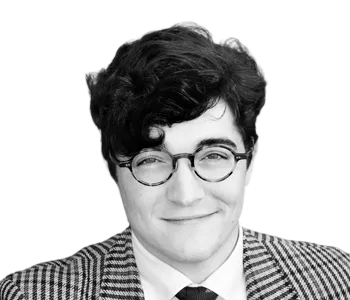
Antone Martinho-Truswell
Antone Martinho-Truswell is a behavioral ecologist whose work focuses on animal minds and learning, especially in birds and cephalopods, intelligent species whose evolutionary history differs dramatically from that of mammals. He has been published in Science, Proceedings of the Royal Society B, Current Biology, and elsewhere, and his work has been covered in The New York Times, The Atlantic, The Times, and The New Scientist, as well as on ABC and BBC Radio. He has also written on longstanding questions in biology, animal behavior, and human society for Aeon and the BBC. Martinho-Truswell is currently Dean of Graduate House at St Paul’s College, Sydney, and was previously Fellow in Biology at Magdalen College, Oxford.
Pull this thread
The traits we treat as definingly human are shared with birds, especially parrots and corvids.
Know something the rest of us don't?
Most threads on Rorotoko begin with our invitation. Any thread can begin with a proposal: you write it with the same prompts every thread answers, and we review it.
Propose a thread →