
Niko Kolodny
The Pecking Order
One way to situate the book is simply to see it as contributing to ongoing philosophical debates about particular social phenomena, such as the state, the workplace, discrimination, and corruption. Much of the book is devoted to democracy in particular.
Another way to situate the book is to see it in conversation with other contemporary political theories. As noted earlier, I argue that it is not enough to appeal to the fair distribution of goods, as liberals such as John Rawls do, or the protection of natural rights, as libertarians such as Robert Nozick do. Instead, we need to appeal to a third kind of value. In this, I take inspiration from, on the one hand, the revival of the republican and Kantian traditions, with their focus on domination and dependence, and on the other hand, relational egalitarianism, with its focus on the effects of the distribution of income and wealth on our social relations. I think that the value that animates these theories is what I call noninferiority. However, these other theories either don’t put it in quite the same terms or don’t offer definite articulations of what they have in mind. While I think that we are barking up the same tree, as it were, we have different conceptions of what’s up there.
I came to this book from teaching political philosophy to undergraduates at Berkeley. Doing so left me dissatisfied with the existing justifications of democracy. It seemed to me that part of what draws us to democracy is that it does something to put us into relations of equality with our fellow citizens. However, many proposed justifications seemed to look past this simple idea or to characterize it in the wrong terms. The result was then a two-part article on the justification of democracy. After writing it, I then saw, or thought I saw, an instance of a more general pattern. That more general pattern is what the book tries to substantiate.
Editor: Judi Pajo
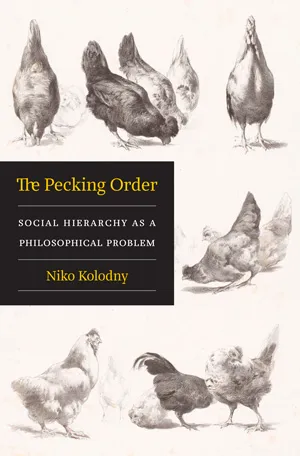
The Pecking Order
Niko Kolodny The Pecking Order: Social Hierarchy as a Philosophical Problem Harvard University Press 496 pages, 6 1/8 x 9 1/4 inches ISBN 978 0674248151
Available here →February 1, 2024
20240201-kolodny-niko-on-book-pecking-order-social-hierarchy-philosophical-problem-2-1
The wide angle
The rest of this thread
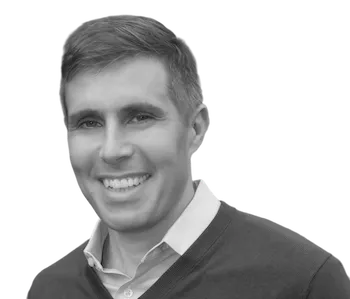
Niko Kolodny
Niko Kolodny received his PhD in Philosophy from the University of California, Berkeley in 2003, where he is currently Professor of Philosophy. Specializing in moral and political philosophy, he has written papers on a wide range of topics, including rationality, promising, love, democracy, justifying the state, modus ponens, future generations, and Rousseau. His teaching is largely on the ethics of emerging technologies. For the 2023–24 academic year, he is a Fellow at the Wissenschaftskolleg zu Berlin (Institute of Advanced Study at Berlin), working on a project on privacy in a digital age.
Pull this thread
There is a freestanding objection to being set beneath another, irreducible to fair distribution or natural rights.
Know something the rest of us don't?
Most threads on Rorotoko begin with our invitation. Any thread can begin with a proposal: you write it with the same prompts every thread answers, and we review it.
Propose a thread →