
Gary Saul Morson
Wonder Confronts Certainty
Wonder Confronts Certainty introduces readers to the especially intense Russian debates, over the past two centuries, on the ultimate questions of life. As Virginia Woolf and others noted when the great Russian classics began to be translated, Russian writers forthrightly address questions that “refined” Western writers usually left implicit.
As Woolf said, the hero of all Russian literature is “the soul.” Russian literature asks:
1) Does life have a meaning? We often think of the purpose of life as individual happiness, but might that idea be rather shallow and self-indulgent? Isn’t there something beyond our own satisfaction? If so, what might it be? When we come to die, what would make us feel that our life has been worthwhile?
2) If, as many people believe, everything in the world is governed solely by the laws of nature, and nothing else beyond this material world exists, then are ideas of right and wrong mere social conventions? As a Dostoevsky character expresses this view: “if there’s no God, all is permitted.” Is that correct, and if not, why not? Or do moral norms have an absolute value?
3) How do people, as individuals and groups, avoid taking responsibility for what they do? Or, as one Russian thinker expressed the point, what “alibis” do we construct for our failure to do what we should? In the Soviet period, people who tortured and murdered the innocent did so because (they thought) the higher wisdom of the Party called for it. Or they said it was not they themselves who were doing these terrible things, but the forces of History (“history” understood not just as what happened but as a force in itself). In our individual lives, we often blame fate, or our disadvantages, or social conditions, or many other factors for our failures and crimes: but do such factors entirely exhaust our capacity to choose?
4) Is everything predetermined, or are there real alternatives, so that, if the same situation were exactly repeated, something else might happen? Do chance and choice really exist? Is the path of history given in advance, or can we choose different paths? Perhaps, as determinists suppose, living resembles reading a novel, where the ending is already written down even if we are still in the middle of the book? If so, do our choices really matter? Why agonize at foregone conclusions? Do collectives – nations, ethnic groups, social classes, civilizations – have their own pre-established destiny? If not, if the laws of nature do not specify a single outcome, where does the “free play” allowing for different possibilities come from?
5) What events define life – the few great ones we all remember and that historians record, or the sum total of the countless, infinitesimally small events that make up our lives? Is life fundamentally dramatic or prosaic? Perhaps the great events are themselves the product of the innumerable small events? Tolstoy insisted that our memories retain only the few remarkable events and so create a false picture of life because what really define us are what he called the “tiny, tiny alterations” of consciousness we do not even notice, but which his novels describe.
The fact that countless people have remarked on Tolstoy’s amazing realism – that, as one writer expressed the point, if nature could write directly without a human intermediary, it would write like Tolstoy – suggests he understood something fundamental. If social scientists understood life as well as Tolstoy, they could create a picture of a person as believable as Tolstoy’s Anna Karenina – but no one has come close!
These and other ultimate questions characterize Russian literature and thought, and the book introduces readers, including those who have not read Russian or any other literature, to the profound answers Russians have given.
Editor: Judi Pajo
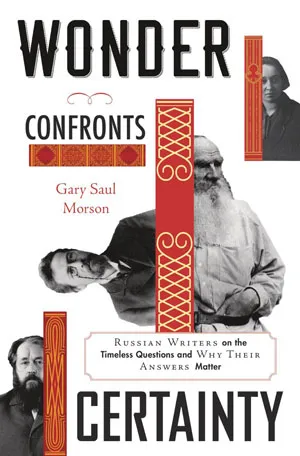
Wonder Confronts Certainty
Gary Saul Morson Wonder Confronts Certainty: Russian Writers on the Timeless Questions and Why Their Answers Matter Harvard University Press 512 pages, 6-1/8 x 9-1/4 inches ISBN 978 0674971806
Available here →February 29, 2024
20240229-gary-morson-wonder-confronts-certainty-1
In a nutshell
The rest of this thread
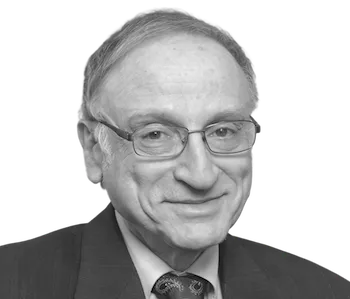
Gary Saul Morson
Gary Saul Morson is Lawrence B. Dumas Professor of the Arts and Humanities and Professor of Russian Literature at Northwestern University, where his course on Tolstoy and Dostoevsky has enrolled over 500 students. He is author or editor of 21 books addressing the great Russian writers, the nature of time, the role of quotations in culture, and the aphorism as a literary/philosophical genre. A member of the American Academy of Arts and Sciences, he has won “best book of the year” awards from the American Comparative Literature Association and the Association for Teachers of Slavic and East European Languages.
Pull this thread
Certainty, not malice, produced the twentieth century's mass murder.
Know something the rest of us don't?
Most threads on Rorotoko begin with our invitation. Any thread can begin with a proposal: you write it with the same prompts every thread answers, and we review it.
Propose a thread →