
Rasmus Rosenberg Larsen
Psychopathy Unmasked
The structure of the book is relatively straightforward. There is a total of eight chapters, where five of them examine one of five central claims about psychopathy by reviewing research published between 1980 and 2024. For example, Chapter 2 investigates whether individuals diagnosed with psychopathy are more dangerous than other non-psychopathic offenders. And Chapter 5 examines the claim that psychopathy is correlated with distinct brain abnormalities.
Across these five central chapters, the pattern is clear: the common claims about psychopathy either lack meaningful empirical support or have been outright falsified by the research.
The chapter I am most proud of, however, is the closing Chapter 8. Here, I step back and ask what I believe is perhaps the most interesting and pressing question, and a question that the field has yet to grapple with: Why is there such a large gap between what is being said about psychopathy and what the science actually shows? Such a situation is very unusual in science. Typically, ideas that fail empirical tests are eventually abandoned. With psychopathy, the opposite has happened; the diagnosis has become more entrenched, despite mounting disconfirming evidence. It’s truly puzzling. The explanation I put forward in Psychopathy Unmasked is that psychopathy is what scientists colloquially refer to as a “zombie idea.” It is an idea that is intellectually appealing or infectious, but at the same time scientifically dead. Like a zombie, it continues to wander the halls of science, repeatedly animating new generations of innocent researchers to believe in the reality of it. And with this uncritical acceptance begins yet another cycle where new researchers carry out a trove of studies that still fail to confirm the reality of psychopathy.
Chapter 8 will presumably be seen as controversial by my peers because it raises the possibility that psychopathy is simply a bunk diagnosis; that no one actually fits the stereotypical image of the “psychopath.” It’s easy to say that a person seems to be lacking the ability to empathize; but that doesn’t automatically mean that they truly do lack that capacity.
So far, science has never documented a clear case of a psychopath, a person that truly fits all the common descriptors about the diagnosis. Perhaps these people exist; perhaps one day they will be clearly documented. But the lack of evidence after decades of research is striking and I think it’s time for scientists to stop speculating and instead draw conclusions from their work.
If a browsing reader opened this chapter, I think they would see the heart of the book: a willingness to confront the uncomfortable possibility that what we have long believed about psychopathy may be thoroughly misguided.
Psychopathy Unmasked uncovers a surprising story about a scientific field shaped by bias, spin, and questionable methods. This flawed science laid the foundation for the legal use of psychopathy assessments, which in turn has fueled large-scale injustices that remain largely invisible to the public.
The book is, in a sense, investigative scientific criticism, motivated by a personal ideal: to rid our legal system of unsound science. Its main purpose is to show that there are compelling reasons to doubt psychopathy as a diagnosis and that few inferences—if any—can be drawn from it in clinical and legal practices.
Importantly, the book is not about pointing fingers. The mainstream account of psychopathy is a powerful story. Looking back, it is easy to see how it was destined for quick adoption in legal practices. For decades, psychopathy has been portrayed as a chronic, dangerous disorder marked by coldness, impulsivity, and a lack of empathy. Some psychologists estimate it affects only 1% of the population, yet it is responsible for a disproportionate share of serious crimes. A truly captivating narrative! But this narrative needs a critical counterpoint, and Psychopathy Unmasked provides it. While the book surveys the history of the diagnosis, its main contribution is a thorough review of the scientific claims that have justified its legal authority—claims about dangerousness, untreatability, empathy deficits, and moral psychological impairment.
The reality is that none of these claims withstand sustained empirical testing. Over the past two decades, research has consistently shown that individuals diagnosed with psychopathy are not substantially more violent or distinct than other offenders. They are not the “social predators” or “morally colorblind” characters portrayed in culture.
Meanwhile, tens of thousands of psychopathy assessments occur each year, shaping life-altering decisions in courts and prisons. Each use of the diagnosis carries the risk of unjust bias. The only responsible course, I argue, is to retire psychopathy assessments from legal use.
If the book leaves one lasting impression, I hope it is this: that future scientists and practitioners will recognize the dangers of prematurely importing psychiatric diagnoses and constructs into the criminal justice system.
Curator: Bora Pajo
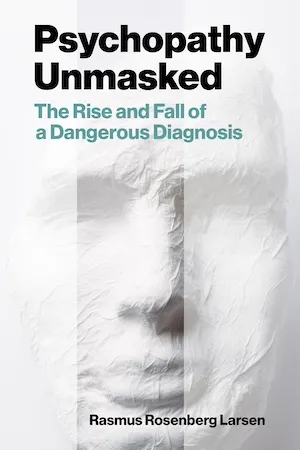
Psychopathy Unmasked
Rasmus Rosenberg Larsen Psychopathy Unmasked: The Rise and Fall of a Dangerous Diagnosis MIT Press 328 pages, 6 x 9 inches ISBN 9780262552202
Available here →September 15, 2025
20250915-larsen-rasmus-on-psychopathy-unmasked-3
A close-up
The rest of this thread
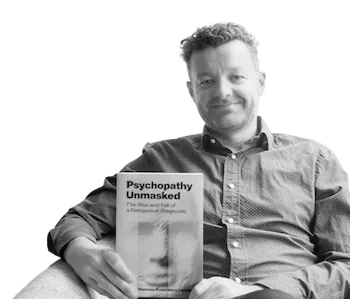
Rasmus Rosenberg Larsen
Rasmus Rosenberg Larsen (PhD) is an Assistant Professor of Forensic Epistemology and Philosophy of Science at theUniversity of Toronto Mississaugaand an Affiliated Scientist at theNational Center for Ontological Research. His work lies at the intersection of psychology, epistemology, and law, with research published in top-tier journals such asThe Lancet: Psychiatry;Psychology, Public Policy, and Law; andPhilosophical Psychology. He is the author ofPsychopathy Unmasked: The Rise and Fall of a Dangerous Diagnosis(MIT Press).
Pull this thread
People diagnosed with psychopathy are not meaningfully more violent than other offenders, and the diagnosis should leave legal use.
Know something the rest of us don't?
Most threads on Rorotoko begin with our invitation. Any thread can begin with a proposal: you write it with the same prompts every thread answers, and we review it.
Propose a thread →