
Roger Crowley
Spice
What started as a contest for spices between Portugal and Spain had many consequences. It hugely expanded European understanding of the world and allowed people, through the resulting medium of cartography, the making of globes and the development of book printing, to visualise the world as an entity. This sense of planetary awareness was highly significant. It prefigured a global trading system. At the same time, it sowed the seeds for centuries of western imperialism and conquest that would also have profound environmental consequences. The new world that the spice voyages set in motion saw the planet as a limitless natural resource for plunder and extraction, culling the wealth of lands and their peoples. I came to write this book because of my long-term interests in maritime history. I had written a previous book about the Portuguese attempts to explore the world in the fifteenth century. They worked their way down the coast of Africa, and eventually, under Vasco da Gama, reached India. Their explorations became more and more extensive. My previous book saw the Portuguese establish themselves on the coast of India, at Goa, then finally capture Malaka on the Malay peninsula. This was a hub of spice trading. The Portuguese appetite for further and further exploration was insatiable. I was curious to see them make the next leap – to find the source of the most valuable of all spices and nutmegs. This book was the natural sequence.
Curator: Bora Pajo
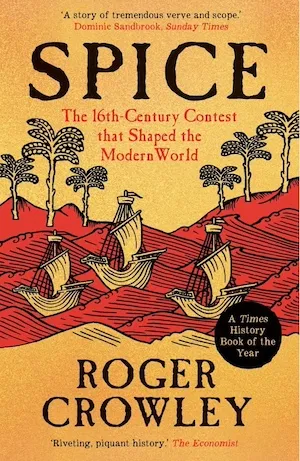
Spice
Roger Crowley Spice: The 16th-Century Contest that Shaped the Modern World Yale University Press 320 pages, 6 x 9 inches, ISBN 978-0300267471
Available here →October 9, 2025
20251009-crowley-roger-on-spice-16th-century-contest-that-shaped-the-world-2
The wide angle
The rest of this thread
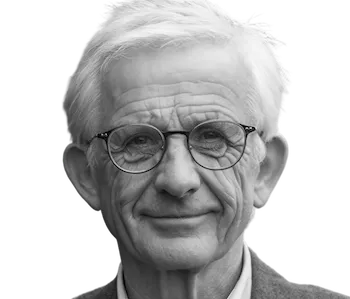
Roger Crowley
Roger Crowley is a British historian and bestselling author specializing in maritime and Mediterranean history. Educated at Sherborne School and Emmanuel College, Cambridge, he was inspired by his early experiences in Malta and later travels across the Greek-speaking world and Turkey. After a career in publishing, he turned to full-time writing, earning a reputation for vivid narrative history rooted in original sources and eyewitness accounts.Crowley’s works include A trilogy on the Mediterranean—1453: The Last Great Siege (2005), Empires of the Sea (2008), and City of Fortune (2011)—as well as Conquerors: How Portugal Forged the First Global Empire (2015), Accursed Tower: The Crusaders’ Last Battle for the Holy Land (2019), and Spice: The 16th-Century Contest That Shaped the Modern World (2024). His books have been translated into more than twenty languages.
Pull this thread
The race for spices, not the Atlantic crossing, was the catalyst of globalisation.
Know something the rest of us don't?
Most threads on Rorotoko begin with our invitation. Any thread can begin with a proposal: you write it with the same prompts every thread answers, and we review it.
Propose a thread →