
Roger Crowley
Spice
I would hope that a reader would start with the introduction. It frames the issues and activities that develop in the book, sets the geographical scene, and explains quite why the spice islands, the key objective of scores of voyages in the sixteenth century, commanded such a magnetic hold on the imagination of early modern Europe. It explains how and why the planetary collision of geological plates in the Malay Archipelago gave rise to extraordinary species, sketches the historical backstory of the magnetic attraction of spices over thousands of years, explains the triggers that set in motion an astonishing exploration of the world and the development of planetary understanding with a chain reaction that the European set in motion that have had long-term influences on global history. Of the many voices that are heard in my book two quotes stand out. It’s still difficult for us, as we look at our spice rack for granted, to grasp exactly why the lure of spices was so strong that thousands of European risked their lives to make hellish journeys with very high mortality rates and terrible suffering for something that added a bit of taste to food. Even at the time, there was bewilderment: a Portuguese monk, Gaspar da Cruz, thought they were non-essential luxuries. ‘pepper and ivory which is the principal that the Portuguese do carry, a man may well live without.’ The answer is that spices provided a glimpse of better lives – and large profits. A second perspective on what the spice discoveries of the long sixteenth century set in motion lies in one telling line from Shakespeare ‘the world is mine oyster and I with sword will open it’ - the development of western imperialism and resource extraction by the use of violence. My book’s aims are twofold. First to carry the reader as far as possible into the world of the sixteenth century and to get a sense of where and how the runaway train of globalisation got going. Second, and quite simply, to provide an engrossing read. The first-hand experiences of Europeans exploring the world are by turns gripping, marvellous, humbling – and ghastly.
Curator: Bora Pajo
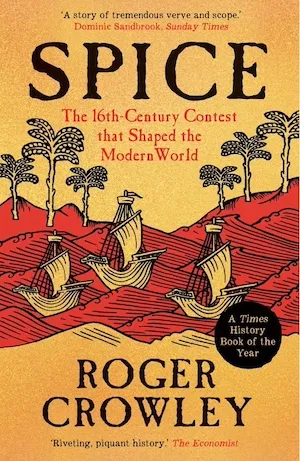
Spice
Roger Crowley Spice: The 16th-Century Contest that Shaped the Modern World Yale University Press 320 pages, 6 x 9 inches, ISBN 978-0300267471
Available here →October 9, 2025
20251009-crowley-roger-on-spice-16th-century-contest-that-shaped-the-world-3
A close-up
The rest of this thread
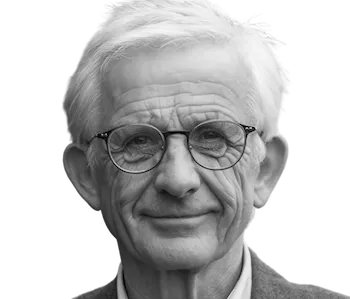
Roger Crowley
Roger Crowley is a British historian and bestselling author specializing in maritime and Mediterranean history. Educated at Sherborne School and Emmanuel College, Cambridge, he was inspired by his early experiences in Malta and later travels across the Greek-speaking world and Turkey. After a career in publishing, he turned to full-time writing, earning a reputation for vivid narrative history rooted in original sources and eyewitness accounts.Crowley’s works include A trilogy on the Mediterranean—1453: The Last Great Siege (2005), Empires of the Sea (2008), and City of Fortune (2011)—as well as Conquerors: How Portugal Forged the First Global Empire (2015), Accursed Tower: The Crusaders’ Last Battle for the Holy Land (2019), and Spice: The 16th-Century Contest That Shaped the Modern World (2024). His books have been translated into more than twenty languages.
Pull this thread
The sixteenth-century contest for cloves and nutmeg was the catalyst of globalisation.
Know something the rest of us don't?
Most threads on Rorotoko begin with our invitation. Any thread can begin with a proposal: you write it with the same prompts every thread answers, and we review it.
Propose a thread →