
Simon Ball
Death to Order
The study of assassination is akin to running a razor blade down the history of international politics: the cut is narrow but long and deep. Assassination reveals statesmen and their servants at their most authentically vulnerable moments – they are, after all, often the people with the most to lose. Assassination: personal, violent, widely reported, strips back layers of self-deception like few other acts.
My own study of assassination started, as historical research should, with curiosity occasioned by a different project. I was researching the attempts by Britain to limit the international trade in small arms from the Edwardian period to the twenty-first century when I came across this statement: semi-automatic pistols were ‘devilish weapons’ because ‘any fool can shoot a Viceroy or a police inspector.’ I wondered if they could, and thus the trail started winding through many hundreds of assassinations.
Curator: Bora Pajo
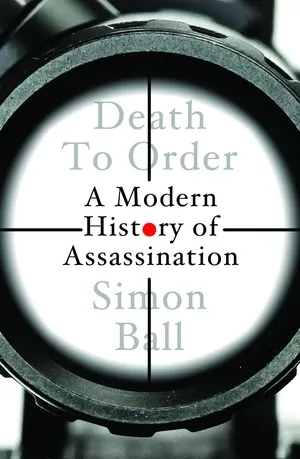
Death to Order
Simon Ball Death to Order: A Modern History of Assassination Yale University Press 464 pages, 6 x 9 inches, ISBN 9780300258042
Available here →October 16, 2025
20251016-ball-simon-on-death-to-order-history-of-assassination-2
The wide angle
The rest of this thread

Simon Ball
Simon Ball has been the University’s Chair of International History & Politics at the University of Leeds since 2012. He previously served as Professor of Contemporary History at the University of Glasgow. As Academic Integrity Lead in the School of History, his research centers on the Cold War, the Second World War, British politics, assassination in international politics, and twentieth-century secret intelligence. Professor Ball edited War in History and sits on the editorial boards of Intelligence & National Security and Diplomacy & Statecraft. His books include Death To Order (2025), Secret History (2020), Alamein (2016; Folio Society 2022), The Bitter Sea (2009), The Guardsmen (2004), The Cold War (1998; reprinted 2009), and The Bomber in British Strategy (1995; Routledge 2022). He collaborates widely beyond academia, including authoring a 2022 REF Impact Case Study.
Pull this thread
Modern assassination is a state phenomenon.
Know something the rest of us don't?
Most threads on Rorotoko begin with our invitation. Any thread can begin with a proposal: you write it with the same prompts every thread answers, and we review it.
Propose a thread →