
Sarah Maslen
Learning to Hear
My book examines the tricks of the trade and forms of collective support for crafting our largely unconscious practices of hearing. As we live our daily lives, our hearing generally seems something that we “have,” not something that we “do.” But people learn that they must develop their hearing when they enter a wide variety of occupations and activities. I investigate some of the strategies and techniques for working on competent hearing, taking as my focus the fields of medicine, music, outdoor adventuring, and Morse code operation. The four studies show that hearing is considerably more varied than we often assume. In examining what it takes to become competent, the book explodes myths of genius, natural talent, or the idea that certain skills are the province of particular kinds of people. Overcoming the social distance between insiders and outsiders requires access to the collectively supported ways that seemingly natural sense abilities are cultivated to competency.
Readers can approach this book in different ways. If you are particularly interested in musicians or mountaineering, then you might like to sink your teeth into the world of your choosing first. One of the strengths of the book is its comparative look at the strategies for cultivating the ear. Having read about hearing in one case, you might find yourself gripped by the ways in which it is cultivated and done elsewhere. If you start at the beginning, you will be first introduced to the idea that our senses are specialised and the story of the project. You will then read about doctors, musicians, outdoor adventurers, and Morse code operation. The final chapter grapples with where this study sits within multiple traditions of philosophy and social theory.
Curator: Rachel Althof
Learning to Hear
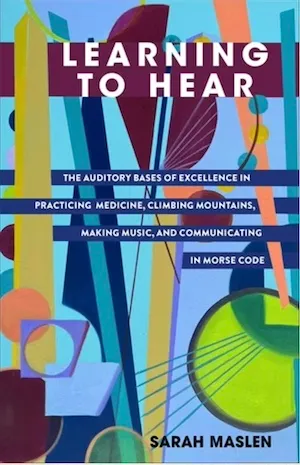
Sarah Maslen Learning to Hear: The Auditory Bases of Excellence in Practicing Medicine, Climbing Mountains, Making Music, and Communicating in Morse Code Columbia University Press 280 pages, 6 x 9 inches, ISBN 9780231217897
Available here →October 20, 2025
20251020-maslen-sarah-learning-to-hear-1-1
In a nutshell
The rest of this thread
Sarah Maslen
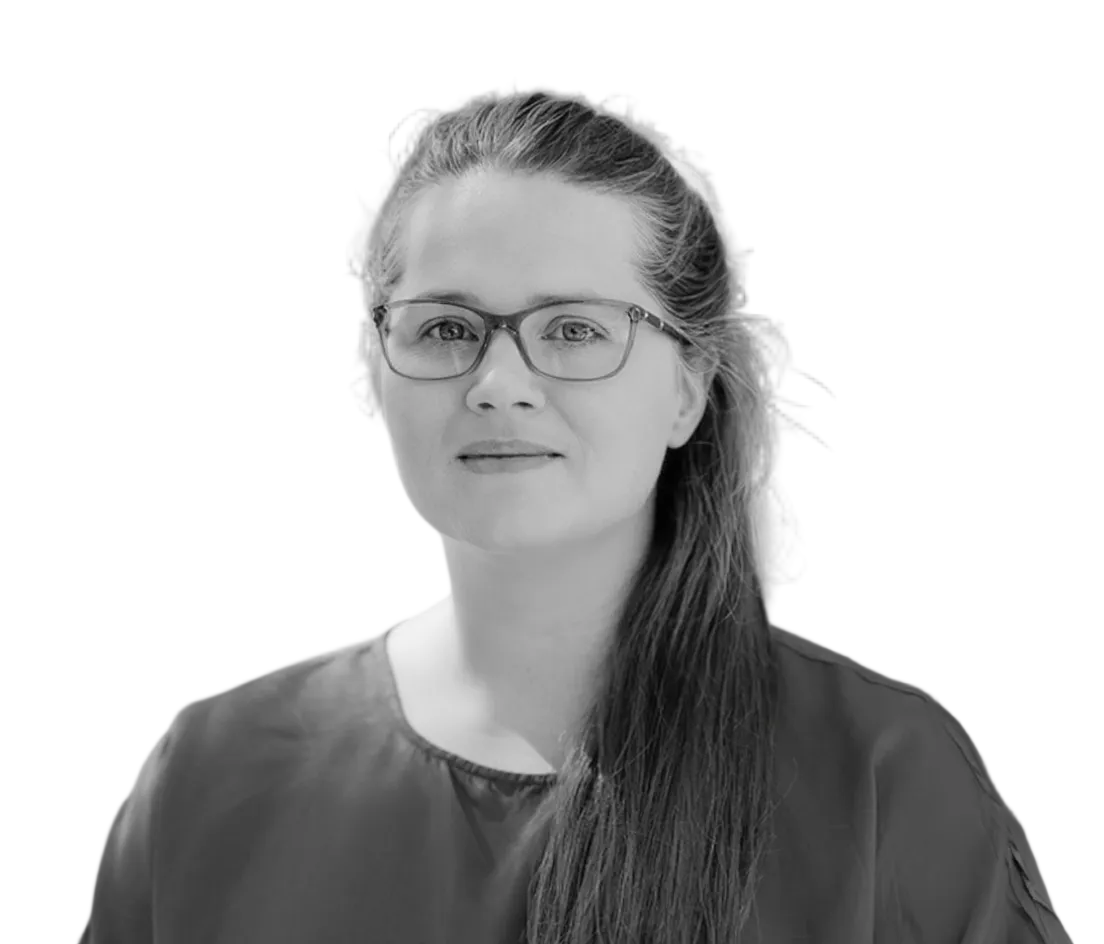
Sarah Maslen is an Adjunct Professor at RMIT University, Australia. Her work addresses knowing, embodiment, and the relationality of the human and non-human in various fields of activity.
Pull this thread
pulls againstpulls alongside
Hearing is something people do, and expert perception is collectively cultivated by teachable tricks.
Against ET · Gods were an incidental byproduct of brain evolution, born when autobiographical memory taught humans they would die. On: Widely shared human dispositions are evolved universals rather than cultural products
Against BB · Art is high play, cognitive play with patterned information, and it earns its biological cost. On: Widely shared human dispositions are evolved universals rather than cultural products
Alongside JM · You cannot explain how anyone sees a painting or understands a novel without first settling what a self is. On: Widely shared human dispositions are evolved universals rather than cultural products
Alongside MN · The gendered public-private divide was invented in early eighteenth-century England by Dunton, Addison and Steele. On: Widely shared human dispositions are evolved universals rather than cultural products
Alongside CE · Numbers are an invention, not a faculty. On: Widely shared human dispositions are evolved universals rather than cultural products
Alongside LK · Experience has a history, and life-changing experience has not always been possible. On: Widely shared human dispositions are evolved universals rather than cultural products
Know something the rest of us don't?
Most threads on Rorotoko begin with our invitation. Any thread can begin with a proposal: you write it with the same prompts every thread answers, and we review it.
Propose a thread →