
Sarah Maslen
Learning to Hear
One of the remarkable observations detailed in this book is how hearing involves more than the ear. Our senses operate in such a way that there is an intertwining between what we typically conceive of as isolated senses. In educational settings, teachers often support students to shift how they hear by getting them to focus on a different sensory cue. I sat with an orthopaedic surgeon who was teaching me about the significance of the “creaks” and “grates” that signify arthritis. He said he listens for them as patients walk into his consulting rooms. This is not something that he learnt about in medical school. It came from his sensitivity to the sounds that happened as patients moved their joints when he was examining them. He was treating me like a medical student to get me to understand this. He got me to place my hand on his knee as he moved the joint to extend his leg. He asked me not whether I could feel the grates or grinds, but instead: “Can you hear that?” I couldn’t on the first go—these ways of sensing and knowing do not come quickly. We repeated the exercise.
In cases like medical practice, it is okay for an action to be repeated as the clinician works to perceive the sound. The case of music making is radically different in this sense, in that musicians need to “hear” themselves before the music sounds. They need to focus on organizing their bodies to form the sound that will be heard if they move this way or that. Musicians necessarily focus on what other sensory cues offer, whether that is glances between musicians to signal an entry point, or collective attention to the rhythmic pulse. One of the most vital strategies is hearing via proprioception, or our inner sense of our body positions and self-movement. Among the stories of proprioception is one from a cellist who knows her sound before it comes out of the instrument based on her sense of her body from within.
There has been great interest in recent years in the nature of decision-making, especially among experts operating in contexts in which there is a degree of time pressure. Authors who have grappled with this often refer to the power of intuition and tacit knowledge. Sometimes they refer to the deep well of experience on which people act, without thinking about it. It is my hope that this book shows readers that we cannot take intuition and tacit knowledge for granted. It is something that individuals and communities actively cultivate. With this in mind, we need to have continuing strong systems for supporting this knowledge development, at a moment in time in which it is the quick wins that follow from using artificial intelligence technologies that are taking centre stage.
Curator: Rachel Althof
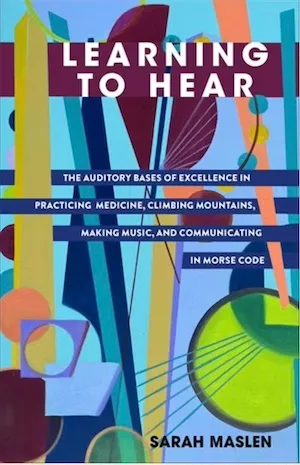
Learning to Hear
Sarah Maslen Learning to Hear: The Auditory Bases of Excellence in Practicing Medicine, Climbing Mountains, Making Music, and Communicating in Morse Code Columbia University Press 280 pages, 6 x 9 inches, ISBN 9780231217897
Available here →October 20, 2025
20251020-maslen-sarah-learning-to-hear-3
A close-up
The rest of this thread
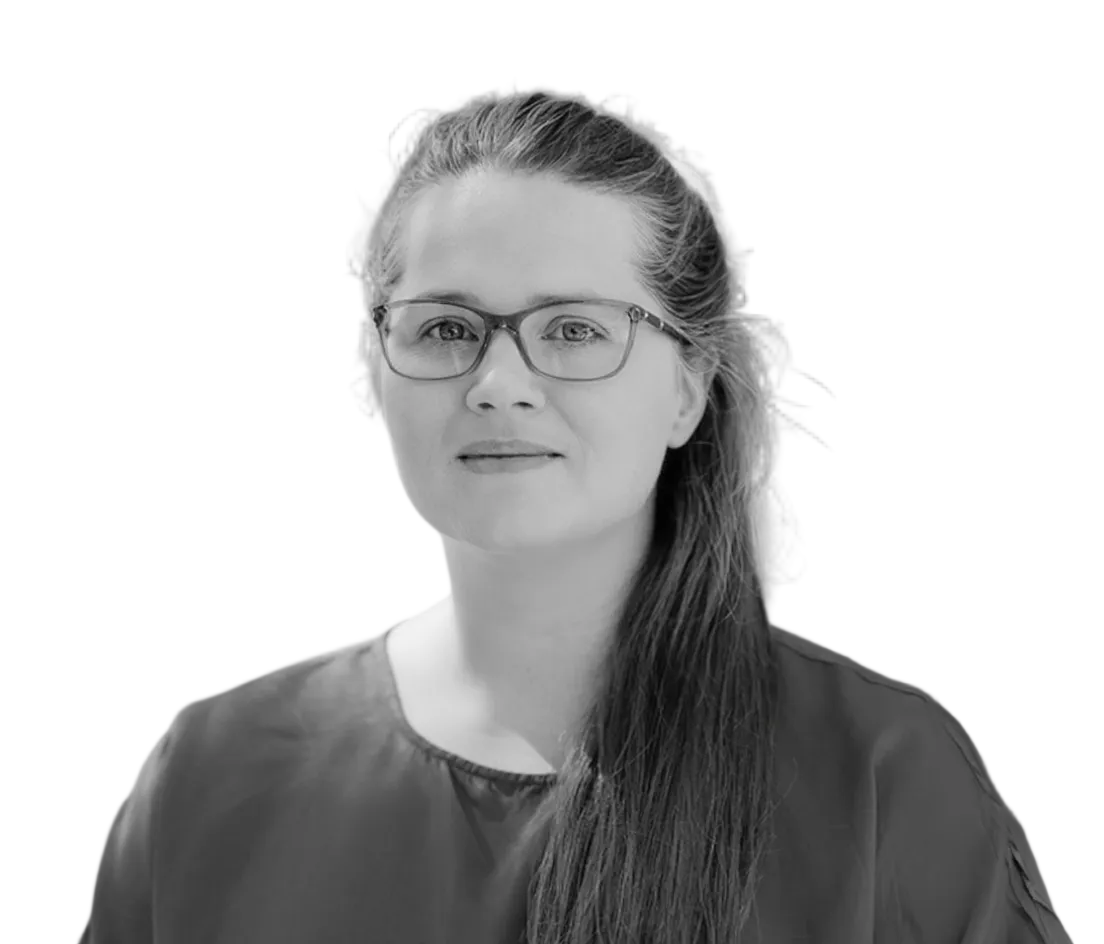
Sarah Maslen
Sarah Maslen is an Adjunct Professor at RMIT University, Australia. Her work addresses knowing, embodiment, and the relationality of the human and non-human in various fields of activity.
Pull this thread
Hearing is something people do, and expert perception is collectively cultivated by teachable tricks.
Know something the rest of us don't?
Most threads on Rorotoko begin with our invitation. Any thread can begin with a proposal: you write it with the same prompts every thread answers, and we review it.
Propose a thread →