
Alice Lovejoy
Tales of Militant Chemistry
This book asks what happens when we take something we’re familiar with and consider it in an unfamiliar light. The “thing” in question is film: not films, the things we watch in cinemas or on our tablets, but the strips of celluloid that you might load into a camera or project onto a screen. We usually think of film in connection with culture or art, information or entertainment, but Tales of Militant Chemistry looks at film as part of the chemical industry.
If we think of film in this way, it starts to look very different. For example, when we focus on the raw materials that are used to make film, we can see how closely this medium of image and sound is related to other chemical products that have nothing to do with images, and nothing to do with sound, but that are made from the same substances.
Take gelatin. Gelatin is used in photographic emulsion—the viscous substance that lies on top of the celluloid in film, making it sensitive to light—and it’s made of animal bones and hides. But these bones and hides can be used to make other things: glue, for example, and food-grade gelatin, which is less refined than photographic gelatin. In this way, we can see how closely film is linked to practices, materials, and industries that extend beyond “cinema” or “photography.”
One of the places where these industries, materials, and practices meet is the factory. The book is rooted in two film factories that, throughout their histories, made much more than film: the Tennessee Eastman Corporation (Eastman Kodak’s primary chemical subsidiary for most of the 20th century, now known as Eastman Chemical) and Agfa’s factory in the eastern German town of Wolfen.
These factories’ product lines included film, but also things like rayon and plastics, and both factories were involved in manufacturing weapons. This part of the story is at the book’s heart. On one hand, I tell the little-known story of Tennessee Eastman’s and Eastman Kodak’s deep involvement with the Manhattan Project, operating the Y-12 uranium separation plant at Oak Ridge. On the other hand, I trace Agfa’s involvement with poison gas during World War I, and, during World War II, with Nazi Germany’s system of concentration camps and forced industrial labor. The factory also gets us to the question of how I’d like the book to be read. As I write in the introduction,
“factories are more than their products. They’re intersections of people and materials, science and politics, industry and money.”
Tales of Militant Chemistry follows all of this—people, materials, scientific knowledge, politics, money—through, and beyond, factories like Tennessee Eastman and Agfa-Wolfen, often in stories that stretch across the globe. I’d like the book to be read through these stories, and especially through the people in the stories—because they underscore the humanity and the drama (tragedy, often, but on rare occasions also comedy) that plays out in a place like the film factory.
Curator: Bora Pajo
.webp)
Tales of Militant Chemistry
Alice Lovejoy Tales of Militant Chemistry: The Film Factory in a Century of War University of California Press 256 page, 5.5 x 8.5, ISBN:9780520402935
Available here →November 4, 2025
20251104-lovejoy-alice-on-tales-of-militant-chemistry-1-1
In a nutshell
The rest of this thread
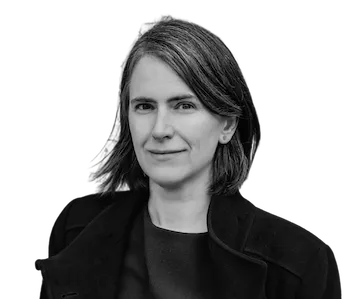
Aaron Fraher
Alice Lovejoy
Alice Lovejoy is Professor in the Department of Cultural Studies and Comparative Literature and the Program in Moving Image, Media, and Sound at the University of Minnesota, and a former editor at Film Comment. She is the author of Tales of Militant Chemistry: The Film Factory in a Century of War (California, 2025) as well as the award-winning Army Film and the Avant Garde (Indiana, 2015). She co-edited the volume Remapping Cold War Media: Institutions, Infrastructures, Translations (Indiana, 2022); another co-edited volume, Film Stock: An International History of a Sensitive Medium, is forthcoming from the University of Minnesota Press.
Pull this thread
Film is a chemical product before it is a medium, and its raw materials carry a history of violence.
Know something the rest of us don't?
Most threads on Rorotoko begin with our invitation. Any thread can begin with a proposal: you write it with the same prompts every thread answers, and we review it.
Propose a thread →