
Alice Lovejoy
Tales of Militant Chemistry
One of my favorite passages in the book comes in the third chapter, which looks at Agfa’s German factories (particularly the Wolfen factory) during the weeks and months after World War II, when they became key sources of war reparations for both the Western Allies and the Soviet Union. During this chaotic period, when German film technologies, raw materials, chemical formulas, and often scientists were being moved West and East in service of Allied goals, a rather comical meeting occurred between two Agfa employees, Bruno Uhl and Fritz Felber; Elmer W. Prince, an American military officer who had recently been (and would again become) the city manager of Morgantown, West Virginia; and Bruno Uhl’s wife, Greti.
The four were discussing the transfer of silver and gelatin for film and photographic paper between former Agfa factories in the American and British occupation zones. Uhl and Felber found themselves continually having to explain to Prince what the materials were for (silver, for instance, wasn’t a form of currency; it was for photographic materials, and gelatin was for film, not food). Prince found himself confounded by these uses. It’s a wonderful passage because it underscores how conditional the meanings behind film’s raw materials were, and still are—how these materials take on completely different kinds of value in different industrial and political contexts, which is one of the book’s larger arguments.
The passage is also wonderful because the four figures’ dialogue was captured in full by a transcriptionist, giving us a rare image of how the chaos in postwar Germany played out on the level of conversational misunderstandings. There are mispronunciations and interjections, interruptions and asides. In places, it reads like Abbott and Costello’s “Who’s on First.” And it’s a testament to the importance of archivists’ work, and archival sources more generally (the book is based on research in more than two dozen archives), in reconstructing histories like these.
We could think of this in a few ways. First, the histories traced in this book put debates about contemporary media into perspective. For instance, we know that our smartphones and computers cannot run without resources extracted through dangerous, precarious labor. These metals and minerals are finite, and they are fraught with questions of power. Cobalt for our smartphones is mined in the same province of Congo where uranium for the atomic bomb was once mined. Ukraine was recently forced to promise the US rare earths in exchange for military support. Tales of Militant Chemistry shows that these present-day events are a chapter in a longer story, one that stretches back, in part, to film, whose factories didn’t only shape cinema’s golden age; they helped create the chemical age, in which toxic waste, forced labor, and proliferating weapons were inseparable from industrial society’s dependence on mass-produced materials like film.
At the same time, the book tells a cautionary tale about the consequences of military-industrial entanglements.
This comes out in the fourth chapter, which explores what happened in the early 1950s, when nuclear testing sped up rapidly around the world. In early 1951, after tests had begun in Nevada, Kodak’s Rochester, NY factory began finding tiny spots of radiation in its finished, unexposed film—spots that damaged the film to the point that it couldn’t be sold. From its experience after the Trinity test in 1945, Kodak knew that the spots must have been created by radioactive fallout, and it alerted Atomic Energy Commission. The AEC didn’t believe Kodak at first; it thought Rochester was too far away from the test site. But it was eventually convinced to send a team to investigate, and that team found that Kodak was correct.
Soon, the agency had made a deal with Kodak and other photographic manufacturers to give them advance warning of nuclear tests—warnings that communities around these film factories didn’t receive.
This is a relatively well-known story, and it was the subject of heated debate in Congress in 1997, when it first came to light (Iowa senator Tom Harkin put it bluntly: “The Government protected rolls of film, but not the lives of our kids.” But Tales of Militant Chemistry draws a link between these early-1950s events and Kodak’s work for the Manhattan Project. During the war, Kodak and Tennessee Eastman operated one of the largest industrial installations at Oak Ridge; they separated uranium used in the bomb dropped over Hiroshima on August 6, 1945. Half a decade later, the same kind of weapon brought fallout across the country to Kodak’s film factories, damaging the company’s products and—as the company noted—its bottom line. The government stepped in to protect Kodak, but in many ways, it was too late, and not only for Kodak: film and atomic weapons were already tied tightly together.
Curator: Bora Pajo
.webp)
Tales of Militant Chemistry
Alice Lovejoy, Tales of Militant Chemistry: The Film Factory in a Century of War University of California Press 256 page, 5.5 x 8.5, ISBN: 9780520402935
Available here →November 4, 2025
20251104-lovejoy-alice-on-tales-of-militant-chemistry-3
A close-up
The rest of this thread
Aaron Fraher
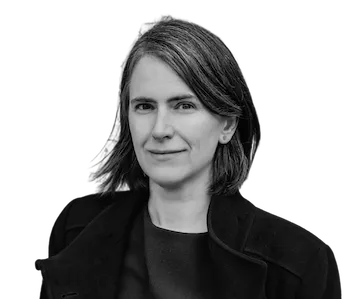
Alice Lovejoy
Alice Lovejoy is Professor in the Department of Cultural Studies and Comparative Literature and the Program in Moving Image, Media, and Sound at the University of Minnesota, and a former editor at Film Comment. She is the author of Tales of Militant Chemistry: The Film Factory in a Century of War (California, 2025) as well as the award-winning Army Film and the Avant Garde (Indiana, 2015). She co-edited the volume Remapping Cold War Media: Institutions, Infrastructures, Translations (Indiana, 2022); another co-edited volume, Film Stock: An International History of a Sensitive Medium, is forthcoming from the University of Minnesota Press.
Pull this thread
Film is a chemical product before it is a medium, and its raw materials carry a history of violence.
Know something the rest of us don't?
Most threads on Rorotoko begin with our invitation. Any thread can begin with a proposal: you write it with the same prompts every thread answers, and we review it.
Propose a thread →