
Alice Lovejoy
Tales of Militant Chemistry
This book is tied to two threads in my previous work. I studied filmmaking in college, and have long been fascinated by film as a physical medium: what it feels like, what it smells like, how it changes when we process or expose it in a certain way—questions that mostly have to do with chemistry. Second, much of my research has focused on the intersections between film and the military, and my first book explored the emergence of an experimental film culture in the socialist Czechoslovak Army’s film studio. When I came across a mention, in the archives, of Kodak’s work for the Manhattan Project, it brought these threads together.
These threads are linked to some of the larger ideas the book relates to. Thinking of film and the military, for example—not war films, but film as something that has, since its earliest years, been entwined with military industries, institutions, and cultures—emphasizes how limiting traditional definitions of “film” can be. This is an idea that film and media historians have explored over the past two decades or so, by looking at film and media practices and cultures that on first glance seem to have little to do with “entertainment” or “communication” or “art,” but play crucial roles in our world. Tales of Militant Chemistry takes this line of thinking in a slightly different direction.
It postpones the idea of a finished film (again, something we might watch in a cinema) and thinks instead of how what’s often called “raw” film has shaped the world—and, in turn, how it has been shaped by the world. Thinking of film as a “raw” substance also emphasizes its physical dimensions, which points to another set of ideas with which the book is in dialogue. These have to do with what’s often called materiality in the humanities and social sciences. Materiality is a big tent. It encompasses things like physical materials and characteristics, as well as social, political, economic, and environmental questions. In this book, I’m interested in tracing the historical relationships between these aspects of film’s materiality.
In particular, the book holds that looking at things like the gelatin, cotton, silver, coal, and wood (some of film’s raw materials), and the ways they were sourced, processed, moved, and sold, reveals not just new industrial aspects of film’s history, but also a larger history of military, colonial, racial, and environmental violence. This is a history that exceeds any kind of national framework—that is, it isn’t only a Kodak history or a US history; it is a history that was always transnational, and must be narrated in this way.
Curator: Bora Pajo
.webp)
Tales of Militant Chemistry
Alice Lovejoy Tales of Militant Chemistry: The Film Factory in a Century of War University of California Press 256 page, 5.5 x 8.5, ISBN:9780520402935
Available here →November 4, 2025
20251104-lovejoy-alice-on-tales-of-militant-chemistry-2
The wide angle
The rest of this thread
Aaron Fraher
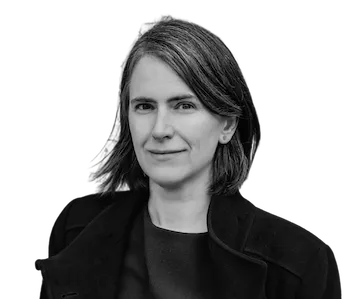
Alice Lovejoy
Alice Lovejoy is Professor in the Department of Cultural Studies and Comparative Literature and the Program in Moving Image, Media, and Sound at the University of Minnesota, and a former editor at Film Comment. She is the author of Tales of Militant Chemistry: The Film Factory in a Century of War (California, 2025) as well as the award-winning Army Film and the Avant Garde (Indiana, 2015). She co-edited the volume Remapping Cold War Media: Institutions, Infrastructures, Translations (Indiana, 2022); another co-edited volume, Film Stock: An International History of a Sensitive Medium, is forthcoming from the University of Minnesota Press.
Pull this thread
Film is a chemical product before it is a medium, and its raw materials carry a history of violence.
Know something the rest of us don't?
Most threads on Rorotoko begin with our invitation. Any thread can begin with a proposal: you write it with the same prompts every thread answers, and we review it.
Propose a thread →