
Michael D. Kirchhoff
The Idealized Mind
My interest in discussions about scientific modeling, idealization and scientific realism started with a coauthored paper “The Literalist Fallacy and the Free Energy Principle: Model-building, Scientific Realism and Instrumentalism”, published in the British Journal for the Philosophy of Science in 2025. The motivation for writing this paper was the observation that several philosophers of cognitive science were inferring the truth of instrumentalism (a version of scientific antirealism) from the fact that theoretical frameworks in neuroscience make use of idealizations. This inference is fallacious; or so we argued. We called it the literalist fallacy. The literalist fallacy is the fallacy of accepting or affirming instrumentalism based on the claim that the theoretical constructs of scientific models do not literally map onto real-world, target systems. However, the widespread use of idealization in science does not entail any kind of scientific antirealism. Therefore, even if models of the mind are both simplified and idealized, this does not stand in the way of defending a version of scientific realism in the sciences of the mind. This is one of the positions defended in The Idealized Mind.
The Idealized Mind is written for methodological purposes in philosophy of cognitive science and the computational cognitive sciences. In the book, I seek to address a novel combination of topics across the philosophy of modeling (and philosophy of science more generally), philosophy of cognitive science, and computational cognitive science. There is a large literature within the philosophy of cognitive science and computational neuroscience that focuses on core issues such as neural representation, neural computation and the prospects of explanatory unification. Yet, these discussions hardly mention methodological issues concerning scientific modeling (and if and where they do, idealization takes a back seat, if it is given a seat at all). This is unfortunate because the cognitive sciences are predominantly a model-based science. Conversely, there is a fast-growing literature on scientific modeling in philosophy of science. However, here one finds no discussion of cognitive science—the focus is mostly on examples from physics. This book rectifies this by bringing these two fields of research together. My hope is that integrating the literature on idealization and scientific modeling with current work in cognitive science will foster a new scientific modeling paradigm for cognitive science and its philosophy: a paradigm where all the central issues about scientific modeling are at the heart of research in cognitive science. I argue that insights about the importance of idealization in science, and how the rampant use of idealization relates to realism about scientific theories, have direct implications for work in cognitive science, especially concerning the status and standing of neural representation, neural computation, and the prospects of explanatory unification.
Curator: Rachel Althof
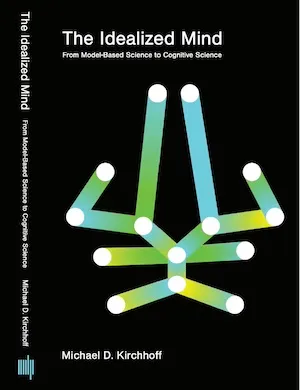
The Idealized Mind
Michael Kirchhoff The Idealized Mind: From Model-Based Science to Cognitive Science MIT Press 248 pages, 6 x 9 inches, ISBN: 9780262552936
Available here →November 13, 2025
20251113-kirchhoff-michael-on-the-idealized-mind-2
The wide angle
The rest of this thread

Michael D. Kirchhoff
Michael D. Kirchhoff is an Associate Professor in the School of Liberal Arts, University of Wollongong, Australia. His current research focuses on the use of idealization in computational neuroscience and philosophy of cognitive science. Kirchhoff is the author of "The Idealized Mind: From Model-based Science to Cognitive Science" (2025) with the MIT Press. A follow-up book is in the MIT Press publication pipeline entitled "The Idealized Brain: Uniting Philosophy of Science and Computational Neuroscience" coming out in 2026. In 2024, Kirchhoff was named Field Leader in 'Philosophy' and Field Leader in 'Epistemology and Scientific History' in The Australian: Research Magazine. In addition to working of idealized modeling in the computational cognitive sciences, Kirchhoff is well-known for his interdisciplinary work integrating the highly technical and mathematical literature on free energy and active inference with current movements in the field of embodied, enactive and extended cognitive science. In this context, Kirchhoff has a co-authored book "Extended Consciousness and Predictive Processing: A Third-Wave View" published in 2019 by Routledge.
Pull this thread
Models of the mind are idealized like frictionless planes, and idealization does not buy antirealism.
Know something the rest of us don't?
Most threads on Rorotoko begin with our invitation. Any thread can begin with a proposal: you write it with the same prompts every thread answers, and we review it.
Propose a thread →