
Tim Altenhof
Breathing Space
Breathing Space examines a widespread breathing culture around the turn of the twentieth century. It explores how this culture influenced modern architecture, both in theory and in the design of actual buildings. This breathing culture was marked by an intensified attention to all things respiratory: in medical debates over the treatment and prevention of tuberculosis; in modern dance and obscure religious movements that sought to reconnect body and mind in a rapidly industrializing society; in popular breathing systems addressing a general audience; and in the field of environmental hygiene, where reformers began to view human respiration itself as a source of indoor air pollution. Concerns about anthropogenic air pollution emerged alongside what we now think of as air pollution more broadly: the modification of the outside atmosphere through particles produced by human activity. In other words, the air we breathe can be at risk both inside and outside our buildings.
I call the resulting breathing culture and the architecture it produced respiratory modernism. It describes a new approach to modern architecture in which the consciously breathing subject is not seen as a passive inhabitant, but as an active agent engaging the surrounding atmosphere. In this sense, Breathing Space is a historic study that brings together various disciplines from architecture to art history, as well as medicine and popular culture, to think through the broader implications of breathing for the spaces that enclose us. This approach understands bodies and the natural world as intertwined, with architecture shaping the flow between them. The book’s title Breathing Space deliberately employs the present participle, which confuses the relation between subject and object. It is unclear whether space itself is breathing or if it is being breathed.
Ongoing thread. More from Tim Altenhof to follow.
Curator: Bora Pajo
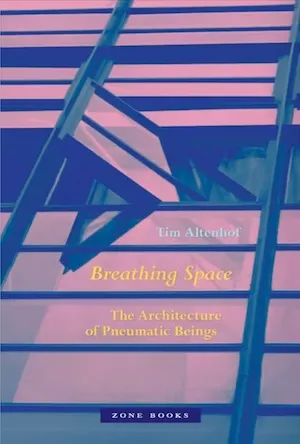
Breathing Space
Altenhof, Tim. Breathing Space: The Architecture of Pneumatic Beings. Zone Books, 2026. ISBN 978-1-945861-11-6
Available here →March 10, 2026
20260310-altenhof-tim-breathing-space
In a nutshell
The rest of this thread
.webp)
© Bengt Stiller
Tim Altenhof
Tim Altenhof is a Berlin-based architect, teacher, and author, currently serving as a senior scientist in architectural theory at the University of Innsbruck. He received his Ph.D. from Yale University, where his dissertation was awarded the Theron Rockwell Field Prize in 2018. An excerpt of this work also won the Bruno Zevi Prize 2018. In 2022, Tim was an International Fellow at the Institute of Advanced Study in the Humanities (KWI) Essen. His writings have appeared, amongst others, in Log, 21:Inquiries into Art, History, and the Visual, and Journal of the Society of Architectural Historians.
Pull this thread
Modern architecture's interpenetration of inside and outside came from a turn-of-the-century breathing culture, with the lung as model.
Know something the rest of us don't?
Most threads on Rorotoko begin with our invitation. Any thread can begin with a proposal: you write it with the same prompts every thread answers, and we review it.
Propose a thread →