
John Scanlan
Editorial Craft
We do look for a balance between scholarly rigour and accessibility. Narrative voice is less important simply because it is the subject that will attract the reader of books in this series and not really the author. We have considered many proposals for books that are more narrative-driven than, say, cultural-historical, but they usually don’t get commissioned. Some of them are taken up and published by Reaktion outside of the Reverb series (such as Liam Cagney’s Berghain Nights).
It’s difficult to say precisely what will work in the series before we see a proposal. It’s a mixture of the subject matter (and it being proposed at a time when the publisher is receptive to the idea), the approach the author wants to take, and then other considerations (e.g., has the subject been written about too much already? Or too recently?)
So, we have often sought to publish books about particular subjects, but can’t find the author with the right angle on it.
We have considered but not commissioned proposals for books on artists such as:
- John Coltrane
- The Beatles (we have already published one Beatles title)
- Pink Floyd
- New Order
- The Who
- Throbbing Gristle
- Yellow Magic Orchestra
And on broader subjects like:
- The influence of William S. Burroughs on UK rock music
- The use of specific songs in film
- Avant-garde pop music
- Fandom
- The Cold War and Eastern Europe in popular music
- Maps as guides to where music happens
- Music video
And on musical cultures / genres such as:
- Australian popular music
- Flamenco
- Indian popular music
- Vienna Electronica
- American Punk
- No Wave (New York)
We have also commissioned books that, for various reasons, never made it to publication:
- Woody Guthrie
- Bob Dylan
- Kraftwerk
- Iggy Pop
- Chinese Rock music
As far as belonging with Reverb or somewhere else, that is perhaps a question for someone at Reaktion. There have been one or two books considered (Maria Golia’s Ornette Coleman book) or commissioned for Reverb (Jamie Sexton’s forthcoming Hauntology book, The Sound of Lost Futures) that ended up coming out as standalone titles, and as far as that goes, I have no input into how the publisher decides on those kinds of things. I think perhaps it is that the more ‘rock’ focused proposals probably have a better fit with Reverb.
I hope readers carry with them s sense of the music and artists we cover as belonging to a period when popular music really did flourish as an art form in its own right, something I am not sure pertains any longer due to the changes that the music industry has undergone.
Curator: Bora Pajo
Editorial Craft
Available here →April 22, 2026
20260422-scanlan-john-reverb-series-closeup
A close-up
The rest of this thread
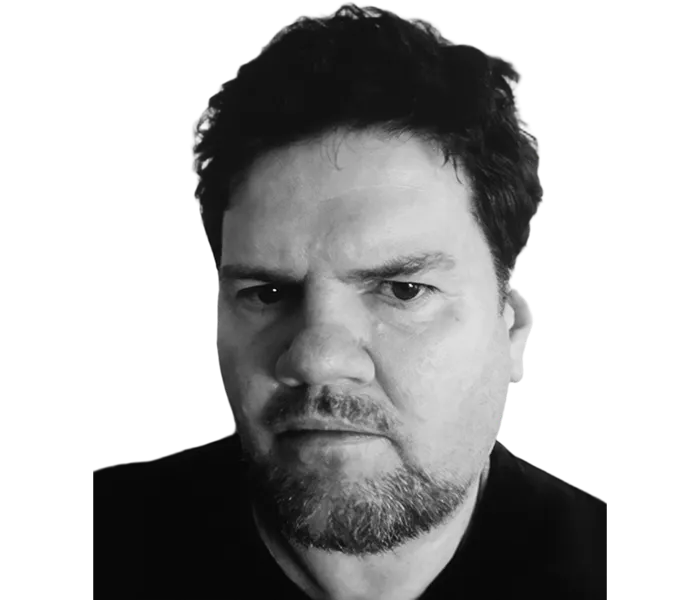
John Scanlan
John Scanlan works in cultural history and aesthetics. He co-founded the Reverb series with Reaktion Books in 2010. He is the author of many articles and books, including Rock ’n’ Roll Plays Itself: A Screen History (Reaktion, 2022) and Sex Pistols: Poison in the Machine (second edition forthcoming, Reaktion, 2026).
Pull this thread
Know something the rest of us don't?
Most threads on Rorotoko begin with our invitation. Any thread can begin with a proposal: you write it with the same prompts every thread answers, and we review it.
Propose a thread →