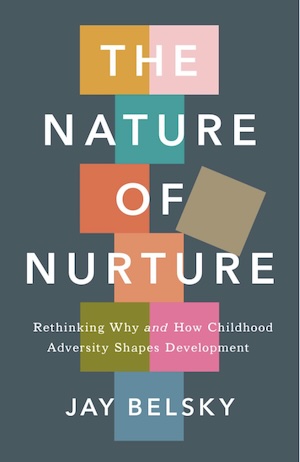
Consider the following facts: some adolescents—males and females--are more sexually active than many others; some adults have multiple unstable intimate relationships; some adults are not particularly involved, devoted, or caring parents. We have long thought of such individuals as “fallen”, behaving as they do either because they are genetically disposed to or because their childhoods led them to develop these ways. But what evolution teaches us, whether we like it or not, is that these ways of developing reflect the fact that in our species’ evolutionary past it made good sense to develop these ways because it increased chances of reproducing.
And by the same token, we should not simply attribute individuals developing and functioning in the opposite way as simply because they had good rearing or were born that way. In fact, one implication of the book’s central arguments is that no matter the trait or feature of an individual under consideration, some not so highly susceptible to effects of early-life experiences were “born” that way, but that others developing in exactly the same way were “made” that way! Thus, knowing how a person develops does not tell you whether nature or nurture were principally responsible because the same way of developing can be the result of different causal influences. Thus, some really nice and some really nasty people were made that way, others were born that way!