
The wide angle
May 8, 2026
The Devil’s Castle
Part of my need to tell the story of the Nazi euthanasia programs, and subsequent abuses in U.S. psychiatry, was the haunting refrain of “the perpetrators were never punished because society could never decide whether these were really crimes.” So many historians made this comment, in one form or another, about the killing of the neurodivergent. And it’s true. In the trials of German doctors who participated in the euthanasia Aktion T4—many of whom killed thousands—judges themselves would interrupt proceedings to make comments like, “Even in classical antiquity the elimination of life unworthy of life was a complete matter of course.” “Life unworthy of life” meaning, of course, the neurodiverse. I asked myself, are we so different now? We let our neurodiverse population die on the streets and languish in jails. We allowed lobotomy, mostly of American women. It didn’t take long to discover how the historical eugenics behind much modern psychiatric thinking harms this population, to this day.
I had an early conversation with someone I’ll just call a publishing professional, who told me, “Decide if this book is history or memoir. It can’t be both.” I was, then, deep into my research on the incredible German woman Dorothea Buck, Nazi survivor and psychiatric critic. We the patients, she wrote again and again, are the real experts in our own care.
I found Buck’s statement to be profoundly true. No biological basis of mental distress has really panned out, as when medicine finally gave up blaming serotonin levels for depression. The medicalization of mental distress has only led to people getting worse while at the same time more are being treated, often with strong drugs. What we have left—what we haven’t tried—are people like Buck, and like me. As a lifelong patient, diagnosed bipolar, I wanted to let that focus into this book. My history holds a mirror to U.S. psychiatry over the last half decade—its promises and its perils, particularly for females. At the same time my story is used insofar as it supports the research, always. I love knowing I was in the psych system at the same time as David Rosenhan, whose faked admission of himself into the horror that was a psych hospital became a “sword plunged into the heart of psychiatry” in the 1970s.
Curator: Bora Pajo
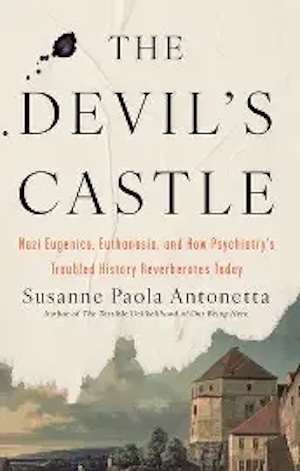
The Devil’s Castle
Antonetta, Susanne Paola. The Devil’s Castle: Nazi Eugenics, Euthanasia, and How Psychiatry’s Troubled History Reverberates Today. Counterpoint, 256 pages, ISBN-13: 9781640094024
Get the book →May 8, 2026
20260508-susanne-paola-antonetta-the-devils-castle
The rest of this thread
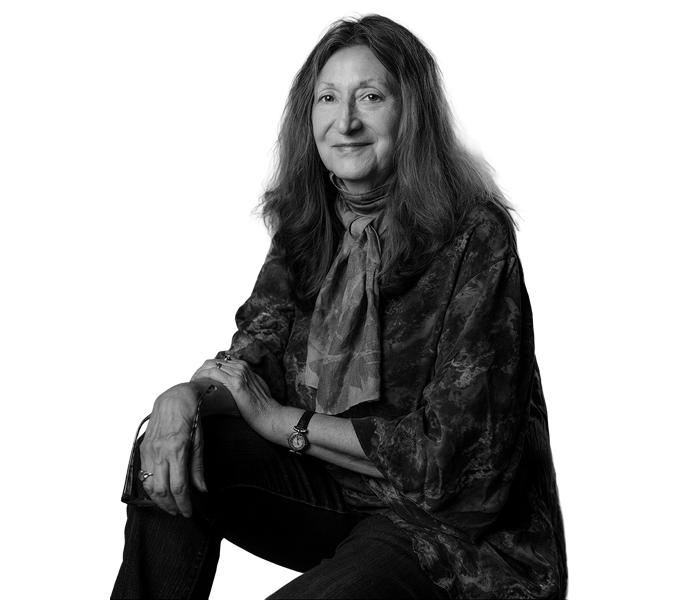
Susanne Paola Antonetta
Susanne Paola Antonetta is Professor Emeritus at Western Washington University and a steering committee member of the group Cultural Autism Studies at Yale. Her latest book is The Devil's Castle: Eugenics, Nazi Euthanasia, and How Psychiatry's Troubled History Reverberates Today (Counterpoint, 2025). She is also the author of The Terrible Unlikelihood of Our Being Here, Make Me a Mother, Entangled Objects, Body Toxic, A Mind Apart, and four books of poetry. Her awards include a New York Times Notable Book, an American Book Award, an Amazon Best Memoir of the Year award, and others. Her essays and poems have appeared in The New York Times, Ms., The Huffington Post, The UK Independent, The Hill, Orion, Psychology Today, and The New Republic and have been featured on CNN as well as the CBC Ideas documentary series. She lives in Asheville, North Carolina.
Feature your book, your art, your project
Publishing with a small press, or on your own?
A Sponsored Thread runs like every other thread on Rorotoko: three parts on three dates, the same editorial review, your own pages in the archive. Marked Sponsored. $199, paid only once accepted.
Get featured →