
Marc Stein
Bicentennial: A Revolutionary History of the 1970s
Some of my favorite paragraphs in the book address Roots, Rocky, Bicentennial Minutes, “Philadelphia Freedom,” and other examples of popular culture during the bicentennial. I also love the many examples of bicentennial humor. But I think I’m most pleased with the extensive discussions of counter-bicentennial activism. This includes dramatic protests led by African Americans, beginning in the late 1960s; the media-savvy actions of the People’s Bicentennial Commission; the Native American Trail of Self-Determination, which followed the Wagon Trail Pilgrimage as it traveled across the country; the fiery fierceness of Philadelphia’s Chinatown-based Dragon Club; and the Dykes for an American Revolution protests in support of the Lesbian Feminist Declaration of Independence. The largest protest was organized by the Puerto-Rican led July Fourth Coalition, which staged July Fourth marches and rallies in multiple cities, including a particularly large one in Philadelphia. The July Fourth Coalition was broad-based and multi-issue, bringing together liberals and leftists who were determined to challenge the official bicentennial. I find what they did profoundly inspirational, and completely at odds with common narratives of collapse, division, and fragmentation on the U.S. left in the 1970s.
Curator: Bora Pajo
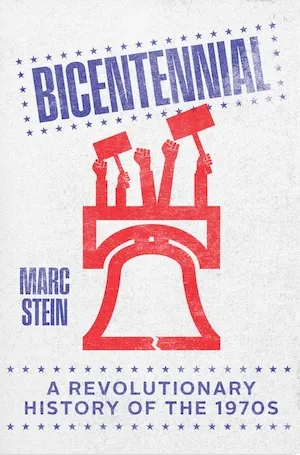
Bicentennial: A Revolutionary History of the 1970s
Stein, Marc. Bicentennial: A Revolutionary History of the 1970s. Chicago: University of Chicago Press, 416 pages, 6 x 9 inches, ISBN: 978-0226847412
Get the book →May 25, 2026
20260525-marc-stein-bicentennial-a-revolutionary-history-of-the-1970
A close-up
The rest of this thread

Marc Stein
Marc Stein is the Jamie and Phyllis Pasker Professor of U.S. History and Constitutional Law at San Francisco State University. He is the 2026-27 president of the Organization of American Historians, the executive director of OutHistory, and the author of six books, including City of Sisterly and Brotherly Loves: Lesbian and Gay Philadelphia, 1945-1972 (2000); Sexual Injustice: Supreme Court Decisions from Griswold to Roe (2010); Rethinking the Gay and Lesbian Movement (2012, 2023); The Stonewall Riots: A Documentary History (2019); Queer Public History: Essays on Scholarly Activism (2022); and Bicentennial: A Revolutionary History of the 1970s.
Know something the rest of us don't?
Most threads on Rorotoko begin with our invitation. Some begin with a proposal. Both use the same prompts and the same editing, with your own pages in the archive. Proposed threads carry a small Sponsored label and a fee.
Propose a thread →