
Deana L. Weibel
The Ultraview Effect
In 2017, at my husband’s urging, I published an anthropological article not in an anthropological journal, but in The Space Review, an online periodical that reaches a wide portion of the space community. In the article, I compared pilgrimage with space exploration, noting some strong commonalities, particularly with respect to the way that objects are imbued with meaning in locations, even on Earth, that may seem somehow “otherworldly.” Within a week or so, I received an email from an Apollo astronaut who wanted to share his experiences with me. Using anthropological convention, I refer to this astronaut by a pseudonym, “Zack.”
Zack wanted to talk, so I drove out to meet him. Soon we were sitting in a restaurant together while he described reaching a point in lunar orbit where he was alone in his capsule, turned all the lights off, let his eyes adjust to the darkness, and then looked out into space. He said he was not prepared for what he saw, that there were so many stars he couldn’t make out a single one. He said it changed his idea of space and changed his idea of time and even his idea of infinity. He began to realize -- based on vision, not just imagination -- just how many stars there were, a number too large for his brain to adequately process. In that moment, he realized that the universe was far bigger than he had ever understood and became certain that there was other intelligent life elsewhere in the universe.
I had talked to a previous astronaut about looking at the Earth from space and the dramatic effect that it had on his understanding of God’s perspective, but Zack was describing something that plunged him into a place of humility, both realizing and accepting his own ignorance of the universe. To be hearing Zack’s stories as part of a lunchtime conversation in a busy restaurant was an amazing juxtaposition of the mundane and the cosmic, and it put my research on a new trajectory.
Curator: Kelli Garza
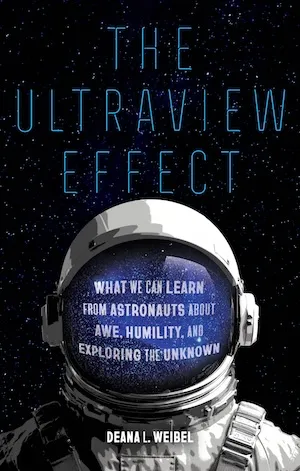
The Ultraview Effect
Weibel, Deana L. The Ultraview Effect: What We Can Learn from Astronauts About Awe, Humility, and Exploring the Unknown. University of California Press, 240 pages, 5 x 8 inches, ISBN: 9780520409521
Available here →June 5, 2026
20260605-deana-weibel-ultraview-effect
A close-up
The rest of this thread
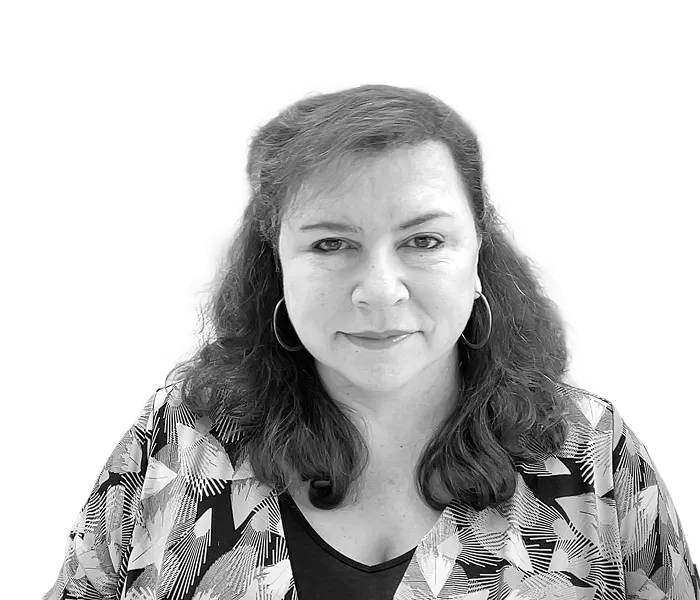
Deana L. Weibel
Deana L. Weibel is a Professor of Anthropology at Grand Valley State University in Michigan. She studies the human side of space exploration, focusing on how astronauts and other members of the larger space community make sense of their “unearthly” understandings and experiences. Her work draws on the anthropology of religion and explores themes like awe, spirituality, and encounters with the unknown. She has published in both academic and public venues and is a Fellow of The Explorers Club.
Pull this thread
A dark-adapted astronaut who turns from Earth to the stars feels humility and disorientation, not the overview effect's unity.
Know something the rest of us don't?
Most threads on Rorotoko begin with our invitation. Any thread can begin with a proposal: you write it with the same prompts every thread answers, and we review it.
Propose a thread →