Virtual worlds and the Metaverse are no longer at the center of media attention, as one has to admit, unlike a few years ago when Mark Zuckerberg rebranded Facebook as Meta to signal the growing importance of virtual reality for business and society. It was during that period that I decided to return to researching virtual worlds, despite having once sworn that I never would.
More than two decades earlier, at the start of my academic career, I had been deeply fascinated by virtual worlds and their potential. I launched several research projects in what was then a largely uncharted field, convinced that working on such an innovative topic would support my path to tenure. However, the hype, especially around Second Life, collapsed as quickly as it had emerged. For a young professor, as I was at that moment, the timing was unfortunate and discouraging, ultimately leading me to abandon virtual worlds.
Ironically, that difficult period produced my most cited work. As interest in virtual worlds declined, I shifted my focus to the broader domain of social media. Together with my coauthor, Michael Haenlein, I developed a classification and definition of social media at a time when many people were still unaware of what social media actually were. For reasons I still cannot fully explain, this definition became widely adopted, arguably for some the definition in the field, and our paper, Users of the World, Unite!, went on to become the most downloaded article on Elsevier’s ScienceDirect for several consecutive years, significantly shaping my academic career.
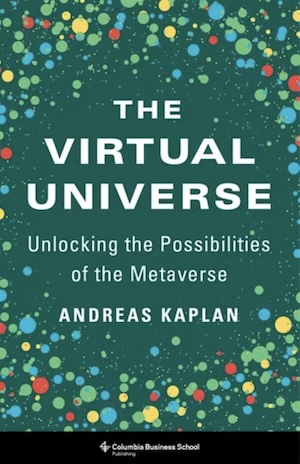
Despite my earlier resolve, renewed interest in the Metaverse, driven by industry developments and increasing demand for executive education, consulting, and media commentary, pulled me back. This ultimately led to my book, The Virtual Universe: Unlocking the Possibilities of the Metaverse, published by Columbia University Press.
By the time the book appeared, however, the hype had faded once again. History, it seems, repeats itself, though with one important difference: this time, I am far more relaxed and no longer drawn into the frustration I once experienced. With or without media buzz, I remain convinced that virtual worlds and the Metaverse will return to the spotlight and play a major role in shaping business and society. To me, it is only a matter of time.