
I had an epiphany early on while doing research for my course in sustainable finance. I was learning about the social ratings of companies, which sustainable asset managers use to guide their investment decisions. I chose some companies at random and looked up their ratings online. As a baseline, I looked up a cigarette manufacturer, assuming their rating would be zero. After all, these companies are the most anti-social imaginable — their products kill their customers.
To my surprise, the company had a rating that was about average. And that company was not an outlier in its industry. When I looked deeper, I saw that the rating rubric only considers factors that have a significant impact on the financial performance of the company being rated. Smoking is legal. Companies put warning notices on their packs and rarely face liability for the cancer that smoking causes. Therefore, the lethal power of cigarettes — they kill about 8 million people per year globally — goes unnoticed by the social rating agencies.
Understanding this made it clear why 80% of socially responsible funds invest in oil and gas companies, despite their carbon dioxide emissions heating the planet to the breaking point. Like Big Tobacco, Big Oil does not pay for the damage that comes from using their products. Besides, the oil industry often outperforms other sectors in the stock market. Since their social ratings are decent and their profitability is attractive, why shouldn’t sustainable funds invest in them?
My research led me from one glaring contradiction to another. Green Bonds are green in name only. Carbon credits should be discredited — most don’t actually displace carbon emissions that would have been produced otherwise. Even microfinance — the heartwarming practice of making small loans to poor families to enable them to run their own tiny businesses — doesn’t alleviate poverty (although it does make it easier to cope with being poor).
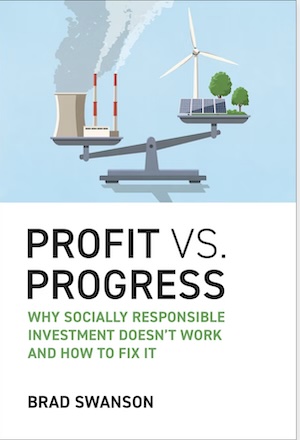
Gradually the pieces fell into place, and I saw that an entire industry has been founded in fantasy. Most of the people doing the work, and the investors they serve, are acting in good faith. But they have been lured into a convenient mistruth. And the world is worse off, not better, for it. First, I began teaching my students to distinguish between the image and the reality of socially responsible finance. Then, I decided to try to show the world.

.png)