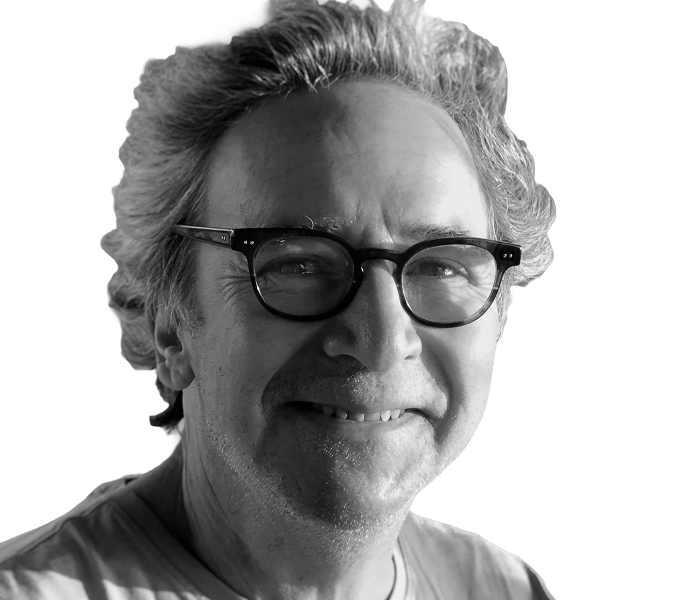
The internet industry — and the commercial internet as we know it today — developed in the city of San Francisco, as opposed to in Silicon Valley to the south. The reason for that has to do with the culture of the city. That is the unique argument City on the Edge makes.
These are the 90s. It's one of the post-counterculture tendrils. There was a freewheeling, libertarian culture that was very associated with the rave community and with psychedelic drugs. There were different strands of the counterculture that descended through the years, and the group that epitomized that was called the Cacophony Society. Those were the people who created Burning Man, essentially. I tell the story of Burning Man as the representative of the culture of that moment.
There were characteristics of that culture in terms of the values around a kind of freedom and individual liberty on the one hand, but also collective empowerment through technology on the other. There was part of the counterculture that was very anti-tech, but there was another part of it that was, like, 'tech can empower us to do stuff'. And it was out of that culture, actually, that came the World Wide Web, and then all the things that followed from that.
The people who were involved didn't want to live in Silicon Valley. Silicon Valley is very suburban — broad boulevards and subdivisions and low-slung office parks. The borders are not that firm. There was certainly stuff that was going on, particularly around Menlo Park, the northern part of Silicon Valley, what people sometimes call the peninsula. That's the northern edge of Silicon Valley, and there were particular institutions there that were influential. But generally speaking, Silicon Valley was very suburban.
Hewlett-Packard was the original company there. They manufactured test equipment, they were an electronics company, and then the semiconductor business, which gave Silicon Valley its name. The early semiconductor industry was very engineering-intensive, very military-oriented. The military was the main customer, actually. Then you had Lockheed Martin, which had a big factory down there, and IBM had a disk drive facility. It was old-style tech, in a way. It came out of the defense establishment, was very hardware-oriented, very engineering-oriented.
The internet, if you think about what a website is — the engineering is underneath it, but it's really about the design, and the creative expression, and the writing. So it's a different thing. And relatedly, the people who were interested in the culture of Burning Man were also the people who were interested in the design end of technology. That became central, much more than the kind of hard engineering part of it.
Google, which I would consider to be in a way part of the culture I'm talking about, is also a Silicon Valley company. They're a big company, and they're based down there. So the biggest companies were still in Silicon Valley. But the cutting edge was in the city.
How can this super wealthy city have all these homeless people?
There's a very long answer to that question, which is in the book. But in summary, the homeless problem has existed in the city for a long time, since the 80s.
The big-picture thing that happened in America is that they shut down all of the mental institutions, and so mentally ill people were no longer institutionalized as a matter of course. At the same time, you had a real federal government retreat from public housing in particular. So homelessness became an issue in the country in the 80s. It became especially bad in California because the weather's better. Unlike in New York, where people can't just live on the street year-round — you kind of have to have some system for getting everybody inside — that imperative doesn't exist in the same way in California.
San Francisco in particular, because of its nature as a refuge — a place that people go. Gay people went there because you could be gay there. Hippies and kids went there to be free from their parents. You could smoke pot, and people wouldn't bother. So there's a certain tolerance, a kind of care towards the refugee, that's part of the city's culture. So it's never been popular to take the kind of harsh measures that would be necessary to force people off the street.
Until about two years ago, there had been a Supreme Court ruling which said that you could not prohibit people from sleeping on public property if you didn't have anywhere for them to go. You had to be able to provide a bed. What happened in San Francisco is that the social activist liberals, who had a lot of influence on these policies, said, well, no, we don't want to spend money on shelters, because that's only an interim thing — we want to really solve the problem, so we want to spend the money on supportive housing instead. The city built a lot of supportive housing, but that's vastly more expensive than shelters, so they obviously could not build enough to house everyone. In the meantime, they didn't build the shelters, and they weren't allowed to sweep the encampments for a while.
So there were always a lot of homeless people from the start of the homelessness problem, then an unwillingness to take harsh measures, and then people just got used to it in this weird way. Most of it was in the Tenderloin — they call it the containment zone. Bad things go on there, it's just allowed to happen there, kind of keep it there. That was almost officially the policy for a long time. But unfortunately for the city, the Tenderloin is directly adjacent to one of the main tourist districts. It's right next to Union Square. As a resident, I never go to the location where the Hilton Hotel is. In New York or LA, it's not quite like that — Skid Row in LA is very isolated from the rest of the city. You would never see that as a tourist.
Ongoing thread. More from Jonathan Weber to follow.