A short documentary film made in 1953 by the talented French team of Chris Marker, Alain Resnais and Ghislain Cloquet bears the title Statues Also Die. Its narrator, the smooth-voiced Jean Négroni, tells us that 'when men die, they enter History; when statues die, they become art.' The film displays a series of images of African figurative sculptures. Such sculptures are then portrayed trapped behind glass exhibition cases, where they are viewed attentively. The message here is that statues created to be commemorated or even worshipped have been taken to western museums to be conserved, classified and labelled, becoming simple objects of art history. They have died and become commodified.
The intent of the filmmakers was to use the fate of these statues as the starting point for a wider critique of colonialism, but the film also nicely illustrates the argument of Austrian art historian Alois Riegl writing in the early-twentieth century that statues may be associated with different kinds of value. Those who crafted the figurative sculptures imbued them with commemorative value. With their displacement to museums, they are appraised on the basis of different forms of value: artistic, or historical.
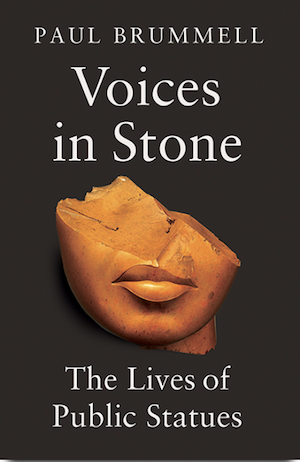
My goal in writing Voices in Stone was to explore how the value of statues changes through their lives, as they age and in some cases are moved in space. Such geographical dislocation is frequently a marker of the changing value of the statue, whether into a museum, as in Statues Also Die, or to a less salubrious location. Thus, the statue of King George V erected in 1936 at the heart of New Delhi and of his Indian empire was moved in 1982 to a peripheral location, where it could be quietly forgotten. Its former prime spot is now occupied by a statue of Indian nationalist politician Subhas Chandra Bose.
Excepting the wondrous creations of the Greek god Hephaestus, and the statue of the murdered Commendatore in Mozart's opera Don Giovanni, statues are themselves passive and emotionless participants in their biographies. The lives of statues are really the lives of the humans who interact with them. The book tells their stories.
Ongoing thread. More from Paul Brummell to follow.