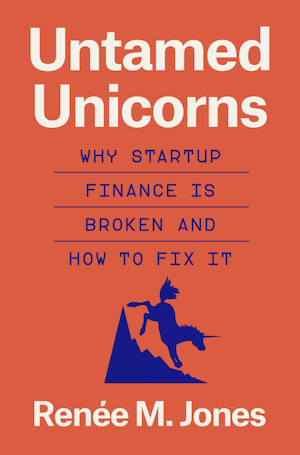
A good example of the problems I'm studying is the implosion of FTX in 2022. It shows the kinds of harm that unaccountable unicorns can cause.
FTX was once the world's second-largest crypto trading platform, handling billions of dollars on behalf of customers around the globe. It had raised $2 billion from some of the country's most prominent venture capital firms. At its peak, it was valued at $32 billion, and its founder, 30-year-old Sam Bankman-Fried, was reportedly worth $16 billion. So it was a shock when FTX filed for bankruptcy in November 2022, after just a few days of questions about the soundness of its balance sheet. At the time of the bankruptcy filing, $8 billion in customer assets were frozen indefinitely. Nearly four years later, those customers have only begun to recover some of the missing funds.
After the bankruptcy filing, federal investigations revealed that FTX had misused billions in customer assets to prop up Alameda Research, a crypto hedge fund also controlled by Bankman-Fried. Much of that diverted cash funded a spending spree by FTX executives: luxury real estate, campaign contributions, and charities favored by Bankman-Fried's family. Prosecutors charged Bankman-Fried with eight counts of fraud and related crimes. In November 2023, he was convicted of the charges. In March 2024, he was sentenced to 25 years in prison.
As I mentioned, FTX was backed by some of the most sophisticated and experienced venture capital investors. Even so, it lacked the basic governance structures expected of a company its size. It had no chief financial officer. It had no reliable accounting systems and no reliable audits. And it allowed assets to be commingled between FTX and Alameda, despite telling the public otherwise. As John Ray, the CEO brought in to manage the company after the bankruptcy, put it: "Never in my career have I seen such a complete failure of corporate controls and such a complete absence of trustworthy financial information as occurred here."
So how did this happen? One factor I focus on is a departure from traditional VC financing practices: no FTX investor held a seat on the company's board. That absence from the board kept investors from monitoring FTX's financial performance, its internal controls, and its compliance with the law. And that lack of engagement almost certainly enabled and prolonged Bankman-Fried's extensive fraud.
FTX is an extreme case of unicorn dysfunction, but its governance failures aren't unique in today's startup world. To keep access to attractive deals, VCs have embraced what's called a founder-friendly model, which lets founders retain control of their firms. Under this model, founders receive shares with super-voting power — typically 10 votes per share — giving them effective control of their boards. The founders of Uber, WeWork, and Theranos — Travis Kalanick, Adam Neumann, and Elizabeth Holmes — all held super-voting shares. With control of the board, essentially the power to choose their own bosses, these founders could brush off investors' objections to their strategies, their management styles, their spending, and their failure to move toward profitability. Only after public relations crises at these firms, often sparked by whistleblowers, did investors regain the upper hand and remove the troublesome founders.
My hope is that the book prompts a reexamination of the policy choices that drove the expansion of the private markets. It also advances a set of reforms, which I lay out in the final chapter. I want to reach legislators, regulators, journalists, and the public, and to challenge the talking points so often used to justify further deregulation. I also hope to shine a light on how the venture capital system affects ordinary people: individual investors, workers, consumers, and local communities.