
In a nutshell
October 2, 2026
Breaking into Song: Television Musicals from Glee to Crazy Ex-Girlfriend
In a narrow sense, it’s about tv musicals, and music on television more generally. This may seem simplistic, but the combination of music and TV is both obvious and yet simultaneously unnoticed. I wanted to rectify that through this work, by not only looking at musical episodes/specials/series throughout US television history, but soundtracks, synergistic deals (eg, the WB network in the 1990s), and shows like Soul Train and American Bandstand that exposed viewers to music they might not have access to locally.
The wide angle
I think this work sits alongside other scholars who’ve written about these things individually, including about MTV, the use of music and soundtracks in television (eg, Steve Halfyard’s work around theme songs), or historical studies of performance, such as Elvis or The Beatles on Ed Sullivan. My work takes a broad approach, tracing music on TV and the TV musical from shows like NBC Opera Theater or PBS’s Great Performances to contemporary shows that use the musical form as a primary genre. It was a way to increase my own knowledge of these disparate elements, from noticing the end credit product placement of musicians on 90s WB series to finding, and enjoying, streaming shows like Schmigadoon. I also discuss the more nuts-and-bolts reasons why certain series or episodes that use the musical format either work or fail beyond the quality of singing or story.
A close-up
If there is one chapter that I feel epitomizes the work, it is, oddly, the chapter on Cop Rock. Viewing this failed experiment from 1990 gave me new insight into television history and production values, even though that is my primary area of study. Indeed, the chapter sits alongside other things I’ve written that have at least problematized the idea of TV’s suggested “golden ages” that featured innovative or culturally significant programs are limited to certain time periods. There are oases and precedents that build to these shifts that haven’t always been properly examined. While Cop Rock was—and is—considered a bit of a joke, it was part of a larger trend in the 1990s when the broadcast spectrum was beginning to expand alongside what kind of programs might be viable. The year 1990 encompasses both Twin Peaks and Cop Rock, both of which were unexpected and innovative in ways that changed the landscape of television more broadly.
Curator: Bora Pajo
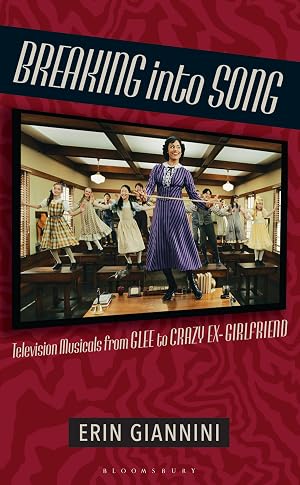
Breaking into Song: Television Musicals from Glee to Crazy Ex-Girlfriend
Giannini, E. (2026). Breaking into song: Television musicals from Glee to Crazy Ex-Girlfriend. Bloomsbury Academic.
Get the book →October 2, 2026
20261002-giannini-breaking-into-song-in-a-nutshell
The rest of this thread

Erin Giannini
Erin Giannini, Ph.D., is an independent scholar. She has written numerous articles about topics from corporate culture in genre television to production-level shifts and their effects on television texts. She is also the author of Supernatural: A History of Television’s Unearthly Road Trip (Rowman & Littlefield 2021), The Good Place [TV Milestones], Meta Television: A History of US Popular Television’s Self-Awareness (Routledge), Community: Going Back to School With Television’s Best Sitcom (Bloomsbury 2025), and Breaking Into Song: Television Musicals From Glee to Crazy Ex-Girlfriend (Bloomsbury 2026) and co-editor of the book series B-TV: Television Under the Critical Radar for Bloomsbury.
Propose a thread
Know something the rest of us don't?
Most threads on Rorotoko begin with our invitation. Some begin with a proposal. Both use the same prompts and the same editing, with your own pages in the archive. Proposed threads carry a small Sponsored label and a fee.
Propose a thread →