
Murray Forman
Old in the Game: Aging in and with Hip-Hop
The image of the aging blues, jazz, or rock musician is common to us today. It is often framed romantically, as are depictions of painters and other creators across the arts who are defined by their relentlessly innovative spirit, expressing “late style” and endurance. Depicted as stalwart and unwavering, they emit a certain gravitas that commands respect. Yet hip-hop artists (the DJs, MCs/rappers, graffiti artists, and B-boys/dancers) are generally not conceived in the same ways. The idea of a septuagenarian — or older — hip-hop artist does not readily align with that of other aging artists, despite the fact that hip-hop culture is over half a century old. Even in 2023, during celebrations of fifty years of hip-hop when the culture’s pioneers and founders were widely feted, the discourse of hip-hop as a youth movement was curiously ubiquitous. The pioneers, many of whom were teenagers when they laid hip-hop’s foundations over fifty years ago, are now well past middle age, crossing into their seventies.
Old in the Game critically examines the period of hip-hop’s inception, when rancor frequently existed between adults and youths in a rupture between the Civil Rights generation and what became known as the hip-hop generation. Yet as I explain, intergenerational discord or dissonance also gradually emerged within hip-hop itself as older and younger hip-hop heads looked askance at one another. Indeed, the fractures across age and generations emerged in hip-hop quite early, amplified through rap lyrics or artist interviews, with each subsequent generational cohort dismissing the aesthetics and general bearing of their predecessors. In taking ageist potshots at one another over the years, young and old hip-hop aficionados have reinforced what is now a pervasive facet of the culture, fueled by mutual incomprehension and animus.
Hip-hop has also mobilized its own linguistic forms that are inscribed with temporal values. It is difficult to discuss hip-hop history and lore without employing the terms “pioneer,” “veteran,” “founding father,” or “OG” to identify early participants in the game. Similarly, while expressions like “back in the day,” “old school,” and “classic” are not necessarily unique to hip-hop, they have acquired a particular resonance when discussing hip-hop pasts. Charting these evolved discursive meanings is crucial to an understanding of how hip-hop was defined at various junctures along the way and how it is conceived today.
Old in the Game consequently challenges the prevailing notion that hip-hop is primarily a youth-oriented movement. It draws from the theories of Critical Age Studies, emphasizing aging as a cultural process more than biological, analyzing the images, discourses, and modes of expression through which hip-hop is represented and made meaningful. It explores age as an essential component of the identities and expressive forms through which hip-hop heads experience the world and project themselves into it. Featuring interviews with numerous hip-hop pioneers, veterans, and OGs such as Grandmaster Caz, Sha-Rock, Chuck D, Ice-T, LL Cool J, Pepa, and Yo-Yo, Old in the Game addresses themes including generational identity formation, ageism, memory and nostalgia, and the concepts of retirement and death. It ultimately responds to the crucial questions: how are the culture’s oldest innovators aging in and with hip-hop and how is aging in hip-hop unique?
Ongoing thread. More from Murray Forman to follow.
Curator: Bora Pajo
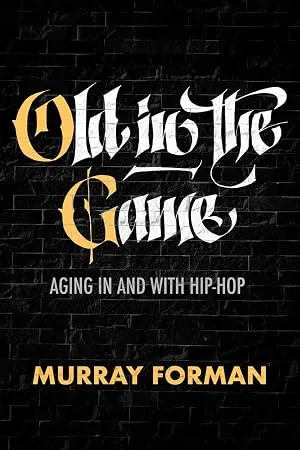
Old in the Game: Aging in and with Hip-Hop
Forman, M. (2026). Old in the game: Aging in and with hip-hop. University of California Press.
Available here →October 10, 2026
20261010-forman-old-in-the-game-in-a-nutshell
In a nutshell
The rest of this thread
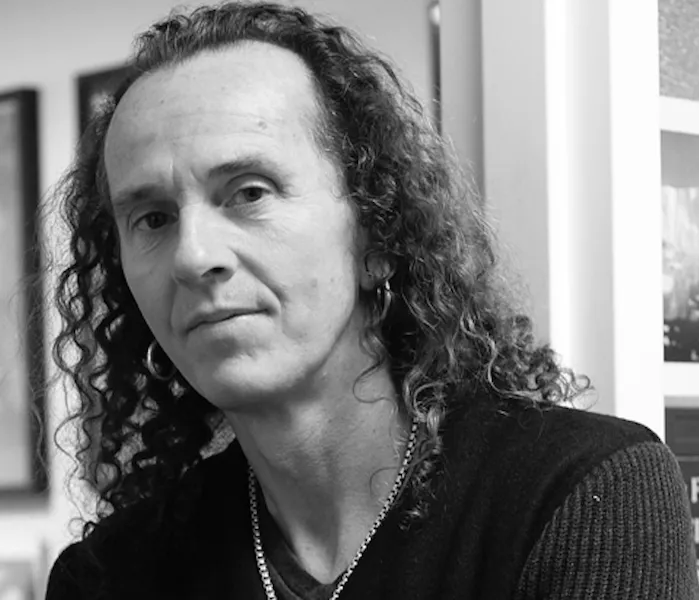
© Matthew Modoono
Murray Forman
Murray Forman is Professor Emeritus (Media and Screen Studies) at Northeastern University, having contributed to the field of Hip-Hop Studies for over thirty years. His books include The ‘Hood Comes First: Race, Space and Place in Rap and Hip-Hop and Old in the Game: Aging In and With Hip-Hop. He is co-editor of three editions of That’s the Joint!: The Hip-Hop Studies Reader and Hip-Hop Archives: The Politics and Poetics of Knowledge Production and he was a founding editor of the Global Hip Hop Studies journal. In 2014-2015 he was an inaugural recipient of the Nasir Jones Hip Hop Fellowship at the Marcyliena H. Morgan Hip Hop Archive, Harvard University.
Pull this thread
Hip-hop is not a youth movement and has not been one for decades.
Know something the rest of us don't?
Most threads on Rorotoko begin with our invitation. Any thread can begin with a proposal: you write it with the same prompts every thread answers, and we review it.
Propose a thread →