
Murray Forman
Old in the Game: Aging in and with Hip-Hop
This example encapsulates a key facet of Old in the Game, that hip-hop’s familiarity and appeal is cross-generational.
In September 2007, the AARP (formerly the American Association of Retired Persons) hosted its annual conference in Boston. The famous crooner Tony Bennett was a headline performer at the event (as were Earth, Wind and Fire and Rod Stewart); Bennett was then eighty-one years old, and his national tour was sponsored by AARP. But down the list of celebrity appearances was the thirty-nine-year-old hip-hop celebrity LL Cool J. He wasn’t there to perform per se, but to lead a morning fitness workout (and to promote a new workout book).
I arrived early to watch the workshop participants as they slowly entered the hotel conference room, people of varying physical proportions and degrees of mobility — some with canes and walkers — and many with greying hair (if they had hair at all) bopping their heads to the phat hip-hop beats that filled the room. Anticipation was high until, with youthful vigor, LL Cool J leaped onto the stage and began his fitness exercises with his typical brio and good humor. LL Cool J had by this point been in the hip-hop industry for over two decades, having begun his career on the nascent Def Jam label in 1984 at the age of sixteen, and he also claimed a string of movie and television appearances. He was a hip-hop star and a bonafide hip-hop veteran.
This example encapsulates a key facet of Old in the Game, that hip-hop’s familiarity and appeal is cross-generational. It illustrates that, against the associations of hip-hop with youthful practices, the culture is increasingly complicated by the generational churn as hip-hop heads separated by years — and decades — claim an affinity with hip-hop. They dwell within a hip-hop sensibility, which is to say a way of being and knowing that informs a worldview and that is inflected by reflexive self-awareness. As my interviews and the archival materials I accessed each indicate, it matters a great deal within hip-hop circles when one seriously entered the hip-hop game (at what historical moment as well as at what age), in what ways they did so (what modes of expression or creative elements they adopted upon entry), and to what extent individuals maintain a hip-hop sensibility throughout the life course, as inhabitants of a culture that is always in flux and flowing.
In my research, I asked numerous hip-hop pioneers and celebrity veterans, as well as fans and participants in the culture, to examine their own age status and to reflect on how age ideology impacts them as they carry the culture with them. Their responses revealed a high degree of age awareness and the pioneers and veterans also know that others — hip-hop heads and fans — are watching them, observing their aging processes, checking to see how and what they’re doing at each stage of life.
Two quotes from my interviews stand out to me. The first is from Grandmaster Caz, one of hip-hop’s more active and tireless pioneers, who serves in educational contexts as a hip-hop historian and as a cultural ambassador while continuing to perform at concerts and cultural events. A member of the pioneering group The Cold Crush Brothers when he was a teenager, Caz was among the first MCs to dedicate himself fully to a hip-hop way of life. He has subsequently been a pioneer in the culture throughout his lifespan; being first is a lifetime attribute and a founder’s status does not dissipate with age. Yet Caz freely admits that as life’s demands, including family responsibilities and other duties, accumulate, the priority of hip-hop may shift. As he states,
“Inside, none of us feels sixty or fifty-five, you know. It’s like it was just yesterday that we were playing out in the park. The reality is that we are sixty and the things outside of hip-hop are really what identify our age more than hip-hop does.”
The second quote is from Cey Adams, an early graffiti artist who is renowned for being among the first to make the transition from the streets to art galleries, museums, and commercial design. His is an understatement, yet it is pure and clear and beautiful in its straightforward simplicity: “It took a lifetime to get here.”
Curator: Bora Pajo
The rest of this thread
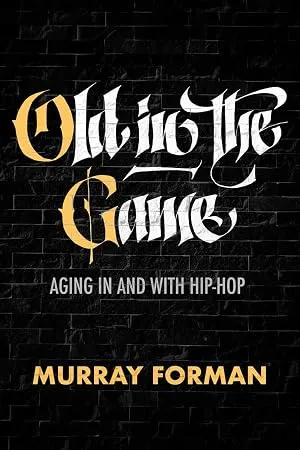
Old in the Game: Aging in and with Hip-Hop
Forman, M. (2026). Old in the game: Aging in and with hip-hop. University of California Press.
Available here →November 8, 2026
20261108-forman-old-in-the-game-a-close-up
A close-up
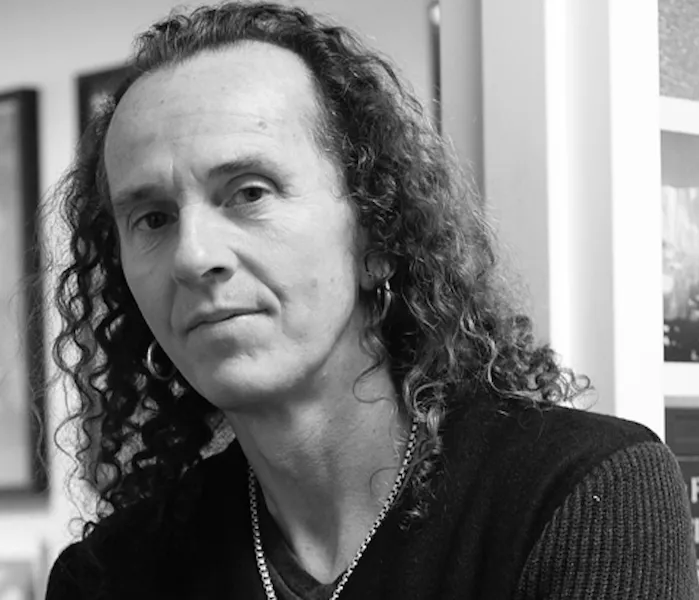
© Matthew Modoono
Murray Forman
Murray Forman is Professor Emeritus (Media and Screen Studies) at Northeastern University, having contributed to the field of Hip-Hop Studies for over thirty years. His books include The ‘Hood Comes First: Race, Space and Place in Rap and Hip-Hop and Old in the Game: Aging In and With Hip-Hop. He is co-editor of three editions of That’s the Joint!: The Hip-Hop Studies Reader and Hip-Hop Archives: The Politics and Poetics of Knowledge Production and he was a founding editor of the Global Hip Hop Studies journal. In 2014-2015 he was an inaugural recipient of the Nasir Jones Hip Hop Fellowship at the Marcyliena H. Morgan Hip Hop Archive, Harvard University.
More in Books
Know something the rest of us don't?
Most threads on Rorotoko begin with our invitation. Any thread can begin with a proposal: you write it with the same prompts every thread answers, and we review it.
Propose a thread →